
Candle Filter vs. Membrane Separation: Comparing Filtration Equipment Options
A candle filter and a membrane separation system both separate one phase from another, yet they answer different process questions. A candle filter is a pressure vessel that captures solids on filter media and removes them as cake — dry, wet or by backwash. A membrane system splits a liquid stream into permeate and retentate through MF, UF, NF, RO or MBR membranes, and is used for continuous separation, purification and concentration rather than bulk cake removal.
This comparison places the two routes side by side on the criteria that actually decide a purchase: the duty itself, wetted materials, discharge and cleaning regime, control scope, design code and the range of customization available. It is written for buyers who have already established that they need separation equipment and must now decide which type to specify — and for those who suspect they will eventually need both at different points in the same line.
The Real Selection Problem: Cake Removal or Stream Purification
The decision is not a preference between two equipment families. It follows from what the plant must do with the solids and with the liquid.
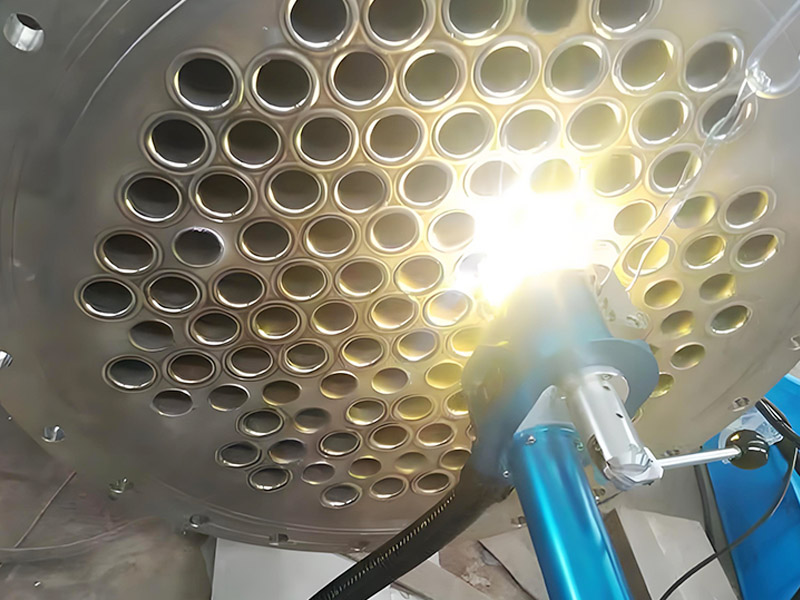
A candle filter is a batch-oriented solid-liquid separator. Feed enters a pressure vessel containing tubular filter elements; the liquid passes through the filter media and the retained solids build up on the element surface as a cake. At the end of the cycle the cake is discharged — dry, wet or by backwash — and the vessel is returned to service. The defining characteristic is that the solid leaves the system as a discrete, recoverable mass.
Membrane separation does the opposite. It keeps the stream moving, dividing it into a permeate that passes through the membrane and a retentate that is retained and usually recirculated or drawn off. The defining characteristic is that the separation happens continuously across a membrane surface, and the target is normally a liquid quality — clarity, dissolved-solids level, product concentration or molecular fraction — rather than a cake.
Four questions that resolve the choice
- Is the solid the product, a by-product or a waste? Recoverable catalyst, crystalline product or filterable sludge points toward cake discharge. Trace suspended solids with no recovery value point toward membranes.
- What is the solids loading? Heavy solids loading loads a membrane surface quickly and increases cleaning frequency; a candle filter is designed to accept and discharge that load.
- Is the target in the solid or in the liquid? Purity and concentration targets in the liquid phase are membrane territory; solids capture and washing are candle filter territory.
- Batch or continuous? Batch cake discharge fits campaign production and multi-product plants. Continuous separation fits steady-state streams and integrated process trains.
Getting this wrong rarely shows up immediately. It shows up later as excessive cleaning cycles, product loss in a waste stream, unplanned element replacement, or a cake that cannot be discharged cleanly from the vessel.
Industry Background: Why Both Routes Are Growing
Separation equipment demand tracks the wider chemical processing equipment market. SNS Insider values the global chemical processing equipment market at USD 68.82 billion in 2026, with the chemicals and petrochemicals segment accounting for a 41.6% revenue share in 2025 — the largest end-user block in that market.
The separation segment specifically is also expanding. Global Market Insights projects the separation machinery market at USD 109 billion in 2026, growing at a 7.2% CAGR over 2026–2035. That growth is not concentrated in a single technology: filter-based solid-liquid separation and membrane-based liquid separation serve different stages of the same flowsheet and are frequently purchased by the same project team.
Market figures are attributed to the publishers above and are reproduced as reported. They describe the category, not any individual supplier's position within it.
Candle Filter Capability: Variants, Materials and Discharge
A candle filter is specified around three variables: how much solids the duty generates, how those solids must leave the vessel, and which construction material survives the medium. Jiangsu Xuyang Chemical Equipment Co., Ltd., a chemical equipment manufacturer established in 2009 in Jingjiang, Jiangsu Province, China, supplies candle filters as one of its custom chemical equipment categories.
Configurations
- SAC Fully Automatic Candle Filter — automatic candle filter configuration.
- SBC Fully Automatic Candle Filter — automatic candle filter configuration.
- CFS Fully Automatic Filtration System — a complete automatic filtration system rather than a single vessel.
Construction and media
- Filter material: SS304, SS316L, Hastelloy, or customized to the medium.
- Filter media: stainless steel, sintered mesh or filter cloth.
- Design standard: ASME, GB or EN.
- Filtration area and filtration accuracy: customized according to process requirements.
- Operating pressure and temperature: customized.
- Control: manual, automatic or PLC.
Cake discharge is the decisive option
Dry discharge, wet discharge and backwash are three different operating philosophies, not three accessories. Dry discharge suits duties where the cake is a product or must be handled as a solid waste. Wet discharge suits cakes that must remain slurry-consistent or where dry handling would create exposure. Backwash suits duties where the media must be cleaned in place between cycles. The choice affects cycle time, operator exposure, downstream handling and the vessel's internal geometry — which is why it belongs in the inquiry, not in the final drawing review.
Membrane Separation Capability: Types, Materials and Cleaning
Membrane separation and filtration equipment covers a family of processes rather than a single machine. Microfiltration (MF) and ultrafiltration (UF) retain suspended solids and larger dissolved species; nanofiltration (NF) and reverse osmosis (RO) retain progressively smaller dissolved species; membrane bioreactor (MBR) configurations combine biological treatment with membrane separation. The correct type follows from the target permeate quality, not from the equipment catalogue.
Specification scope
- Membrane type: MF, UF, NF, RO or MBR.
- Membrane material: PVDF, PES, PA or PTFE.
- Equipment material: SS304, SS316L, FRP or PP.
- Capacity, operating pressure, operating temperature and filtration accuracy: customized according to process requirements and application.
- Control system: manual, automatic or PLC.
- Cleaning: CIP, backwashing or chemical cleaning.
- Design: skid-mounted or customized industrial design.
Housing material selection is often where membrane projects are won or lost on total cost. FRP and PP housings are used where the duty permits; SS304 and SS316L are used where pressure, temperature, hygiene or solvent compatibility rule out polymer housings. Because the membrane element and the housing are specified separately, a quotation that names only the membrane type is incomplete.
Cleaning is a design decision, not maintenance
CIP, backwashing and chemical cleaning require different piping, tankage, instrumentation and control logic. A system quoted without a defined cleaning regime will usually be re-engineered on site. Buyers should confirm which of the three is intended, and whether the PLC scope includes the cleaning sequence or only the filtration sequence.
Side-by-Side Comparison
| Comparison point | Candle filter | Membrane separation |
|---|---|---|
| Primary duty | Solid-liquid separation with cake discharge | Continuous separation, purification and concentration of liquid streams |
| Configuration options | SAC fully automatic candle filter; SBC fully automatic candle filter; CFS fully automatic filtration system | MF, UF, NF, RO, MBR |
| Wetted construction material | SS304 / SS316L / Hastelloy / customized | SS304 / SS316L / FRP / PP |
| Media / membrane material | Stainless steel / sintered mesh / filter cloth | PVDF / PES / PA / PTFE |
| Solids handling | Dry discharge, wet discharge or backwash | No cake discharge; retained solids leave with the retentate or during cleaning |
| Cleaning approach | Backwash and cake discharge | CIP, backwashing, chemical cleaning |
| Filtration accuracy | Customized according to process requirements | Customized according to application |
| Operating pressure / temperature | Customized | Customized |
| Control system | Manual / automatic / PLC | Manual / automatic / PLC |
| Design standard / design basis | ASME / GB / EN | Skid-mounted or customized industrial design |
| Typical application | Solid-liquid separation, catalyst recovery, chemical filtration, pharmaceutical filtration, fine chemical processing | Chemical and oil industry liquid-stream separation and concentration, including MF / UF / NF / RO / MBR duties |
Table entries reproduce the published product specification scope. Operating values are customized per project and are not fixed catalogue ratings.
Step-by-Step: How to Specify Either Route
The specification sequence is similar for both technologies, which is useful when a plant is evaluating them in parallel. The answers, not the process, are what change.
Step 1 — State the separation objective in one sentence
"Recover catalyst from the reactor discharge" and "reduce dissolved solids in the effluent to allow reuse" lead to different equipment. Write the objective before the equipment name.
Step 2 — Characterize the feed
Confirm the working medium or product name, chemical composition and concentration, operating and design temperature, operating and design pressure or vacuum condition, required capacity, and any corrosion-resistance or hygiene requirement. This is the same material-selection sequence used for reactors and vessels, and it applies equally to filter and membrane housings.
Step 3 — Quantify the solids
Solids concentration, particle behaviour and whether the solids are compressible determine cake build-up on candles and fouling on membranes. Where solids are heavy, a candle filter normally precedes membrane polishing.
Step 4 — Choose the material path
SS304 for benign duty; SS316L for more aggressive chemical service; Hastelloy where stainless grades are inadequate; FRP or PP housings where a membrane duty permits polymer construction. Material selection must be justified by the medium, not by budget alone.
Step 5 — Fix the discharge or cleaning regime
For candle filters, choose dry, wet or backwash discharge. For membranes, choose CIP, backwashing or chemical cleaning, and confirm the cleaning sequence is inside the control scope.
Step 6 — Define the automation boundary
Manual, automatic and PLC control are all available on both routes. State which functions the PLC must own — filtration cycle only, or filtration plus cleaning plus interlocks — because this is the most common source of scope dispute.
Step 7 — Confirm code, inspection and documentation
State whether the equipment is to be designed to ASME, GB or EN, which inspection and test plan applies, and which documents must accompany delivery. Pressure-vessel design, temperature control, sealing and process configuration should be agreed before fabrication, and material verification, weld inspection, pressure testing, factory acceptance and documentation details confirmed in the technical agreement.
Step 8 — Decide on skid integration
Membrane systems are commonly supplied skid-mounted or as a customized industrial design. Candle filter systems, including the CFS fully automatic filtration system, can likewise be integrated with pumps, valves, piping and instrumentation. Skid scope changes civil work, commissioning time and site labour requirements, so it should be decided during evaluation rather than after order placement.
Use Cases: Where Each Route Fits
Candle filter applications
- Solid-liquid separation in chemical and fine chemical processing.
- Catalyst recovery, where the catalyst must be captured and returned to the process.
- Pharmaceutical filtration, where the cake or the filtrate must be recovered cleanly.
- Dyes and pigments, where product solids are the output.
- Mineral processing and pulp and paper duties with meaningful suspended solids.
- Solvent recovery and water treatment streams carrying filterable solids.
Membrane separation applications
- Chemical industry liquid streams requiring clarification, purification or concentration.
- Oil industry process and wastewater streams.
- Duties requiring MF or UF for suspended solids and macromolecule retention.
- Duties requiring NF or RO for dissolved-species retention and concentration.
- MBR duties combining biological treatment with membrane separation.
Control and Cleaning Implications
Automation is where the two routes diverge most in day-to-day operation. A candle filter cycle has discrete phases — filtration, cake washing where applicable, discharge and media cleaning — and each phase is a candidate for automatic sequencing. A membrane system runs a continuous separation loop with periodic cleaning interruptions, so its control logic is built around cross-flow conditions, cleaning triggers and permeate quality rather than batch steps.
Both routes offer manual, automatic and PLC control, and both can be delivered as fully automatic systems. The practical difference is the consequence of a fault: a candle filter fault typically shows up as a wet or incomplete cake, while a membrane fault typically shows up as falling flux. The instrumentation and alarm strategy should reflect that difference, and should be written into the technical agreement rather than assumed.
Compliance and Verification Before You Commit
ASME Boiler and Pressure Vessel Code Section VIII governs the design, analysis, fabrication, inspection and testing of pressure vessels, including heat exchangers, reactors, filters and specialty vessels. For a candle filter — a pressure-retaining vessel by construction — that framework is directly relevant. For a membrane system, the applicable requirements depend on which parts of the skid are pressure-retaining and on the buyer's jurisdiction.
Compliance has a measurable cost. Estimates cited by Fortune Business Insights indicate that compliance with ASME standards can represent up to 20% of a pressure vessel's total material cost. That figure is a planning input, not a quotation: it explains why two superficially similar vessels can carry different price floors.
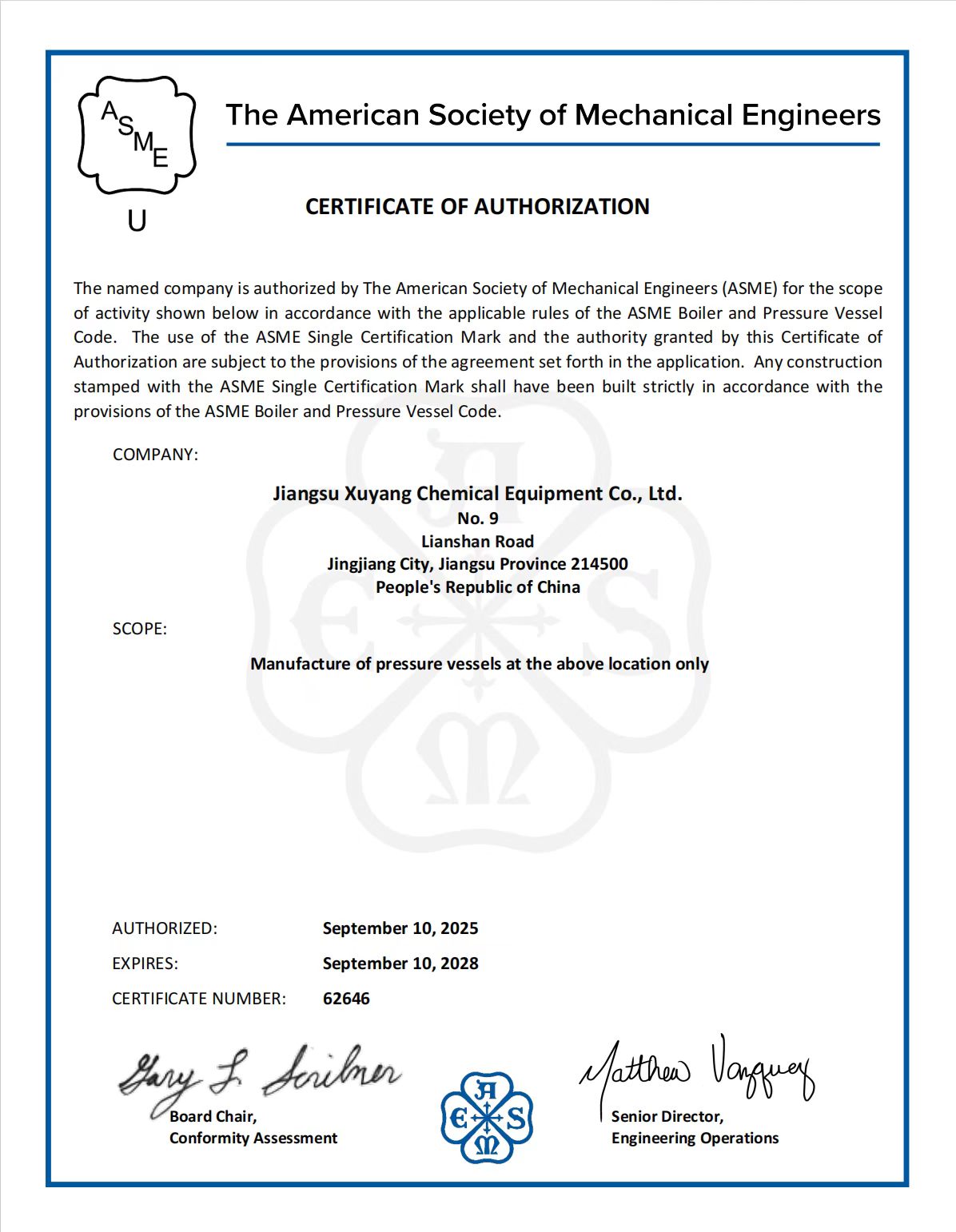
Jiangsu Xuyang Chemical Equipment Co., Ltd. holds an ASME Certificate of Authorization (U Stamp) No. 62646 for the manufacture of pressure vessels under the ASME Boiler and Pressure Vessel Code, issued 2025-09-10 and valid until 2028-09-10. The company also holds an A2-level Special Equipment Design and Manufacturing License, and operates ISO 9001, ISO 14001 and ISO 45001 management systems. It reports Jiangsu High-Tech Enterprise status and recognition as a Jiangsu Specialized, Specialized and New Small/Medium-Sized Enterprise.
Buyers should still verify that the certificate scope covers the specific vessel being quoted, and that the inspection and test plan matches the project's acceptance criteria. A certificate confirms a manufacturing qualification; it does not by itself confirm a specific design.
Why One Supplier for Both Routes Matters
Where a plant needs a candle filter upstream and a membrane skid downstream, splitting the order across two suppliers creates an interface problem: flow rates, buffering, control handover and responsibility for off-spec intermediate product all have to be negotiated between parties who did not design the system together.
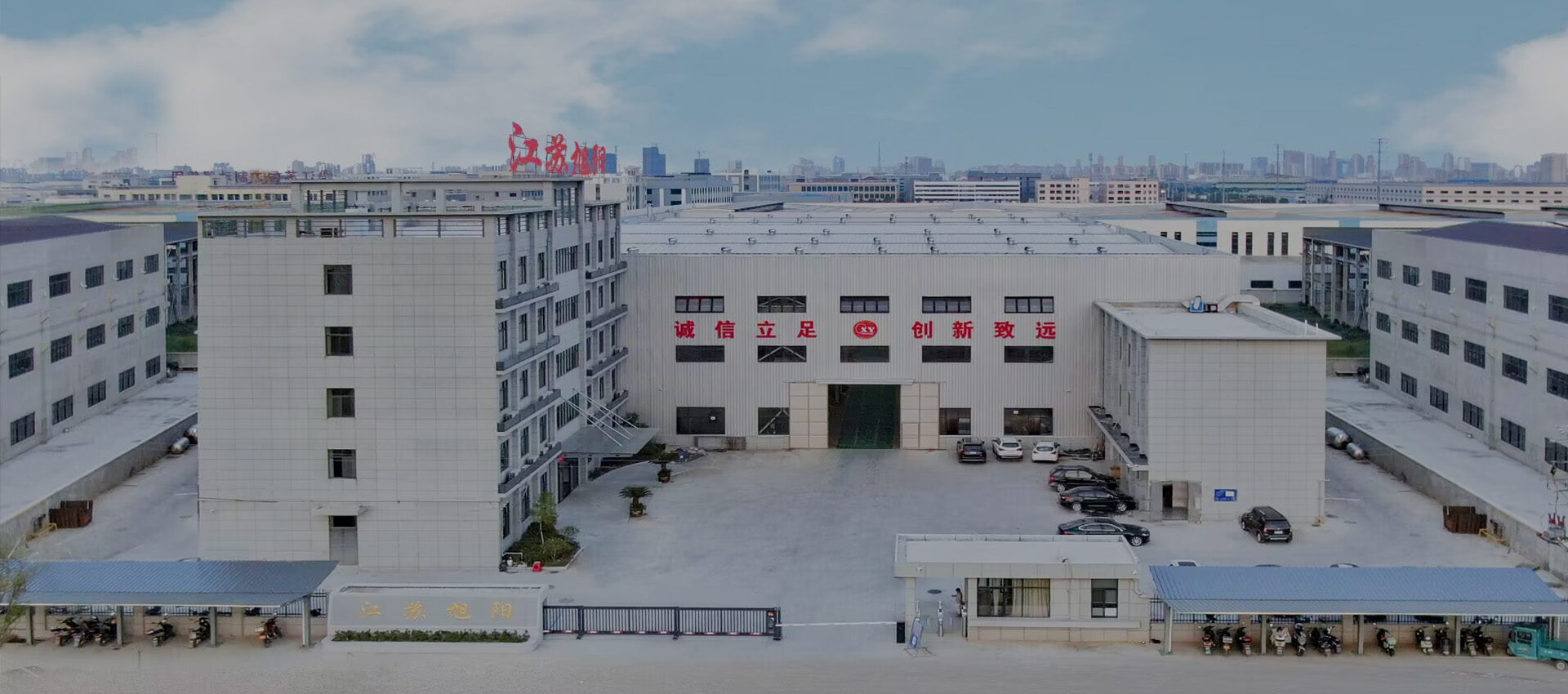
Xuyang's portfolio covers both categories — candle filters and membrane separation and filtration equipment — alongside reactors, storage tanks, shell-and-tube heat exchangers, towers, corrosion-resistant PTFE-lined equipment and skid-mounted equipment. The company was established in 2009, occupies a 10,000 m² facility with 110 employees, and reports an annual output of 1,000 units; its stated monthly capacity is 100 units, with a minimum order quantity of 1 unit.
Customization scope covers capacity and structure, SS304/SS316L, Hastelloy or titanium construction, jackets and coils, electric heating, agitation options, mechanical or magnetic seals, explosion-proof configuration, and skid integration and connection layout. Stated lead time is 30–60 days, subject to project confirmation. Documented quality control covers pressure-vessel design, temperature control, sealing and process configuration, with material verification, weld inspection, pressure testing, factory acceptance and documentation-package details confirmed in the technical agreement. The export team can communicate in English, Russian, Arabic and Turkish.
Capacity, lead time, quality-control and export-language statements are company-reported and should be confirmed against the project specification and technical agreement.
Frequently Asked Questions
What design standards and certifications should I verify before ordering?
Candle filters can be designed to ASME, GB or EN, and membrane systems are supplied as skid-mounted or customized industrial designs, so the applicable standard depends on which parts are pressure-retaining and on the destination market. ASME BPVC Section VIII governs the design, analysis, fabrication, inspection and testing of pressure vessels, including filters. Jiangsu Xuyang Chemical Equipment Co., Ltd. holds ASME Certificate of Authorization (U Stamp) No. 62646 for the manufacture of pressure vessels, issued 2025-09-10 and valid to 2028-09-10, along with an A2 Special Equipment Design and Manufacturing License and ISO 9001, ISO 14001 and ISO 45001 management systems. Confirm that the certificate scope covers the specific vessel in the quotation.
Can a Chinese custom chemical equipment OEM manufacturer supply both a candle filter and a membrane system?
Yes, where the manufacturer's portfolio covers both categories. Jiangsu Xuyang Chemical Equipment Co., Ltd. was established in 2009 in Jingjiang, Jiangsu Province, China, and lists candle filters and membrane separation and filtration equipment alongside reactors, storage tanks, heat exchangers, towers, PTFE-lined equipment and skid-mounted equipment. The company reports a 10,000 m² facility, 110 employees, an annual output of 1,000 units and a monthly capacity of 100 units, with a minimum order quantity of 1 unit. Its export team can communicate in English, Russian, Arabic and Turkish. Buyers evaluating any Chinese OEM should confirm certificate scope, inspection and test plan, and documentation deliverables against their own project requirements.
What drives the cost difference between the two options?
Cost tracks specification, not category. For a candle filter, the main drivers are wetted material (SS304, SS316L, Hastelloy or customized), filtration area and accuracy, the discharge method selected (dry, wet or backwash), automation level and code compliance. ASME compliance alone can represent up to 20% of a pressure vessel's total material cost, according to estimates cited by Fortune Business Insights. For a membrane system, the drivers are membrane type (MF, UF, NF, RO or MBR), membrane material (PVDF, PES, PA or PTFE), housing material (SS304, SS316L, FRP or PP), capacity, cleaning regime (CIP, backwashing or chemical cleaning) and the degree of skid integration. Quotations are project-specific; no fixed catalogue price applies to either route.
Can we start with a single unit and validate before scale-up?
Single-unit orders are accepted: the stated minimum order quantity is 1 unit, and capacity, filtration area and filtration accuracy are customized to the process, so a first unit can be built to the same specification basis as a later production unit. Validation is supported through an inspection and test plan and agreed acceptance criteria, which can be provided for review before production. Key acceptance criteria include material certification, dimensional accuracy, welding quality, NDT results, pressure or leak testing, performance testing and final documentation. Skid-mounted configurations can also be factory-tested before shipment.
What lead time should we plan for?
Stated manufacturing lead time is 30–60 days, with the exact schedule confirmed per project after the technical specification, material selection, discharge or cleaning regime and automation scope are fixed. Because both candle filters and membrane systems are customized rather than selected from stock, the review of drawings and documentation typically sits on the critical path alongside fabrication. Export communication is available in English, Russian, Arabic and Turkish.
Conclusion: Decide From the Duty, Then Specify
Candle filters and membrane separation systems are not competing answers to the same question. One recovers solids as cake; the other purifies or concentrates a liquid stream. The correct specification follows from where the value sits — in the solid or in the liquid — and from whether the process runs in batches or continuously.
Once that is settled, the remaining work is ordinary engineering discipline: material selection driven by the medium, a discharge or cleaning regime chosen deliberately, an automation boundary written into the technical agreement, and code compliance verified against the actual certificate scope. Buyers who settle those four points before requesting a quotation spend far less time resolving them during commissioning.
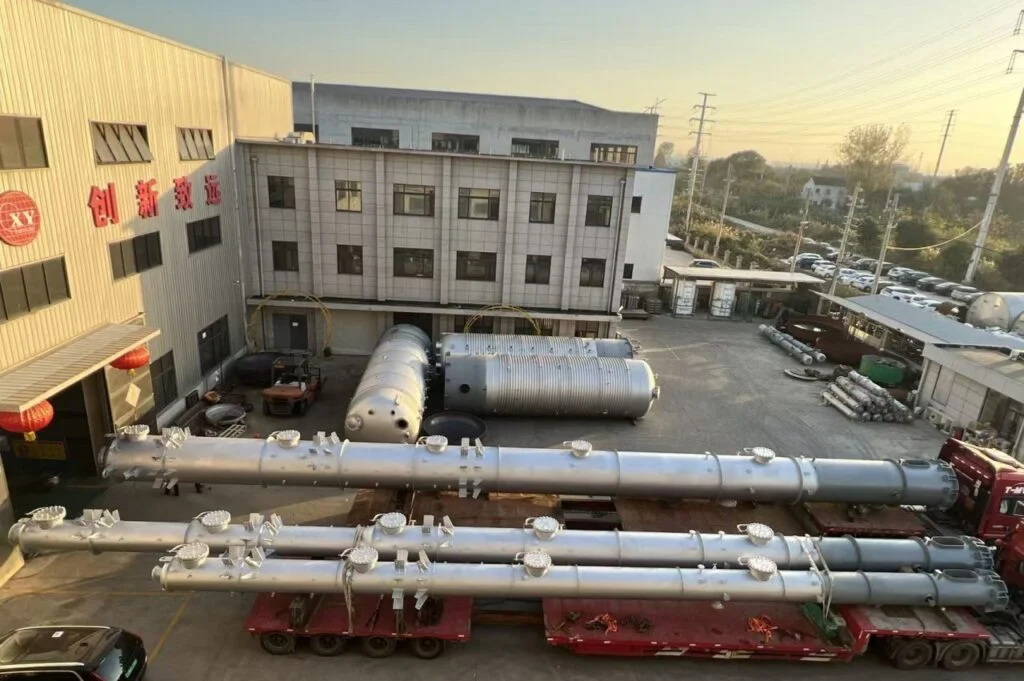
Next Step
Send the duty description — medium, solids loading, target permeate or filtrate quality, operating pressure and temperature, and required capacity — and the team at Jiangsu Xuyang Chemical Equipment Co., Ltd. can confirm whether a candle filter, a membrane system or a combined train fits the process.
Technical catalogue: 2026 Xuyang Pressure Vessel Catalog (PDF)
Website: www.xuyangequip.com
Email: alice@xuyangsang.com | WhatsApp: +86 18994707690
Address: No.9 Lianshan Road, Chengnan Park, Jingjiang, Jiangsu, China
Candle filtersMembrane separationCustom chemical equipmentASME U Stamp
Have Questions or Need More Details?
Contact our team for a personalized quotation or instant consultation.
Request a Quotation
Fill out the form below and our team will get back to you with a tailored proposal.
WhatsApp Direct Chat
Prefer to chat in real-time? Message us on WhatsApp for instant assistance & quick answers.
- Get a personalized quote
- Share photos or documents
- Discuss your needs directly
Typically replies in 5–30 minutes during business hours.