
Chemical Separation Equipment: A Buyer's Guide to Custom Chemical Equipment
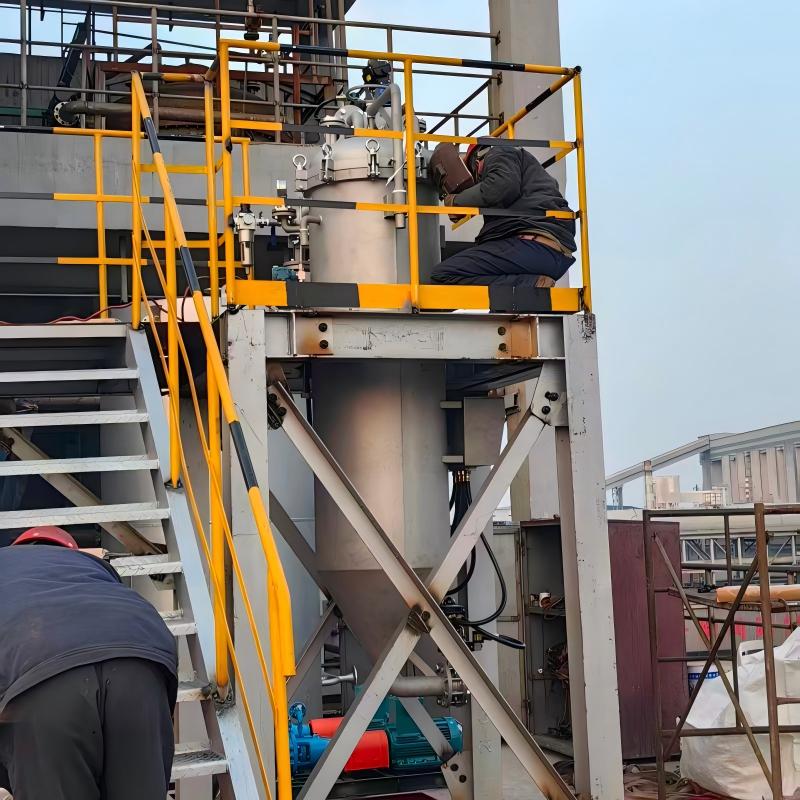
A candle filter is one of the core solid–liquid separation units in a custom chemical equipment package.
Chemical separation equipment is the group of process units that divide a mixed chemical stream into usable fractions. In practice it means filtration and membrane systems that remove solids or dissolved species, distillation and fractionation towers that separate components by volatility, and the supporting vessels — reactors, storage tanks and shell and tube heat exchangers — that allow the separation step to run as one system.
Buyers entering this category usually need two things at the same time: a clear map of what can be supplied, and an understanding of which process data actually determines the final design. Most of the cost and schedule risk in a separation project is created before a single drawing is released, because the equipment list is written before the duty is defined.
This guide covers the equipment families, the order in which a custom specification should be built, and the questions that turn a general inquiry into a quotable scope. Jiangsu Xuyang Chemical Equipment Co., Ltd. is a Chinese manufacturer of custom chemical equipment, established in 2009 and located in Jingjiang Economic and Technological Development Zone, Jiangsu Province, China. The company integrates R&D, engineering design, equipment manufacturing and import/export trade, and its portfolio includes chemical reactors, membrane separation and filtration equipment, candle filters, storage tanks, heat exchangers, towers, corrosion-resistant lined equipment, skid-mounted equipment and water treatment equipment.
Why Separation Projects Run Into Trouble Before the Equipment Is Selected
Separation performance is determined by the process, not by the vessel. A filter, a membrane skid or a distillation tower will only perform to its design basis, and that basis is built from feed composition, required product purity, throughput, operating pressure and temperature, solids loading, viscosity and corrosivity. When those inputs are missing, suppliers can only respond with indicative sizing, and the quotation that follows is a placeholder rather than a specification.
The second common problem is material selection driven by price rather than by the medium. Stainless steel grades such as SS304 and SS316L cover a wide range of chemical service, but corrosive media may require Hastelloy or titanium construction, and some duties are better handled with PTFE-lined equipment. A material decision taken on the basis of one operating point, without considering concentration and temperature excursions, tends to reappear later as a corrosion or contamination issue.
The third problem is unit thinking. A separation step rarely runs alone: it needs a feed vessel, a heat exchanger to reach the right temperature, a reactor upstream, and pumps and instrumentation to tie it together. When those units are engineered separately, the site integration work — piping, wiring, commissioning — becomes the schedule driver. This is the reason modular, skid-mounted configurations have become a standard option for separation and reaction packages.
What Is Changing in the Chemical Separation Equipment Market
Demand context matters at the research stage because it explains where suppliers are investing. The global separation machinery market was projected at USD 109 billion in 2026, growing at a 7.2% CAGR from 2026 to 2035 according to Global Market Insights Inc. The wider chemical processing equipment market is valued at USD 68.82 billion in 2026, with the chemicals and petrochemicals segment holding a 41.6% revenue share in 2025, according to SNS Insider market research.
Three drivers sit behind that activity. First, purity and yield targets in fine chemicals and pharmaceuticals continue to tighten, which pushes filtration accuracy, cake discharge control and distillation stage design upward. Second, solvent recovery and environmental compliance turn separation equipment into a cost-recovery and discharge-compliance asset rather than a pure process cost. Third, new-energy and battery-material production introduces additional demand for reactors, filtration and crystallization-related equipment built in corrosion-resistant materials.
Compliance is a visible cost line as well. Estimates cited by Fortune Business Insights suggest that compliance with ASME requirements can represent up to 20% of a pressure vessel's total material cost. That figure is a planning reference, not a quotation: the actual effect depends on the code division, inspection scope, material grade and documentation package required by the project.
Alongside these drivers, procurement teams increasingly ask for traceability. Manufacturing systems such as ERP and MES, documented inspection steps and factory acceptance testing are now part of how buyers compare suppliers, because they reduce the risk of unrecorded deviations between fabrication and delivery.
The Chemical Separation Equipment Map: What Each Family Does
Filtration and solid–liquid separation: candle filters
A candle filter separates solids from a liquid stream on cylindrical filter elements, and it is used where filtration precision, cake handling and cleaning access matter. Jiangsu Xuyang supplies candle filters as the SAC fully automatic candle filter, SBC fully automatic candle filter and CFS fully automatic filtration system. Published specifications list filtration area, filtration accuracy, operating pressure and operating temperature as customized values; filter media options include stainless steel, sintered mesh and filter cloth; and cake discharge can be configured as dry discharge, wet discharge or backwash.
Construction materials are SS304, SS316L, Hastelloy or a customized grade, with control available as manual, automatic or PLC-based and design standards quoted as ASME, GB or EN. Typical duties include solid–liquid separation, catalyst recovery, chemical filtration, pharmaceutical filtration and fine chemical processing.
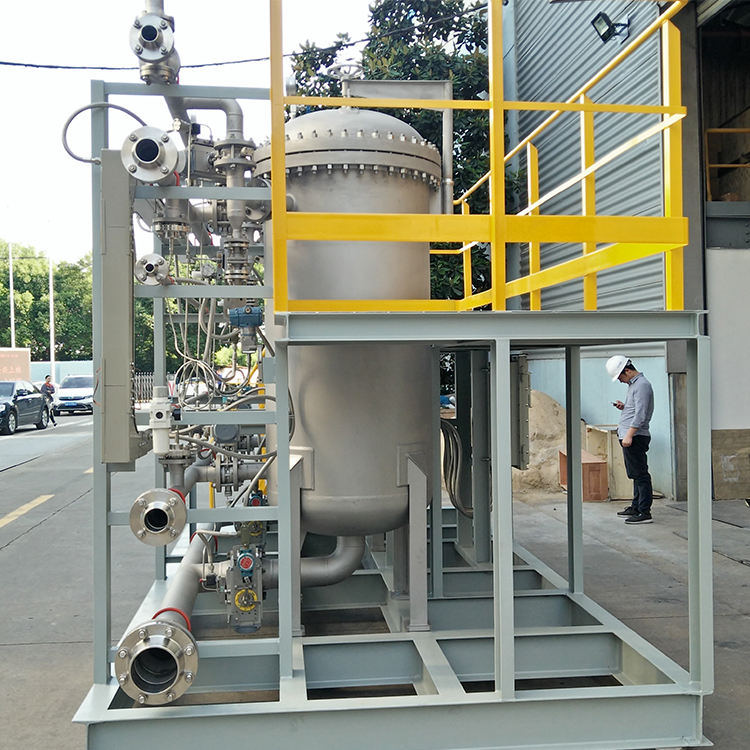
Candle filter configured for solid–liquid separation, with dry, wet or backwash cake discharge options.
Membrane separation and filtration equipment
Membrane systems handle separation at a finer scale — clarifying, purifying and concentrating liquid streams without a phase change. Membrane separation and filtration equipment from Jiangsu Xuyang is offered with MF, UF, NF, RO or MBR membrane types, membrane materials in PVDF, PES, PA or PTFE, and equipment materials in SS304, SS316L, FRP or PP. Ceramic membranes are listed as a primary material option for the equipment family.
Filtration accuracy, operating pressure and operating temperature are customized to the application, and cleaning can be configured as CIP, backwashing or chemical cleaning. Control ranges from manual through automatic to PLC-based, and the equipment is supplied as skid-mounted or as a customized industrial design. Documented applications are the chemical industry and oil industry, where the systems are used for separation, purification and concentration of liquid streams.
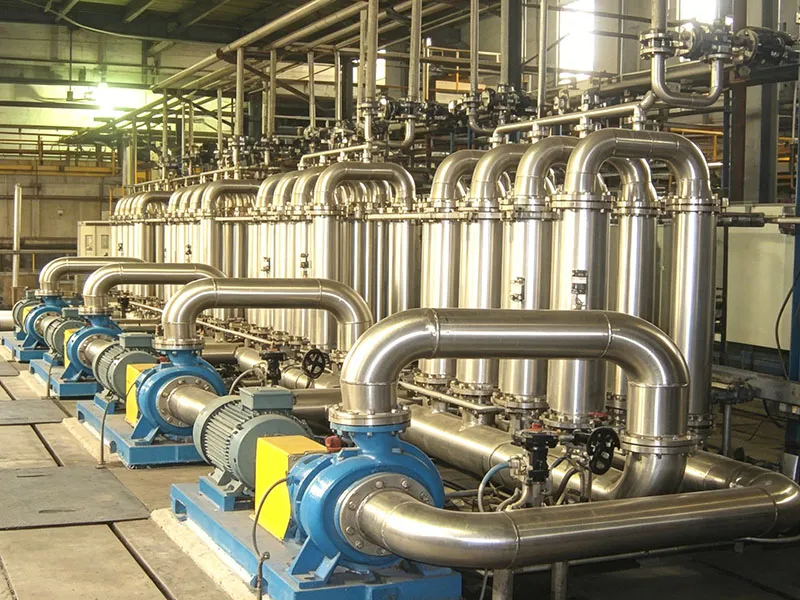
Membrane separation and filtration equipment, configurable with MF, UF, NF, RO or MBR membranes.
Distillation and fractionation towers
Where components differ in volatility, distillation remains the workhorse. Jiangsu Xuyang builds packed towers and tray towers, with random or structured packing and sieve, valve or bubble cap trays. Tower diameter, height, design capacity, feed composition, operating pressure and temperature and number of theoretical stages are all defined by the process, and the design is fully customized according to feed composition, required purity, capacity and separation requirements.
The tower can be supplied as a complete distillation system integrated with reboiler, condenser, reflux and automatic control. Reboiler options are kettle, thermosiphon or forced circulation; condenser options are shell and tube, plate or air-cooled; tower materials include carbon steel, SS304, SS316L, Hastelloy and titanium; and design standards are quoted as ASME, GB or EN. Typical application scenarios are chemical separation and solvent recovery.
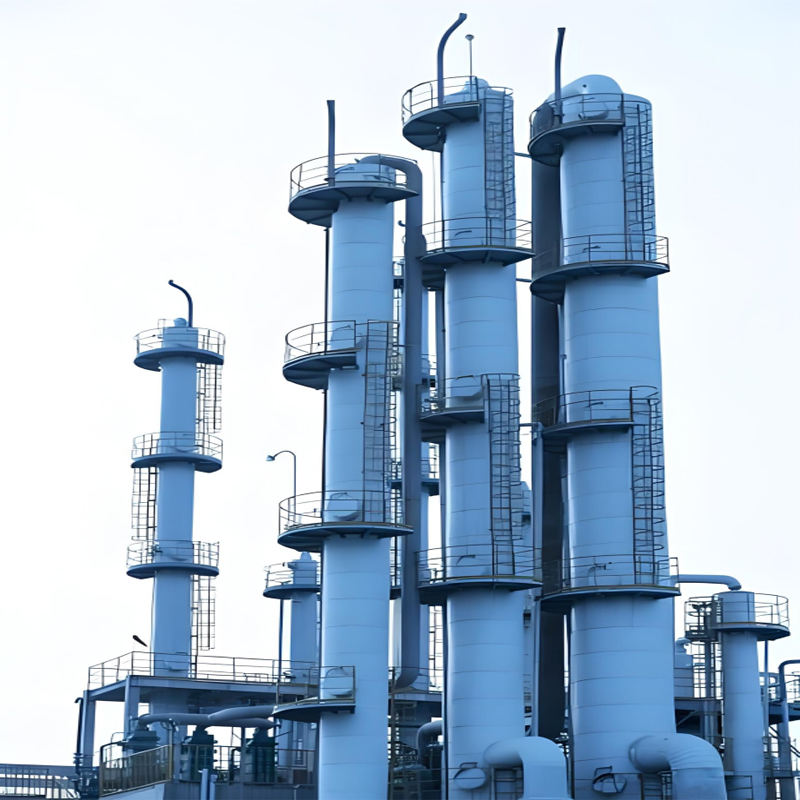
A distillation tower is sized from feed composition, required purity and separation requirements — not from a standard catalogue size.
The supporting equipment that determines separation reliability
Separation units depend on the equipment around them, and buying them as one scope removes a large share of interface risk.
- Reactors. Chemical reactors are available with volume customized from laboratory to industrial scale, in SS304, SS316L, carbon steel, Hastelloy, titanium or zirconium. Configurations include jacketed, electric heating, high pressure, external coil, Hastelloy reactors and titanium reactor vessels, with agitator types spanning anchor, paddle, turbine, ribbon and high-shear, and sealing by mechanical or magnetic seal.
- Shell and tube heat exchangers. Fixed tube sheet, floating head and U-tube designs are available, with shell materials in carbon steel, SS304, SS316L or Hastelloy and tubes in SS304, SS316L, titanium or Hastelloy. Tube passes, tube arrangement, baffle type and horizontal or vertical installation are project-specific, and design standards are quoted as ASME, GB, EN or TEMA.
- Storage tanks. Stainless steel and carbon steel storage tanks are supplied vertical or horizontal, with heating and cooling by jacket, half-pipe coil or external coil, optional insulation and agitation, and surface finishes including polished and pickled and passivated.
- Skid-mounted process equipment. Reactors, storage tanks, heat exchangers, filters and pumps can be integrated on a single skid, with pressure, temperature, flow and level instrumentation and PLC or DCS control, factory tested before shipment.
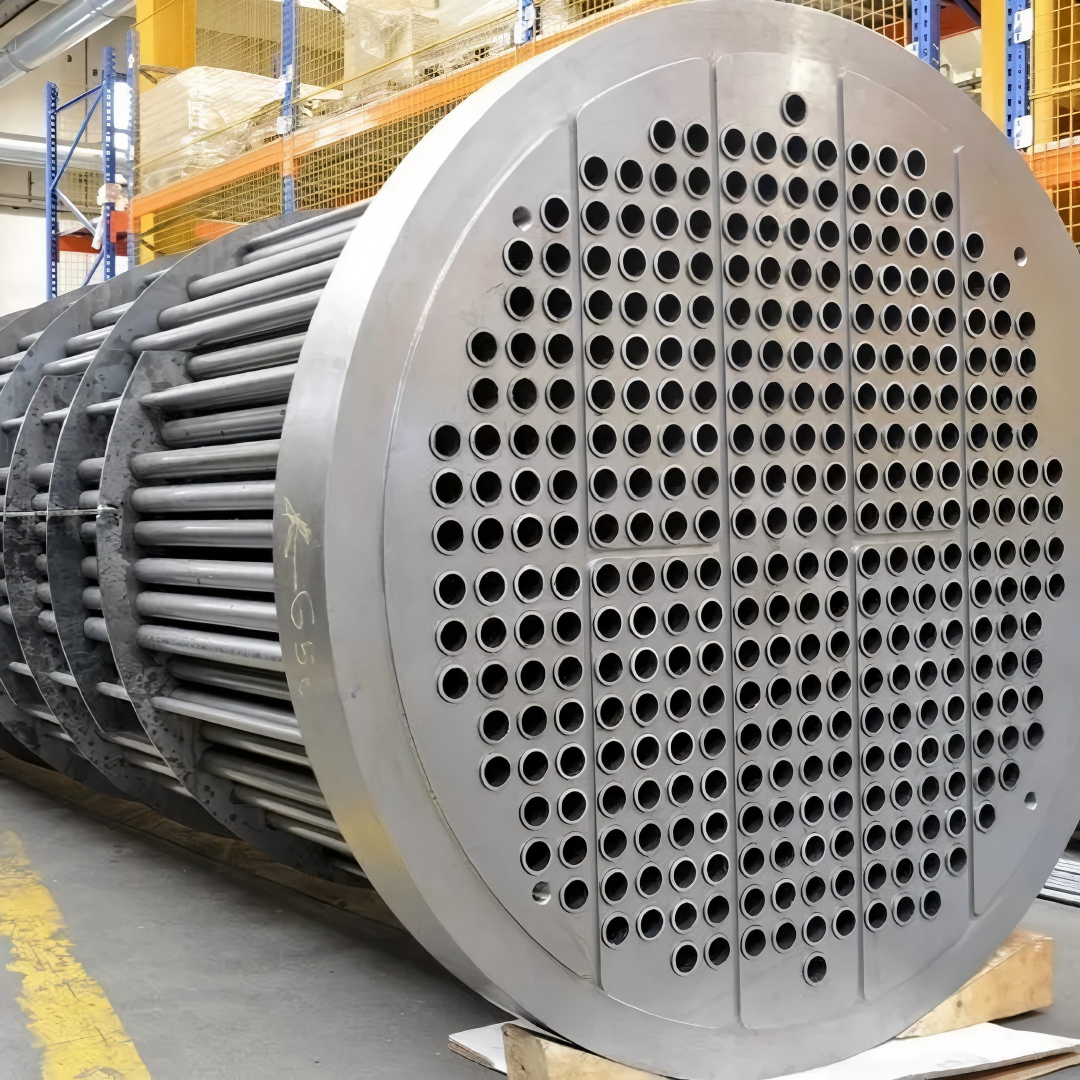
Shell and tube heat exchangers provide the heating, cooling and heat recovery duty that separation steps depend on.
Step-by-Step: How a Custom Separation Scope Is Actually Built
The sequence below reflects the information set a manufacturer needs before an accurate design and quotation can be issued. It is also the order in which the largest cost decisions are locked.
- Define the separation duty. State whether the goal is solid–liquid separation, dissolved-species removal, volatile-component fractionation or concentration of a liquid stream. Different duties point to different equipment families before any sizing begins.
- Fix the feed and product specification. Feed composition, required purity, capacity and separation requirements are the four inputs described in Jiangsu Xuyang's distillation design basis. The same logic applies to filtration: solids loading and target filtration accuracy determine filtration area and media.
- Select the separation technology. Candle filtration, membrane filtration and distillation are not interchangeable. Membrane systems suit clarification, purification and concentration of liquid streams; candle filters suit cake-forming solid–liquid duties and catalyst recovery; towers suit volatility-based fractionation and solvent recovery.
- Confirm the wetted material through a documented sequence. The working medium and product name, chemical composition and concentration, operating and design temperature, operating and design pressure including vacuum, required capacity, and corrosion-resistance or hygiene requirements are confirmed in that order before material selection is finalised.
- Set the mechanical design basis and code. Design pressure, design temperature, corrosion allowance, nozzle and connection requirements and the applicable standard — ASME, GB, EN, PED or TEMA for heat exchangers — are agreed at this stage, together with the inspection scope they imply.
- Define heating, cooling and agitation. Steam, thermal oil, electric heating or hot water on the heating side; cooling water, chilled water or air cooling on the cooling side; jacket, half-pipe coil or external coil for vessel heating; and anchor, paddle, turbine, ribbon or high-shear agitation where a reactor is in scope.
- Define instrumentation and control philosophy. Pressure, temperature, flow and level measurement with manual, automatic, PLC or DCS control. Control scope is one of the clearest cost differentiators between a basic unit and an integrated package.
- Agree testing and documentation. Factory testing can include FAT, hydrostatic test and leak test. For rotating elements, a dedicated agitator dynamic-balancing test workshop supports verification of agitator assemblies before shipment.
- Decide the integration level. Standalone equipment, or a skid-mounted package with piping, valves, instruments and control integrated on a single frame for indoor or outdoor installation. Skid integration shifts work from the site to the factory, which is usually the schedule argument for choosing it.
What the manufacturer brings to the specification
Design capacity on the supplier side matters as much as the equipment list. Jiangsu Xuyang reports a 10,000 m² manufacturing facility, approximately 110 staff, an annual production capacity of 1,000 units, RMB 81 million in registered capital and an R&D team of 7 engineers. The company holds an A2-level Special Equipment Design and Manufacturing License issued by the relevant Chinese authorities, and operates ISO 9001 quality, ISO 14001 environmental and ISO 45001 occupational health and safety management systems. It is recognised as a Jiangsu High-Tech Enterprise and a Jiangsu Specialized, Specialized and New Small/Medium-Sized Enterprise.
Technical development is supported by industry–university–research cooperation with Nanjing Tech University, China University of Petroleum and Soochow University, and by the establishment of Nanjing Xuyang High-End Equipment Research Co., Ltd. Recorded patented technologies include a non-standard high-pressure stainless-steel reactor, a chemical catalytic reaction reactor, a welding fixture for chemical reactor shells, a heat exchanger for heat recovery and a shell-and-tube condenser. The company also reports inspection and testing equipment, ERP and MES production management, and an intelligent manufacturing workshop used for process traceability from manufacturing through delivery.
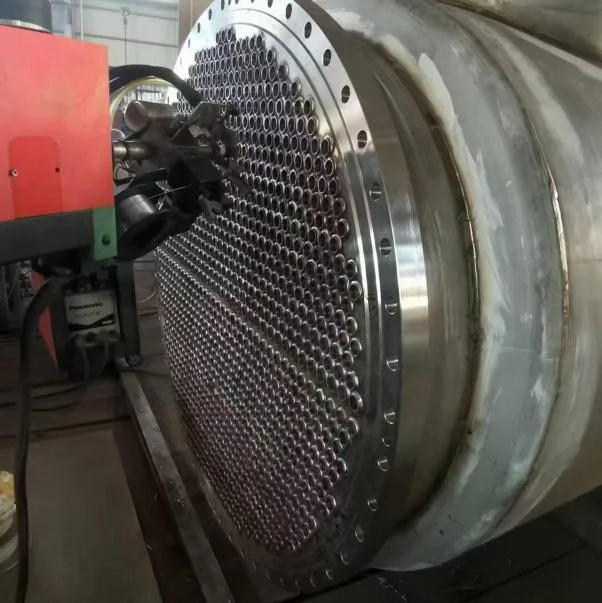
Automatic tube sheet welding is one of the fabrication steps that determines heat exchanger reliability in a separation package.
Use Cases: Where Separation Equipment Earns Its Place
Separation equipment is specified against a duty, and the same equipment family behaves very differently across industries. The application patterns below reflect the documented industry scope of these product families.
- Fine chemicals and catalyst recovery. Candle filters handle solid–liquid separation and catalyst recovery where the catalyst has to be recovered cleanly and the cake discharged in a controlled way. Dry, wet and backwash discharge options allow the cycle to match the downstream handling step.
- Pharmaceutical and biochemical processing. Filtration and membrane systems support clarification and purification where filtration accuracy and cleaning method — CIP, backwashing or chemical cleaning — influence both product quality and validation effort.
- Solvent recovery and environmental protection. Distillation towers combined with heat exchangers allow solvent recovery and fractionation, with the reboiler and condenser selection determining how much heat can be recovered inside the loop.
- New energy and battery materials. Reactors, filtration equipment and crystallization-related systems serve battery-material production, where Hastelloy and titanium construction are often specified for aggressive media.
- Polymer, resin and coatings. Reaction vessels with external coil or jacket heating and matched agitation handle viscous or heat-sensitive duties where temperature control across the batch is critical.
- Water treatment and discharge compliance. Membrane separation and filtration equipment is used for separation, purification and concentration of liquid streams, supporting recovery targets and discharge limits.
For reactor-based process projects, published application data describes a temperature range of -20 °C to 350 °C and a design pressure of 0.6 to 1.6 MPa, subject to medium-specific confirmation. Selection still depends on corrosivity, viscosity, pressure, sanitary requirements, sealing type, agitation method and explosion-proof requirements, and the exact standards and process parameters should be confirmed in the technical agreement.
Comparison Table: Separation and Supporting Equipment Options
The table below compares the equipment families described in this guide using their published specifications. It is a scope-mapping tool for early-stage buyers, not a cross-supplier performance benchmark.
| Equipment | Primary separation function | Material options | Key customizable parameters | Typical duty |
|---|---|---|---|---|
| Candle filter (SAC, SBC, CFS) | Solid–liquid separation with cake discharge | SS304, SS316L, Hastelloy, customized | Filtration area, filtration accuracy, operating pressure and temperature, filter media, discharge method, control | Catalyst recovery, chemical and pharmaceutical filtration, fine chemical processing |
| Membrane separation and filtration equipment | Separation, purification and concentration of liquid streams | SS304, SS316L, FRP, PP; ceramic membranes | Membrane type (MF, UF, NF, RO, MBR), membrane material, filtration accuracy, pressure and temperature, cleaning method, control | Chemical and oil industry liquid-stream purification and concentration |
| Distillation tower | Fractionation by volatility; solvent recovery | Carbon steel, SS304, SS316L, Hastelloy, titanium | Tower diameter and height, packing or tray type, theoretical stages, reboiler and condenser type, pressure and temperature, control | Chemical separation, purification, solvent recovery, bioethanol and biochemical duties |
| Shell and tube heat exchanger | Heating, cooling and heat recovery supporting the separation step | Shell: carbon steel, SS304, SS316L, Hastelloy. Tube: SS304, SS316L, titanium, Hastelloy | Heat transfer area, exchanger type (fixed tube sheet, floating head, U-tube), tube passes, baffle type, orientation, design pressure and temperature | Preheating feed, condenser and reboiler duty, heat recovery |
| Reactor (incl. external coil, high pressure, Hastelloy, titanium) | Reaction upstream or downstream of separation | SS304, SS316L, carbon steel, Hastelloy, titanium, zirconium | Volume from laboratory to industrial scale, pressure and temperature, agitation type, sealing, heating and cooling method, control | Chemical, fine chemical, pharmaceutical, polymer, battery-material reaction duties |
| Storage tank | Feed, intermediate and product holding | SS304, SS316L, carbon steel, Hastelloy, titanium, customized | Capacity, orientation, jacket or coil heating, insulation, agitation, surface finish, control | Chemical processing, water treatment, environmental protection scenarios |
| Skid-mounted process equipment | Integrated process package around the separation step | Carbon steel, SS304, SS316L, Hastelloy, titanium; skid frame in carbon steel, SS304 or SS316L | Process capacity, integrated equipment set, piping, instrumentation, PLC or DCS control, heating and cooling media, FAT scope | Modular chemical, pharmaceutical, solvent recovery and new-material process plants |
Specification values above are the published customization ranges for Jiangsu Xuyang Chemical Equipment Co., Ltd. product families. Final values are confirmed in the technical agreement for each project.
Frequently Asked Questions
1. Which standards and licenses should I verify when sourcing separation equipment from China?
Start with the pressure-equipment qualification, because separation equipment frequently includes vessels designed and fabricated under a pressure code. Jiangsu Xuyang holds an A2-level Special Equipment Design and Manufacturing License issued by the relevant Chinese authorities, and operates ISO 9001 quality, ISO 14001 environmental and ISO 45001 occupational health and safety management systems. On the technical side, product specifications quote design standards of ASME, GB, EN and PED, with TEMA also referenced for shell and tube heat exchangers; ASME U Stamp, CE and ISO are listed as certification options for reactors and storage tanks. ASME BPVC Section VIII is the code framework commonly cited for the design, analysis, fabrication, inspection and testing of pressure vessels, including heat exchangers, reactors and filters, but its legal applicability depends on the project's jurisdiction. Buyers should request certificate copies with scope, issuing body and validity dates rather than relying on a logo.
2. Can a custom chemical equipment manufacturer build separation equipment around my process data rather than a standard model?
Yes, when the process data is supplied. Jiangsu Xuyang states that distillation tower design is fully customized according to feed composition, required purity, capacity and separation requirements; that reactor volume is customizable from laboratory to industrial scale; and that filtration area, filtration accuracy, membrane type and operating conditions are defined per project. Material choice spans SS304, SS316L, carbon steel, Hastelloy, titanium and zirconium, with PTFE-lined equipment and piping for corrosion-resistant duties. Supporting capacity includes a 10,000 m² manufacturing facility, approximately 110 staff, an annual production capacity of 1,000 units and an R&D team of 7 engineers, with patented technologies covering high-pressure stainless-steel reactors, chemical catalytic reaction reactors, heat recovery heat exchangers and shell-and-tube condensers.
3. What drives the cost of custom separation equipment?
Four cost drivers dominate. Material selection is the largest: SS304 and SS316L are the standard stainless options, while Hastelloy, titanium, zirconium and PTFE lining are specified for corrosive or high-purity service and carry a different cost base. Design code is the second: estimates cited by Fortune Business Insights indicate ASME compliance can represent up to 20% of a pressure vessel's total material cost, so the inspection and documentation scope should be agreed early. The third is process surface and complexity — filtration area, heat transfer area, tower height and number of theoretical stages all scale with duty. The fourth is automation and integration: manual control versus PLC or DCS, and standalone equipment versus a skid-mounted package with piping, instrumentation and factory acceptance testing. A quotation without these four items defined cannot be compared like for like.
4. How can I validate a design before shipment?
Validation normally happens in three layers. The first is drawing review: Jiangsu Xuyang's R&D team prepares CAD or 3D designs from process parameters, material requirements and space constraints, and the approved drawing becomes the manufacturing basis. The second is factory testing: FAT, hydrostatic test and leak test can be performed before shipment, and functional testing applies to skid-mounted packages with integrated instrumentation and control. The third is documentation: inspection records, test reports and material certification travel with the equipment so that the receiving site can verify conformity. For rotating assemblies such as agitators, a dedicated dynamic-balancing test workshop is used to check assemblies before delivery.
5. What information do I need before requesting a quotation and delivery schedule?
Prepare a single information pack: equipment type (reactor, tank, heat exchanger, candle filter, membrane system or tower), capacity or volume, working medium, required material, operating and design pressure, operating and design temperature, vacuum requirement, heating and cooling method, agitation requirements, nozzle requirements, applicable standard (ASME or GB), site conditions and any existing drawings or specifications. Adding recent maintenance or modification history and, for existing equipment, clear photos, alarm messages and current operating parameters speeds up technical review. With that pack in hand, Jiangsu Xuyang can respond with a design basis and commercial proposal — the 2026 Xuyang Pressure Vessel Catalog is available for download at the brochure link, and sample, drawing and quotation requests can be sent directly to the contact below.
Conclusion: Build the Duty First, Then the Equipment List
Chemical separation equipment is a system decision. The filtration or membrane unit, the distillation tower, the reactor upstream and the heat exchangers that hold the temperature profile are all sized from the same process basis, and every one of them inherits the material and code decisions taken at the start. Buyers who define feed composition, purity, capacity, pressure, temperature and corrosion requirements before requesting drawings get comparable quotations; buyers who start with a vessel sketch usually pay for the re-design later.
For projects moving from research into evaluation, the practical next step is a documented specification pack and a short list of equipment families that match the duty. Jiangsu Xuyang Chemical Equipment Co., Ltd. supplies individual process units and integrated skid-mounted packages across reactors, filtration, membrane separation, distillation, heat transfer and storage, and supports the design basis with its A2-level Special Equipment Design and Manufacturing License and ISO management systems.
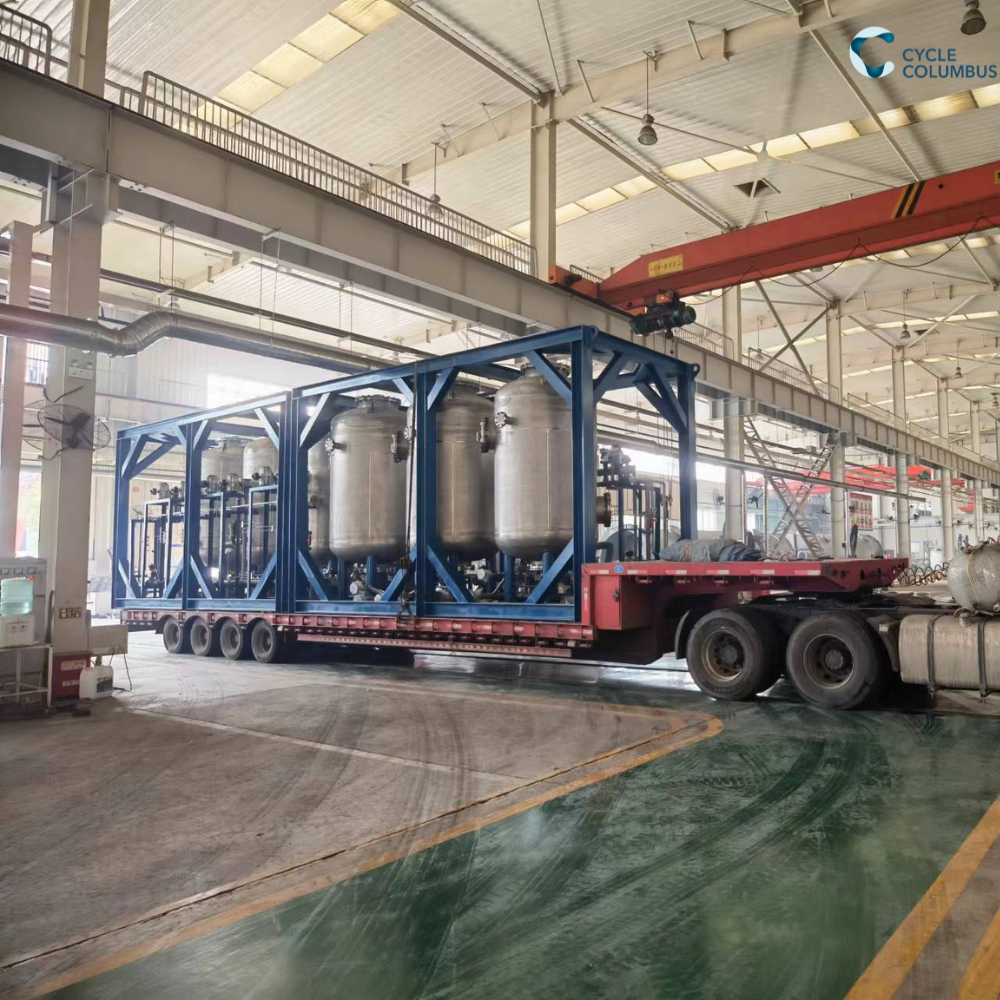
Skid-mounted packages integrate reactors, tanks, heat exchangers, filters and pumps with instrumentation and control on a single frame.
Request a Sample Discussion, Drawing or Quotation
Send your process parameters — equipment type, capacity, medium, material, design pressure and temperature — and the team will respond with a design basis and commercial proposal.
Jiangsu Xuyang Chemical Equipment Co., Ltd.
Address: No.9 Lianshan Road, Chengnan Park, Jingjiang, Jiangsu, China
Contact: Alice · Email: alice@xuyangsang.com · Mobile / WhatsApp: +86 18994707690
Website: xuyangequip.com
Catalog: 2026 Xuyang Pressure Vessel Catalog (PDF)
Have Questions or Need More Details?
Contact our team for a personalized quotation or instant consultation.
Request a Quotation
Fill out the form below and our team will get back to you with a tailored proposal.
WhatsApp Direct Chat
Prefer to chat in real-time? Message us on WhatsApp for instant assistance & quick answers.
- Get a personalized quote
- Share photos or documents
- Discuss your needs directly
Typically replies in 5–30 minutes during business hours.