
Supplier Evaluation for Custom Chemical Equipment: Capability Verification and Delivery Assurance
Custom chemical equipment is process equipment engineered to a buyer's own medium, operating conditions and drawings rather than selected from a catalogue. For a buyer at the awareness and research stage, the decisive question is not which supplier lists the widest product range, but which supplier can convert capability claims into drawings, test records, accepted standards and contractual terms that still hold during inspection and after delivery.
This guide sets out a supplier evaluation framework for custom chemical equipment covering reactors, towers, shell and tube heat exchangers, storage tanks, candle filters and membrane separation skids. It connects welding verification and drawing control to purchasing terms and acceptance criteria, so that multi-product orders can be assessed against evidence instead of impressions.
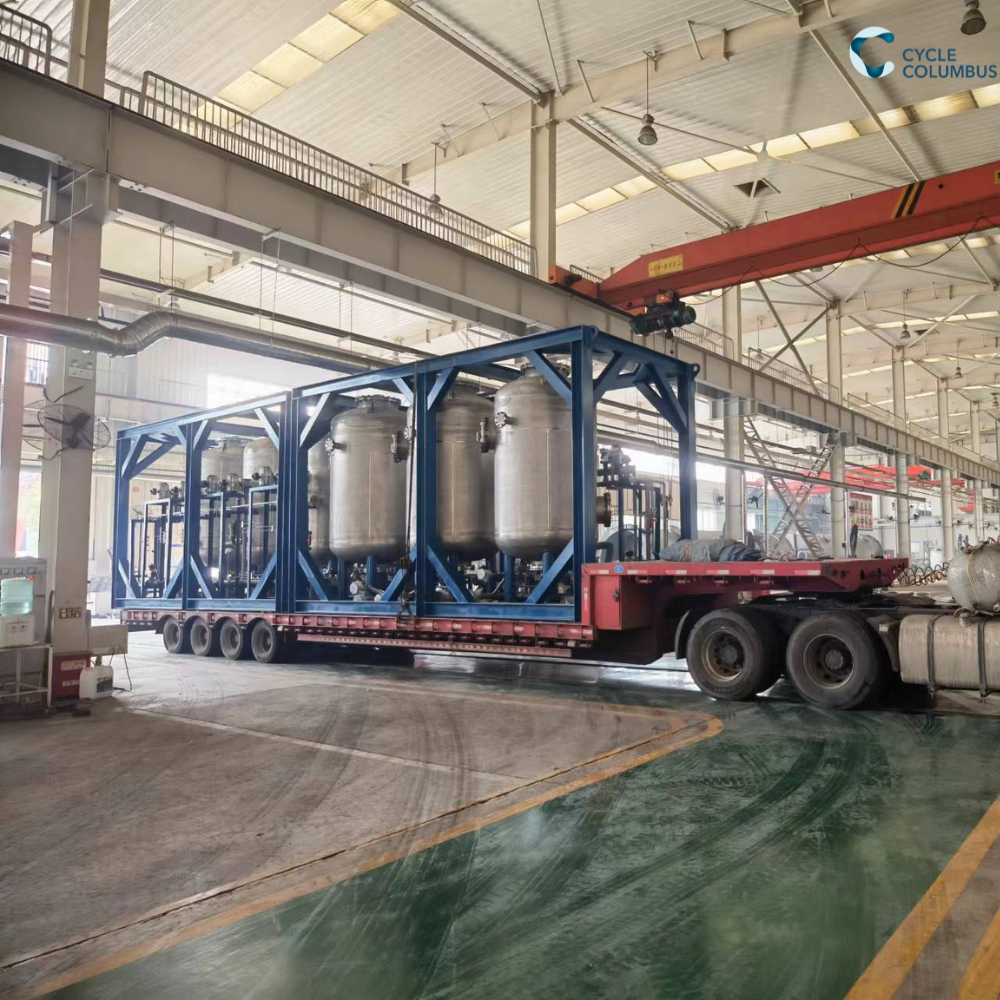
Problem Definition: Why Custom Equipment Resists Standard Supplier Checks
A custom vessel is defined by data a buyer supplies: working medium and concentration, operating and design pressure, operating and design temperature, vacuum condition, required capacity, corrosion allowance, heating and cooling method, agitator and seal arrangement, nozzle requirements and the applicable design standard. Two buyers rarely specify the same combination, so a supplier's reference list proves that equipment was built, not that the same engineering problem was solved.
Three failure modes repeat across custom equipment orders:
- Capability exists in the workshop but not in a documented procedure. A skilled welder is not the same asset as a qualified welding procedure with traceable records.
- The approved drawing is not the drawing that reaches fabrication. Revision drift after approval is a common source of dimensional and nozzle mismatch at site.
- Acceptance criteria stay verbal. When the test list, witness points and document deliverables are not written into the purchase order, the buyer has no contractual basis for rejection or rework.
The evaluation task, therefore, is to move every claim into one of three states: documented, witnessed, or contractual. Anything left outside those states is an assumption, not a verified capability.
Industry Background: Scale, Standards and Cost Pressure
The global chemical processing equipment market was valued at USD 64.80 billion in 2025 and is estimated at USD 68.82 billion in 2026, with a forecast of USD 105.30 billion by 2035, according to SNS Insider. The same source places the chemicals and petrochemicals segment at a 41.6% revenue share in 2025, which is the segment where custom reactors, towers, heat exchangers and separation equipment concentrate.
Cost pressure is structural rather than commercial. Fortune Business Insights estimates that compliance with ASME requirements can represent up to 20% of a pressure vessel's total material cost. That estimate explains why quotations for apparently similar vessels diverge: the gap is frequently documentation, material certification, non-destructive testing and stamp administration rather than steel weight.
O'Donnell Consulting summarises ASME Boiler and Pressure Vessel Code Section VIII as governing design, analysis, fabrication, inspection and testing of pressure vessels, including heat exchangers, reactors, filters and specialty vessels. In China, pressure-vessel engineering and manufacturing is tied to a Special Equipment Design and Manufacturing License, and Jiangsu Xuyang Chemical Equipment Co., Ltd. states that it holds an A2-level Special Equipment Design and Manufacturing License.
Jiangsu Xuyang Chemical Equipment Co., Ltd. is a chemical equipment manufacturer established in 2009 and located in Jingjiang Economic and Technological Development Zone, Jiangsu Province, China. The company integrates R&D, engineering design, equipment manufacturing and import/export trade, and serves the chemical, environmental protection, pharmaceutical, fermentation, food, new-material and lithium-related industries.
Detailed Solution: A Five-Layer Supplier Evaluation Framework
Layer 1 — Entity and Scope Verification
Start with the legal entity and the documented product scope. Jiangsu Xuyang states that it holds an A2-level Special Equipment Design and Manufacturing License and operates ISO 9001, ISO 14001 and ISO 45001 management systems. Its documented product scope covers chemical reactors, membrane separation and filtration equipment, candle filters, storage tanks, heat exchangers, towers, corrosion-resistant lined equipment, skid-mounted equipment and water treatment equipment.
The buyer action is specific: request the license and certificate copies, confirm that the stated scope covers the exact equipment type and material being purchased, and confirm which legal entity will sign the contract and issue the documentation package. A certificate that covers a different product category, or a different company within a group, does not transfer to the purchase order.
Layer 2 — Drawing and Design Verification
Custom equipment begins with a data sheet, not a model number. The company states that it provides CAD or 3D designs based on process parameters, material requirements and space constraints, supported by an R&D team of 7 engineers and industry-university-research cooperation with Nanjing Tech University, China University of Petroleum and Soochow University.
A complete design brief for evaluation should record equipment type (reactor, tank, heat exchanger or candle filter), capacity or volume, medium, material, operating and design pressure, operating and design temperature, vacuum requirement, heating or cooling method, agitator requirements, nozzle requirements, applicable standard (ASME or GB), site conditions, and any existing drawings or specifications the buyer already holds. Volume for reactors is customized from laboratory to industrial scale, and materials span carbon steel, SS304, SS316L, Hastelloy, Titanium and Zirconium, with PTFE-lined options for corrosion service.
Design standards documented across the product range include ASME, GB, EN and PED, with TEMA also listed for shell and tube heat exchangers. Revision control is the second test: the approved drawing revision must be the revision released to fabrication, and any change after approval should be re-approved in writing before cutting starts.
Layer 3 — Fabrication and Welding Verification
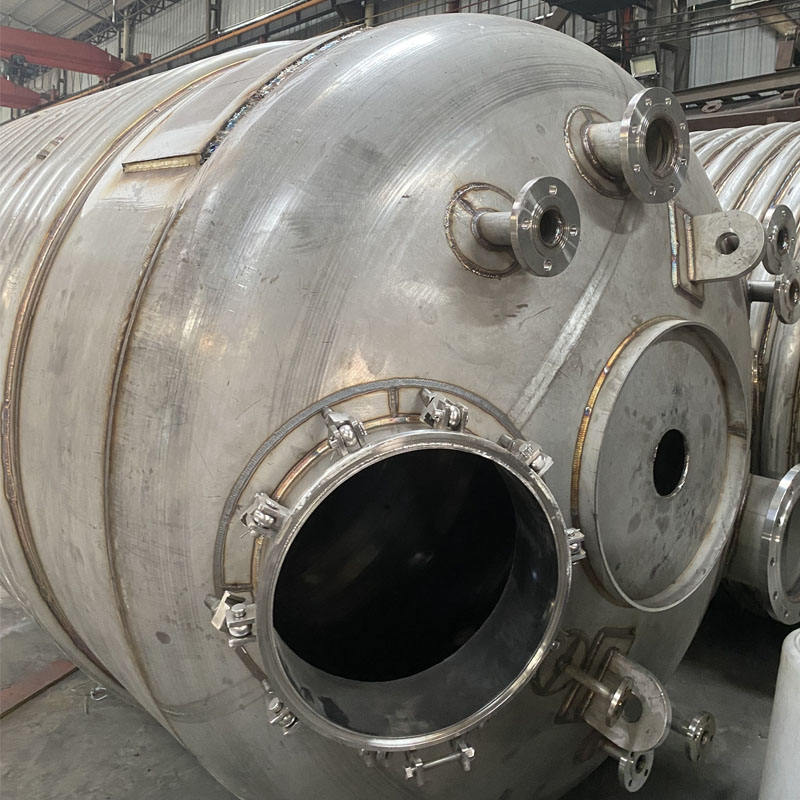
Welding is the point where a pressure-vessel claim becomes either evidence or exposure. The company states that it uses plasma and deep penetration automated welding technologies, and that every vessel undergoes X-ray detection (NDT), hydraulic pressure tests and surface roughness inspections.
The inspection sequence the company describes runs from material inspection and joint preparation through fit-up inspection, pre-welding inspection, welding process control, visual inspection, NDT inspection, pressure or leak testing and final inspection, ending with quality documentation. For a buyer, that sequence maps directly onto a list of documents to request before fabrication begins: welding procedure specifications and their qualification records, welder qualification records, the NDT procedure with its acceptance level, radiographic or digital detector records, and the hold points at which the buyer or an appointed inspector may witness work.
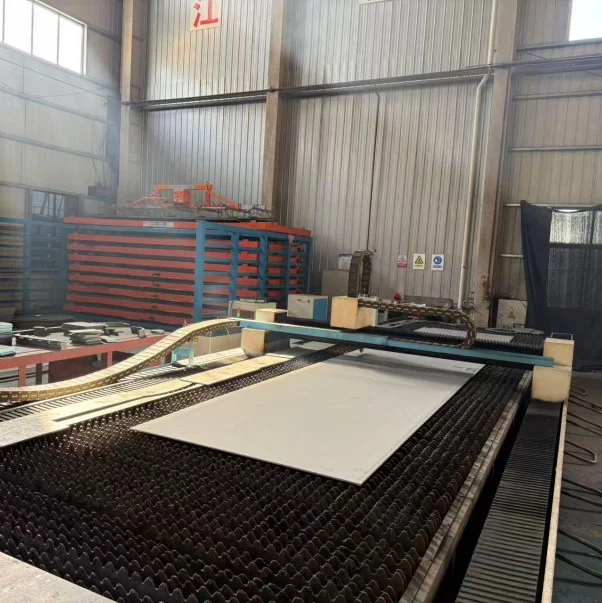
Supporting assets matter here. The company reports a dedicated agitator dynamic-balancing test workshop and inspection and testing equipment, and states that it uses ERP and MES production-management systems to improve process traceability from manufacturing through delivery. Traceability claims should be tested, not accepted: ask for one sample heat number and follow it from mill certificate to vessel marking.
Layer 4 — Testing and Acceptance Verification
Factory testing documented for skid-mounted equipment includes FAT, hydrostatic test and leak test. Control can be PLC, DCS or automatic operation, with instrumentation covering pressure, temperature, flow and level. For reactors, sealing options are mechanical or magnetic, and agitator options include anchor, paddle, turbine, ribbon and high-shear designs.
These are the raw materials of an acceptance clause. The purchase order should state which tests apply, to which standard, who witnesses them, and which documents must be delivered: material test certificates, NDT reports, hydrostatic test records, surface finish records, the FAT report and the packing list. Surface finish should be specified with a measurable value where the process requires it, because polished, pickled and passivated finishes are separate treatments rather than interchangeable descriptions.
Layer 5 — Commercial and Delivery-Term Verification
Delivery assurance on a multi-product order is a scheduling and interface problem as much as a manufacturing one. A single order may combine a reactor, a storage tank, a shell and tube heat exchanger, a candle filter and a skid-mounted package that integrates vessels, pumps, piping, valves, instruments and controls on one frame. Someone must own the interfaces between those items, and that responsibility belongs in the contract, not in correspondence.
The company reports a 10,000 m² manufacturing facility, approximately 110 staff, annual output of 1,000 units and RMB 81 million in registered capital, together with a stated 24-hour service commitment. These figures are company-reported; they are useful for planning conversations and should be confirmed through a factory audit or reference checks when order volume or schedule risk is significant.
Step-by-Step Breakdown: Running the Evaluation from First Contact to Purchase Order
- Issue a process data sheet, not a request for a price. Include medium and concentration, operating and design pressure and temperature, vacuum condition, required capacity, material preference, heating and cooling method, agitation and seal requirements, nozzle list, applicable standard and site conditions.
- Request entity and certificate documents. Ask for the A2 Special Equipment Design and Manufacturing License, ISO 9001, ISO 14001 and ISO 45001 certificates, and any ASME U Stamp or CE documentation claimed for the specific equipment type. Check issuer, number, scope and validity date.
- Request a drawing-based technical proposal. The response should include a general arrangement drawing, nozzle schedule, material specification, design standard and, where offered, CAD or 3D design output.
- Agree the inspection and test plan before fabrication. Fix the hold points, witness points and review points, and name who attends each.
- Verify welding and NDT records. Review procedure qualifications, welder qualifications and NDT acceptance levels, then confirm that radiographic or digital records will be delivered with the equipment.
- Write acceptance criteria into the purchase order. Specify tests, standards, document deliverables, surface finish values, dimensional tolerances and the consequence of non-conformance.
- Agree delivery, packaging and multi-item coordination. Define the shipment schedule per item, packaging protection, marking, loading responsibility and who owns cross-item interface design.
- Agree the after-sales information path. The company requests equipment name, model and serial number, PO or contract number and purchase date, a description of the fault, current operating pressure, temperature and medium, photos or video, alarm messages or error codes, and recent maintenance or modification details to support a technical response.
Use Cases: Where the Framework Changes the Outcome
Replacing a Multi-Product Process Line
When a buyer replaces a reactor, a heat exchanger and a storage tank in one project, the risk is not the individual vessels but their interfaces: shared utilities, nozzle alignment, control signals and commissioning sequence. Evaluating the supplier on one integrated scope, with one inspection and test plan and one documentation index, prevents three separate acceptance conversations from producing three incompatible outcomes.
Corrosive and High-Pressure Duty
For aggressive media, material selection becomes the dominant variable. The company's documented options include Hastelloy reactor equipment, titanium reactor vessel construction, titanium shell and tube heat exchangers, PTFE-lined equipment and piping, and external coil reactor configurations. Each of these changes welding procedure, NDT method and post-weld treatment, so the buyer should ask for procedure qualification records specific to the material being quoted rather than for a general capability statement.
Filtration and Separation Sections
A candle filter section and a membrane separation skid are specified by different parameters than a reactor. Candle filter documentation covers filtration area, filtration accuracy, operating pressure and temperature, filter media (stainless steel, sintered mesh or filter cloth), cake discharge method (dry, wet or backwash) and control mode (manual, automatic or PLC). Membrane equipment is specified by membrane type (MF, UF, NF, RO or MBR), membrane material (PVDF, PES, PA or PTFE), equipment material (SS304, SS316L, FRP or PP), cleaning regime (CIP, backwashing or chemical cleaning) and skid configuration. Comparing these items requires category-specific verification, not a single equipment checklist.
Export Projects with Code Requirements
For export projects, the applicable code and the acceptance authority must be settled before design starts. Design standards documented across the range include ASME, GB, EN and PED, and certification options listed for storage tanks and reactors include ASME U Stamp, CE and ISO. Where a notified body, third-party inspector or insurer must witness testing, that requirement should appear in the inspection and test plan, not be introduced after fabrication.
Comparison Table: Verification Priorities by Equipment Category
The table summarises what a buyer should verify per equipment category, using the parameters and standards documented in the supplier's product information. It is a verification map, not a performance ranking.
| Equipment category | Primary verification focus | Documents to request | Documented supplier parameters |
|---|---|---|---|
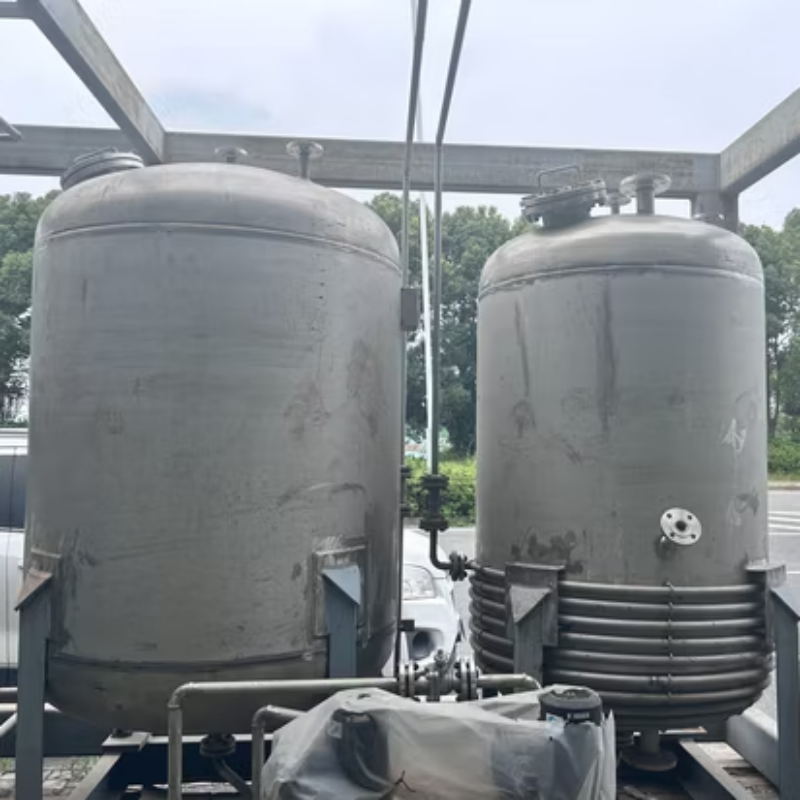
| Chemical reactor / industrial chemical reactor (including stainless steel reactor, high pressure reactor, external coil reactor, PTFE lined reactor, Hastelloy and titanium reactor equipment) | Material versus medium, design pressure and temperature, agitator and seal selection, jacketed or coil heating | Design calculation, material certificates, welding and NDT records, hydrostatic test record, seal and agitator data | Volume customized from laboratory to industrial scale; SS304, SS316L, carbon steel, Hastelloy, Titanium, Zirconium; heating by steam, thermal oil or electric; mechanical or magnetic seal; standards ASME, GB, EN, PED |
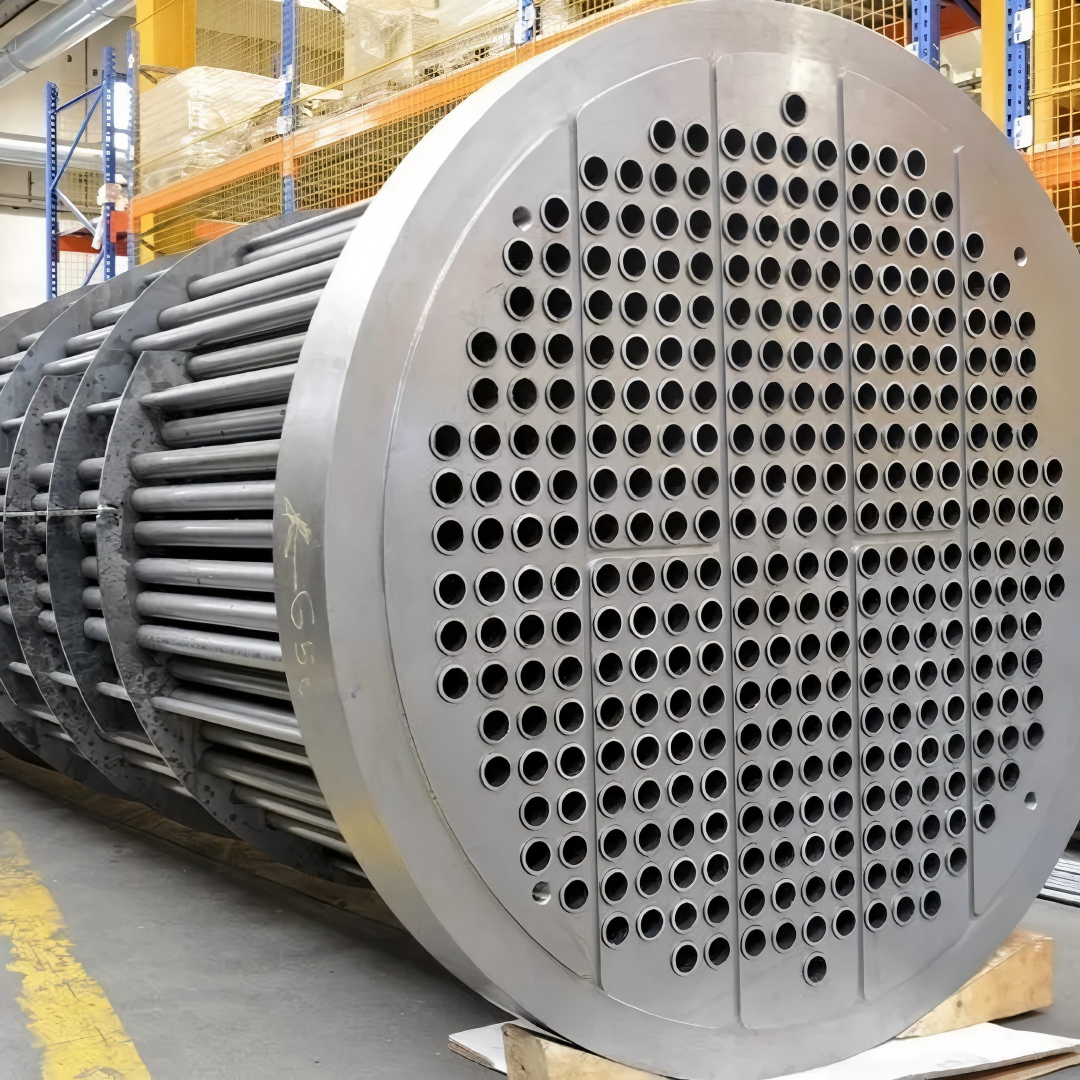
| Shell and tube heat exchanger (including titanium shell and tube heat exchanger) | Thermal duty, tube and shell material pairing, tube configuration, pressure drop, maintenance access | Thermal design sheet, tube-to-tubesheet joint details, material certificates, pressure test record | Fixed tube sheet, floating head or U-tube; shell in carbon steel, SS304, SS316L or Hastelloy; tubes in SS304, SS316L, titanium, Hastelloy or customized; standards ASME, GB, EN, TEMA |
| Storage tank (vertical, horizontal, external coil, stainless steel storage tank) | Capacity, orientation, heating and cooling method, surface finish, site installation limits | General arrangement drawing, nozzle schedule, surface finish record, test record | Material SS304, SS316L, carbon steel, Hastelloy, Titanium; jacket, half-pipe coil or external coil; polished or pickled and passivated finish; standards ASME, GB, EN, PED; certification options ASME U Stamp, CE, ISO |
| Tower (distillation and separation) | Separation duty, stage count, packing or tray selection, reboiler and condenser integration | Process design basis, internals specification, material certificates, test records | Packed or tray tower; random or structured packing; sieve, valve or bubble cap trays; kettle, thermosiphon or forced circulation reboiler; material up to Hastelloy and Titanium; standards ASME, GB, EN |
| Candle filter (SAC, SBC, CFS) | Filtration area and accuracy, filter media, cake discharge method, cleaning regime | Filtration calculation, media specification, control philosophy, factory test record | Filter media stainless steel, sintered mesh or filter cloth; dry, wet or backwash cake discharge; manual, automatic or PLC control; material SS304, SS316L, Hastelloy; standards ASME, GB, EN |
| Membrane separation and filtration equipment | Membrane type and material, recovery rate, cleaning and backwash design, skid footprint | Process flow diagram, membrane specification, cleaning procedure, factory acceptance test record | MF, UF, NF, RO or MBR membranes; PVDF, PES, PA or PTFE membrane material; equipment in SS304, SS316L, FRP or PP; CIP, backwashing or chemical cleaning; PLC control |
| Skid-mounted process equipment | Interface ownership, integrated control, factory testing before shipment, transport and relocation | P&ID, instrument list, FAT procedure and report, hydrostatic and leak test records, packing list | Reactor, storage tank, heat exchanger, filter and pump integrated on one skid; carbon steel, SS304, SS316L, Hastelloy or titanium; PLC or DCS control; FAT, hydrostatic test and leak test |
FAQ
What certifications should a custom chemical equipment supplier provide?
A supplier should provide its special equipment manufacturing license, its quality and management system certificates, and the product-level standards and certifications that apply to the specific equipment being purchased. Jiangsu Xuyang states that it holds an A2-level Special Equipment Design and Manufacturing License and operates ISO 9001, ISO 14001 and ISO 45001 systems. Its product documentation lists ASME, GB, EN and PED as design standards, with TEMA additionally listed for shell and tube heat exchangers, and lists ASME U Stamp, CE and ISO as certification options for storage tanks and reactors. Buyers should request certificate copies and confirm issuer, number, scope and validity, because public marketplace claims about a Manufacture License of Special Equipment and ISO 9001:2015 were not independently verified in the public record.
How is welding quality verified on pressure vessels?
Verification combines a qualified procedure, qualified welders and documented inspection. The company states that it uses plasma and deep penetration automated welding technologies, and that every vessel undergoes X-ray detection (NDT), hydraulic pressure tests and surface roughness inspections. The documented inspection sequence is material inspection, joint preparation, fit-up inspection, pre-welding inspection, welding process control, visual inspection, NDT inspection, pressure or leak testing, final inspection and quality documentation. Buyers should request procedure and welder qualification records, the NDT procedure with acceptance level, the recorded results, and agreement on witness points before fabrication begins.
Can equipment be built to specific drawings and process parameters?
Yes. The company states that it provides CAD or 3D designs based on process parameters, material requirements and space constraints, supported by an R&D team of 7 engineers. A workable drawing brief covers equipment type, capacity or volume, medium, material, operating and design pressure, operating and design temperature, vacuum requirement, heating or cooling method, agitator requirements, nozzle requirements, applicable standard (ASME or GB), site conditions, and any existing drawings or specifications. Reactor volume is customized from laboratory to industrial scale, and materials include carbon steel, SS304, SS316L, Hastelloy, Titanium and Zirconium.
What drives the cost of a custom chemical equipment order?
Four variables dominate. The first is material grade: carbon steel, SS304, SS316L, Hastelloy, Titanium, Zirconium and PTFE-lined construction carry different procurement and fabrication costs. The second is code compliance: Fortune Business Insights estimates that ASME compliance can represent up to 20% of a pressure vessel's total material cost. The third is testing and documentation scope, including NDT methods, hydrostatic and leak testing, FAT and the depth of the document package. The fourth is integration level, since a skid-mounted package combining vessels, piping, instruments and PLC or DCS control carries engineering hours that individual vessels do not. Buyers should compare quotations against the same data sheet and the same inspection and test plan, not against a headline unit price.
How should a buyer start the evaluation and move to a quotation?
Send the process data sheet and any existing drawings, then request a drawing-based technical proposal with the applicable standard, material specification and preliminary inspection and test plan. Jiangsu Xuyang accepts enquiries through Alice at alice@xuyangsang.com, telephone and WhatsApp +86 18994707690, and can supply CAD or 3D design output and factory test documentation for review before a purchase order is placed.
Conclusion
Supplier evaluation for custom chemical equipment is a documentation exercise before it is a commercial one. The supplier that can show a license with a valid scope, a drawing revision that matches the approved release, welding and NDT records tied to a specific vessel, a defined inspection and test plan, and acceptance criteria written into the purchase order is the supplier whose delivery commitments can be enforced.
Applied across reactors, towers, shell and tube heat exchangers, storage tanks, candle filters and membrane skids, the five-layer framework turns a multi-product enquiry into a set of verifiable checkpoints. Capability is then assessed on evidence rather than on adjectives, and delivery assurance rests on terms rather than on expectation.
Next Step: Request a Drawing-Based Review
Share your process data sheet, medium, design pressure and temperature, and material requirements. Jiangsu Xuyang Chemical Equipment Co., Ltd. can respond with a technical proposal, applicable standard, and preliminary inspection and test plan for reactors, towers, heat exchangers, storage tanks, candle filters and skid-mounted systems.
Email: alice@xuyangsang.com | Telephone / WhatsApp: +86 18994707690 | Website: www.xuyangequip.com
Address: No.9 Lianshan Road, Chengnan Park, Jingjiang, Jiangsu, China
Download the pressure vessel catalogue: 2026 Xuyang Pressure Vessel Catalog (PDF)
Have Questions or Need More Details?
Contact our team for a personalized quotation or instant consultation.
Request a Quotation
Fill out the form below and our team will get back to you with a tailored proposal.
WhatsApp Direct Chat
Prefer to chat in real-time? Message us on WhatsApp for instant assistance & quick answers.
- Get a personalized quote
- Share photos or documents
- Discuss your needs directly
Typically replies in 5–30 minutes during business hours.