
Skid-Mounted Membrane Separation for Water Treatment and Liquid Concentration: Application Guide
A skid-mounted membrane separation package is a membrane filtration system — membrane modules, feed and circulation pumps, valves, piping, instruments and a control panel — assembled on one steel frame, tested in the factory and delivered as a single unit. For water treatment and liquid concentration projects, that packaging decision changes what happens on site: piping and civil work shrink, commissioning becomes a matter of connecting utilities, and the separation performance validated before shipment is the performance the plant starts up with.
The format is supplied by Jiangsu Xuyang Chemical Equipment Co., Ltd., a chemical equipment manufacturer established in 2009 in the Jingjiang Economic and Technological Development Zone, Jiangsu Province, China. The company's product scope covers membrane separation and filtration equipment, skid-mounted equipment, water treatment equipment, reactors, storage tanks, heat exchangers, towers and corrosion-resistant lined equipment, and it serves chemical, environmental protection, pharmaceutical, fermentation, food, new-material and lithium-related industries.
Problem Definition: Where Membrane Projects Usually Go Wrong
Membrane projects rarely fail because the membrane is wrong. They fail because adjacent specifications do not agree. A membrane type is chosen for the filtration accuracy it delivers, but the membrane material is then selected for cost rather than for the cleaning chemistry the plant will actually run. A skid is ordered with modules and piping but without the feed tank, cleaning skid and PLC that the duty requires, so the “package” arrives as a component set. Equipment material is fixed at SS304 while the liquid stream carries chlorides that will attack it within the first year of operation.
Each of these mismatches turns into either a design change after drawing approval or a commissioning problem that the operations team inherits. For a buyer working through research and evaluation, the decision is not simply whether to use membrane separation. It is which combination of membrane type, membrane material, equipment material, capacity, operating pressure, operating temperature, filtration accuracy and package scope will hold together across the life of the plant.
Three constraints drive most of the difficulty in this decision. The first is that separation duty and cleaning chemistry pull in different directions: the membrane that tolerates aggressive chemical cleaning is not always the membrane with the tightest pore structure. The second is that equipment material has to satisfy the liquid, the cleaning agents and the site's corrosion allowance at the same time. The third is site integration — a membrane plant built from loose components requires civil works, field piping, field wiring and multi-party commissioning that a packaged system removes.
Industry Background: Why Packaged Separation Is Being Specified More Often
Demand for separation equipment is broadening rather than concentrating. The global chemical processing equipment market was valued at approximately USD 68.82 billion in 2026, and the chemicals and petrochemicals segment accounted for a 41.6% revenue share of that market in 2025 (SNS Insider, 2026). The separation machinery category — the equipment family that includes membranes and filters — was projected at around USD 109 billion in 2026, with a 7.2% CAGR forecast through 2035 (Global Market Insights, as published in a public market report).
For a project buyer, the useful reading of those figures is not market size but availability of options. Membrane separation now appears in effluent treatment and reuse, product concentration and recovery, solvent and process-liquid polishing, and in the water side of battery-material and new-material plants — not only in dedicated water-treatment facilities. When the same separation duty appears across industries, suppliers respond by packaging the technology rather than selling it as a set of components, because the buyers in those industries are process engineers and project teams, not membrane specialists.
A second background factor is standards pressure. Pressure-containing equipment in a membrane skid is often designed to ASME, GB, EN or PED frameworks, and compliance with ASME provisions has been estimated to represent up to 20% of a pressure vessel's total material cost (Fortune Business Insights, 2026). That cost is real, but it is also the reason packaged systems are attractive: a single qualified fabricator applies the standard once, across the whole skid, instead of the buyer coordinating compliance across several vendors.
Detailed Solution: Matching Membrane, Material and Package to the Duty
The application logic for a packaged membrane system runs in a fixed order: membrane type first, membrane material second, equipment material third, then the customised process parameters, and finally the package scope and control philosophy. Handling those in sequence avoids the circular revisions that make membrane projects slow.
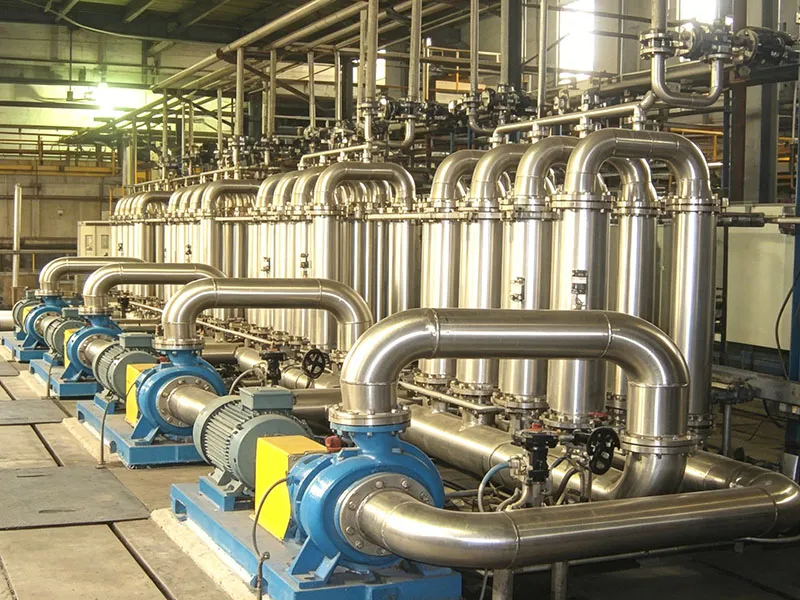
Skid-mounted membrane separation and filtration equipment — membrane modules, pumps, piping, instrumentation and control integrated on a single frame.
1. Membrane type defines what the system can separate
The membrane separation and filtration equipment range covers five membrane types — MF, UF, NF, RO and MBR — and the type is the primary determinant of what the skid can achieve. The distinction is not a matter of degree; each type occupies a different separation band and produces a different concentrate and permeate stream.
- MF (microfiltration) removes suspended solids, turbidity and larger particulate matter. It is typically positioned as a clarification or pre-treatment stage ahead of tighter membranes, and it is where a project first decides whether gross solids need to be taken out before the liquid reaches the separation membrane.
- UF (ultrafiltration) removes colloids, macromolecules, proteins and fine suspended solids. In liquid concentration duties it is often used to fractionate or to clarify a product stream before further concentration.
- NF (nanofiltration) sits between ultrafiltration and reverse osmosis. It is commonly specified where partial demineralisation or the separation of dissolved species is needed without the full salt rejection of RO.
- RO (reverse osmosis) is the tightest of the four pressure-driven types and is used for demineralisation and for concentrating dissolved solids by removing water from the stream.
- MBR (membrane bioreactor) combines biological treatment with membrane separation, keeping biomass in the system and producing a clarified permeate. It is the type most often specified where the duty is biological treatment plus solids separation in one stage.
2. Membrane material determines chemical tolerance and cleaning strategy
Once the type is fixed, the membrane material decides how the system will be cleaned and how long the elements survive the duty. The equipment is offered with PVDF, PES, PA and PTFE membranes. In general commercial practice, PVDF is widely used for MF, UF and MBR duties where resistance to oxidising and chemical cleaning matters; PES is commonly selected for UF where hydrophilic behaviour and low fouling are priorities; PA (polyamide) is the standard chemistry for NF and RO composite membranes; and PTFE is chosen where chemical and solvent resistance dominate the selection.
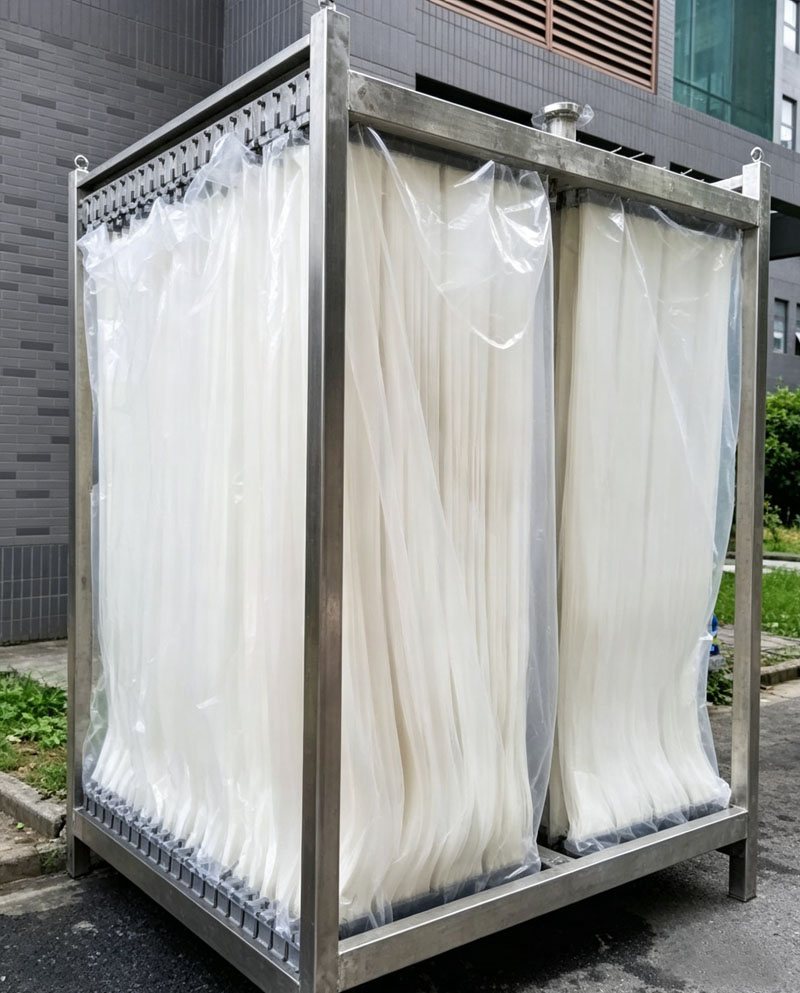
PVDF hollow fibre membrane — a common choice where chemical cleaning resistance governs membrane life.
The practical consequence is that cleaning strategy should be settled at the same time as membrane material, not afterwards. The equipment can be configured with CIP, backwashing and chemical cleaning, and each of those options constrains the membrane chemistry that can be used. A system designed around aggressive chemical cleaning with a membrane that cannot tolerate it will lose performance long before its expected service life.
3. Equipment material governs the frame, housings and wetted parts
Membrane material is only half of the corrosion decision. The equipment material — the housings, pipework, valves and skid frame that the membrane sits inside — is offered in SS304, SS316L, FRP and PP, and is selected according to the process medium. SS304 is generally specified for benign streams where cost discipline matters. SS316L is the more common choice for mildly corrosive or chloride-bearing liquids. FRP is used where corrosion resistance is required at a lower capital cost than alloy construction, and PP is used for aggressive chemical duty where a thermoplastic wetted path is appropriate.
This is also where cross-equipment consistency matters. A membrane skid sits inside a wider process train that may include a shell and tube heat exchanger, a reactor, a storage tank or a candle filter. If the skid's wetted path is SS316L and the adjacent tank is SS304, the project has introduced a corrosion weak point without anyone deciding to.
4. Capacity, pressure, temperature and filtration accuracy are customised to the process
None of the operating parameters on a membrane skid are catalogue constants. Capacity is customised according to process requirements, operating pressure is customised, operating temperature is customised, and filtration accuracy is customised according to the application. This is a deliberate design position rather than a gap in the specification: a membrane duty is defined by the liquid, the feed concentration, the target permeate quality and the required recovery, and those inputs vary from project to project.
For buyers, that means the technical enquiry has to carry real process data — liquid composition and concentration, feed rate, target separation, operating and design temperature, operating and design pressure, cleaning regime and site utilities. A quotation built on incomplete data will produce a skid that has to be re-engineered after award.
5. Skid packaging changes site integration, control and cleaning
Skid-mounted execution integrates equipment, piping, valves, instruments and control systems on a single frame. In the skid-mounted equipment specification, the main equipment can include a reactor, storage tank, heat exchanger, filter and pump; piping is customised according to process requirements; instrumentation covers pressure, temperature, flow and level; control can be PLC, DCS or automatic; heating can be steam, thermal oil, electric or hot water; and cooling can be cooling water, chilled water or air cooling. Testing can include FAT, hydrostatic testing and leak testing, and installation can be indoor or outdoor.
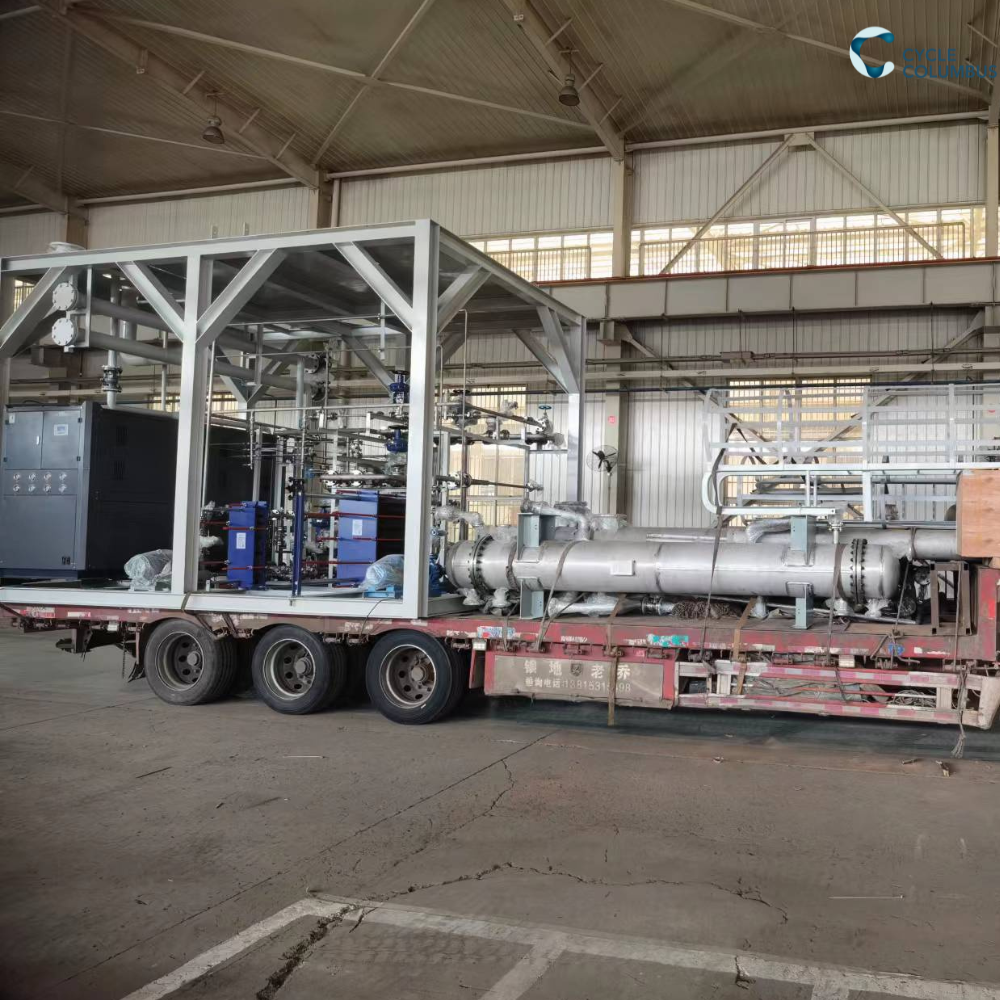
Skid-mounted execution: frame, piping, valves, instruments and controls assembled and tested before shipment.
Three integration effects follow. First, factory assembly and testing move commissioning risk off site: the package is assembled, pressure-tested and functionally tested before it is shipped, so site work is reduced to positioning, utility connection and start-up. Second, the control system is designed as one system rather than several — pressure, temperature, flow and level monitoring sit on a single PLC or DCS, and cleaning sequences (CIP, backwashing, chemical cleaning) can be automated rather than left to manual valve operation. Third, the compact layout reduces the space and civil works a membrane plant needs, and the modular frame allows the unit to be transported and, if the plant is reconfigured, relocated.
Step-by-Step Breakdown: Specifying a Skid-Mounted Membrane System
Use Cases: Where Packaged Membrane Separation Fits
Water treatment and environmental duties
Effluent treatment, water reuse and discharge compliance are the most common entry points for a packaged membrane system. MF or UF is typically used as clarification ahead of tighter stages, RO where dissolved solids must be reduced, and MBR where biological load and solids separation occur together. The packaged format suits environmental projects because it can be installed in an existing plant with limited space and connected to existing utilities.
Liquid concentration and product recovery
Concentration duties use the membrane to remove water or a permeating component while retaining the product. RO and NF are the usual choices where dissolved material is being concentrated; UF is used where the target is a macromolecular or colloidal fraction. The economics of these projects depend on recovery rate and on how often the membrane must be cleaned — which is why membrane material and cleaning design are specified together.
Chemical and fine chemical processing
In chemical and fine chemical plants, membrane skids are often integrated with existing production lines rather than installed as stand-alone plants. That places a premium on compact footprint, on a control system that can talk to the plant's automation, and on wetted materials that match the rest of the train. Corrosive process liquids drive the selection toward SS316L, FRP or PP wetted paths.
Pharmaceutical, food and natural extract processing
Pharmaceutical, food processing and natural extract applications bring sanitary requirements into the specification alongside separation performance. Here the membrane choice is influenced by cleaning validation and by the need to avoid cross-contamination between batches, and CIP design becomes part of the package rather than an add-on.
New-material, battery-material and lithium-related processes
Membrane separation also appears in the water and process-liquid side of new-material, battery-material and lithium-related projects, where the duty is often a combination of solids removal and dissolved-solids control. These projects tend to be schedule-driven, which favours factory-assembled and factory-tested skids over field-erected systems.
Comparison Table: Selection Reference
The two tables below summarise the selection logic described above. They are organised around the decisions a project team actually makes, and they use only the membrane types, membrane materials and equipment materials offered in the equipment specification.
| Membrane type | Separation band | Typical project role | Common membrane material practice |
|---|---|---|---|
| MF | Suspended solids and larger particulate | Clarification and pre-treatment ahead of tighter stages | PVDF, PTFE |
| UF | Colloids, macromolecules, fine suspended solids | Clarification, fractionation and pre-concentration | PVDF, PES, PTFE |
| NF | Between UF and RO; partial demineralisation | Selective removal of dissolved species | PA composite |
| RO | Dissolved solids and water removal | Demineralisation and concentration of dissolved solids | PA composite |
| MBR | Biological treatment plus solids separation | Combined biological and membrane stage | PVDF, PES |
| Equipment material | Where it is normally considered | Selection driver |
|---|---|---|
| SS304 | Benign or lightly aggressive liquid streams | Standard stainless construction where corrosion load is low |
| SS316L | Mildly corrosive and chloride-bearing streams | Higher corrosion resistance on wetted parts and frame |
| FRP | Corrosive duty where alloy cost is a constraint | Corrosion resistance with lower material cost |
| PP | Aggressive chemical duty | Thermoplastic wetted path for chemical compatibility |
Two limits apply to both tables. Membrane material practice reflects general commercial convention and should be confirmed against the actual liquid and cleaning regime. Equipment material selection must be verified against medium-specific data — corrosivity, viscosity, temperature and pressure — in the technical agreement, not assumed from the table.
FAQ
What standards should a Chinese chemical separation equipment manufacturer meet for a membrane filtration project?
Pressure-containing parts of a membrane skid are normally designed to a recognised framework — ASME, GB, EN or PED — and the applicable standard should be written into the technical agreement rather than assumed. Jiangsu Xuyang holds an A2-level Special Equipment Design and Manufacturing License issued by the relevant Chinese authorities, and operates ISO 9001 quality, ISO 14001 environmental and ISO 45001 occupational health and safety management systems. Design standards, certificates and process parameters remain project-specific and should be confirmed in the technical agreement before manufacture.
How far can membrane separation and filtration equipment be customised?
Capacity is customised according to process requirements, operating pressure and operating temperature are customised, and filtration accuracy is customised to the application. Membrane type can be MF, UF, NF, RO or MBR; membrane material can be PVDF, PES, PA or PTFE; equipment material can be SS304, SS316L, FRP or PP; control can be manual, automatic or PLC; and cleaning can be configured as CIP, backwashing or chemical cleaning. The system is supplied as a skid-mounted design or as a customised industrial design, so the package battery limit is also a specification choice rather than a fixed product boundary.
What drives the cost of a custom membrane separation skid?
The main cost drivers are the same variables that define the duty: membrane type and membrane area, membrane material, equipment material for housings and frame, operating pressure, the extent of automation and the package scope. Material selection is a significant lever — SS316L, FRP and PP wetted constructions sit at different cost levels from SS304. Standards compliance also carries cost: compliance with ASME provisions has been estimated at up to 20% of a pressure vessel's total material cost (Fortune Business Insights, 2026). Comparing quotations on scope rather than headline price is the reliable approach.
How is a custom skid-mounted membrane system validated before shipment?
Factory testing can include FAT, hydrostatic testing and leak testing, and functional testing can be provided before shipment. Because equipment, piping, valves, instruments and control systems are integrated on a single skid and factory-assembled, the assembly and the separation configuration are verified before the unit leaves the workshop rather than after it reaches site. The specific test protocol, inspection requirements and documentation package should be agreed in the technical agreement.
What are the lead time and minimum order quantity for a skid-mounted membrane system?
The stated lead time is 30–60 days, with a minimum order quantity of 1 unit and a monthly capacity of 100 units. In practice the schedule is driven by how quickly the process data, package scope and control philosophy are frozen: changes to membrane selection, skid frame material or control architecture after drawing approval will affect delivery. Project teams that want to confirm scope against an existing production line, or obtain a quotation for a specific liquid stream, can send process details to alice@xuyangsang.com or reach the team on WhatsApp at +86 18994707690 for a design review.
Conclusion: Decide the Sequence, Then the Skid
Skid-mounted membrane separation works because it turns a multi-discipline site build into a single engineered package. The savings are not primarily in the equipment itself — they come from moving piping, wiring, testing and commissioning into a factory, and from making the separation duty, the cleaning regime and the control system one design decision instead of four.
Getting there depends on holding a fixed sequence: membrane type, then membrane material, then equipment material, then the customised capacity, pressure, temperature and filtration accuracy, then the package scope and control philosophy. Projects that skip ahead to a price per unit usually return to step one. Projects that supply complete process data up front tend to receive a quotation that does not need to be re-engineered after award.
For water treatment, liquid concentration, chemical processing and environmental duties, the same logic applies: the liquid decides the membrane, the cleaning regime decides the membrane material, and the process train decides the equipment material. The skid format then determines how much of that work happens before the unit reaches site.
Next Step: Review Your Process Data Against a Packaged Design
Send the liquid composition, feed rate, target separation, operating temperature and pressure, and cleaning regime, and the engineering team at Jiangsu Xuyang Chemical Equipment Co., Ltd. can confirm membrane type, membrane material, equipment material and skid scope against the duty. A design review, quotation or factory acceptance test plan can be arranged from the same enquiry.
Contact: alice@xuyangsang.com | WhatsApp +86 18994707690 | No.9 Lianshan Road, Chengnan Park, Jingjiang, Jiangsu, China
Have Questions or Need More Details?
Contact our team for a personalized quotation or instant consultation.
Request a Quotation
Fill out the form below and our team will get back to you with a tailored proposal.
WhatsApp Direct Chat
Prefer to chat in real-time? Message us on WhatsApp for instant assistance & quick answers.
- Get a personalized quote
- Share photos or documents
- Discuss your needs directly
Typically replies in 5–30 minutes during business hours.