
Custom Chemical Equipment Manufacturer: Jiangsu Xuyang
Chemical Equipment Co., Ltd.
Custom chemical equipment refers to non-standard process equipment — reactors, heat exchangers, storage tanks, filters, towers and skid-mounted systems — engineered around a specific process duty rather than selected from a catalogue. Jiangsu Xuyang Chemical Equipment Co., Ltd. (Xuyang) is a Chinese manufacturer of this equipment type, established in 2009 and based in the Jingjiang Economic and Technological Development Zone, Jiangsu Province. This profile examines what the company supplies, how its manufacturing and engineering base is structured, and which points a buyer should verify before requesting a quotation.
Problem Definition: Why Custom Chemical Equipment Is Hard to Evaluate
The difficulty in sourcing custom chemical equipment is not a shortage of suppliers. It is the absence of a readable specification. A standard pump or valve can be compared on published curves; a jacketed reactor or a shell and tube heat exchanger has no fixed specification until medium, concentration, design pressure, design temperature, capacity and applicable code are all fixed.
That gap creates three predictable problems at the discovery stage:
- Filtering by catalogue parameters excludes capable fabricators. A workshop that builds to drawings will rarely show a fixed model number, because the vessel geometry is generated by the process duty.
- A qualification claim is not a verified scope. Holding a pressure-vessel licence does not confirm that the licence covers the specific vessel class, material and inspection regime the project requires.
- Price gaps are frequently specification gaps. Compliance with ASME provisions has been estimated to represent up to 20% of a pressure vessel's total material cost, so two quotations that differ by roughly that margin are often comparing different standards coverage rather than different margins.
The practical resolution is to evaluate a custom equipment manufacturer on scope clarity rather than on product listings: what equipment families it builds, which materials it works in, which design codes it manufactures to, and what inspection evidence it can hand over with the vessel.
Industry Background: Demand and Code Pressure in Process Equipment
The wider category is large and structurally tied to chemical and petrochemical investment. SNS Insider valued the global chemical processing equipment market at USD 68.82 billion in 2026, and reported that the chemicals and petrochemicals segment led the market with a 41.6% revenue share in 2025. Global Market Insights figures cited for separation machinery place that segment at USD 109 billion in 2026, growing at 7.2% CAGR from 2026 to 2035.
Two structural forces shape how buyers read those numbers. First, equipment demand is increasingly concentrated in applications where material selection matters — corrosive media, high-pressure service, solvent recovery, battery materials and fine chemical processing — which pushes specification toward stainless steel, titanium, Hastelloy, zirconium and PTFE lining rather than carbon steel alone. Second, code compliance has become a procurement variable rather than a background assumption: ASME BPVC Section VIII governs the design, analysis, fabrication, inspection and testing of pressure vessels, including heat exchangers, reactors, filters and specialty vessels, and the cost of meeting such provisions is visible in the quotation.
Company Overview: Jiangsu Xuyang Chemical Equipment Co., Ltd.
Jiangsu Xuyang Chemical Equipment Co., Ltd. was established in 2009 and operates from the Jingjiang Economic and Technological Development Zone in Jiangsu Province, China. The company integrates research and development, engineering design, equipment manufacturing and import/export trade, and serves the chemical, environmental protection, pharmaceutical, fermentation, food, new-material and lithium-related industries.
In its own disclosures, Xuyang reports RMB 81 million in registered capital, a manufacturing facility covering 10,000 m², approximately 110 staff, an annual production capacity of 1,000 units, a technical R&D team of 7 engineers, more than 300 cooperation customers and a 24-hour service commitment. The company also states that selected products are exported to Japan, South Korea and Southeast Asia, and identifies the EU, USA, Russia and Asia among its main markets.
| Profile item | Company-reported detail |
|---|---|
| Legal entity | Jiangsu Xuyang Chemical Equipment Co., Ltd. |
| Established | 2009 |
| Location | Jingjiang Economic and Technological Development Zone, Jiangsu Province, China |
| Registered capital | RMB 81 million |
| Manufacturing area | 10,000 m² |
| Employees | Approximately 110 |
| R&D team | 7 engineers |
| Annual production capacity | 1,000 units |
| Business scope | R&D, engineering design, equipment manufacturing, import/export trade |
| Primary industries served | Chemical, environmental protection, pharmaceutical, fermentation, food, new-material, lithium-related |
Qualifications and Management Systems
Xuyang holds an A2-level Special Equipment Design and Manufacturing License issued by the relevant Chinese authorities — a qualification directly relevant to pressure-vessel engineering and fabrication in the Chinese regulatory framework. The company also operates ISO 9001 (quality), ISO 14001 (environmental) and ISO 45001 (occupational health and safety) management systems, and has been recognised as a Jiangsu High-Tech Enterprise, a Jiangsu Specialized, Specialized and New Small/Medium-Sized Enterprise, and a 3A Contract-Honoring and Creditworthy Enterprise.
For export-oriented projects, product documentation lists ASME, GB, EN, PED and TEMA as available design standards, with ASME U Stamp, CE and ISO shown as certification options on reactor and storage tank specifications. Buyers should confirm the applicable certificate, its scope and its validity against the specific purchase order during technical review.
Core Products and Solutions
Xuyang's portfolio covers both individual process equipment and integrated equipment systems. The main product families are chemical reactors, membrane separation and filtration equipment, candle filters, storage tanks, heat exchangers, towers, corrosion-resistant lined equipment, skid-mounted equipment and water-treatment equipment.
Reactors and Reaction Equipment
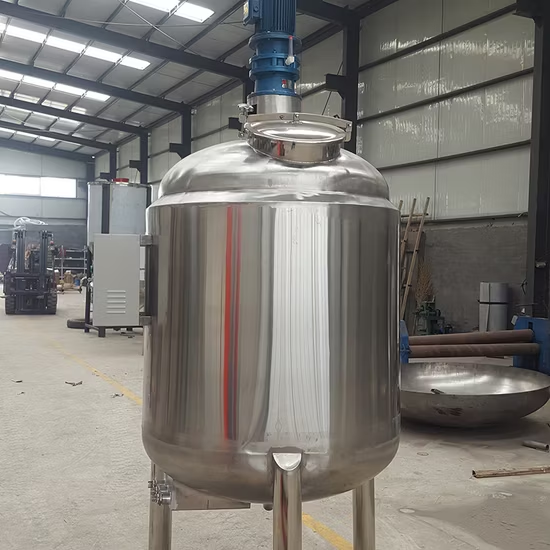
Reaction equipment is the company's central product line and the clearest illustration of how custom fabrication works in practice. Available configurations include stainless-steel and carbon-steel reactors, electric-heating reactors, high-pressure reactors, internal- and external-coil reactors, intelligent reactors, and special-material reactors using titanium, zirconium or Hastelloy.
Published specifications state that reactor volume is customised from laboratory to industrial scale, with materials covering SS304, SS316L, carbon steel, Hastelloy, titanium and zirconium. Working pressure and temperature are set according to process requirements. Heating options are steam, thermal oil or electric heating; cooling options are cooling water or chilled water. Agitator types include anchor, paddle, turbine, ribbon and high-shear designs, with mechanical or magnetic sealing, and manual, automatic or PLC control. Reactors are used across chemical, fine chemical, petrochemical, pharmaceutical, biochemical, new energy, battery materials, agrochemical, dyes and pigments, polymer and resin, coatings, oil and gas, food and beverage, and environmental protection industries.
Heat Transfer Equipment
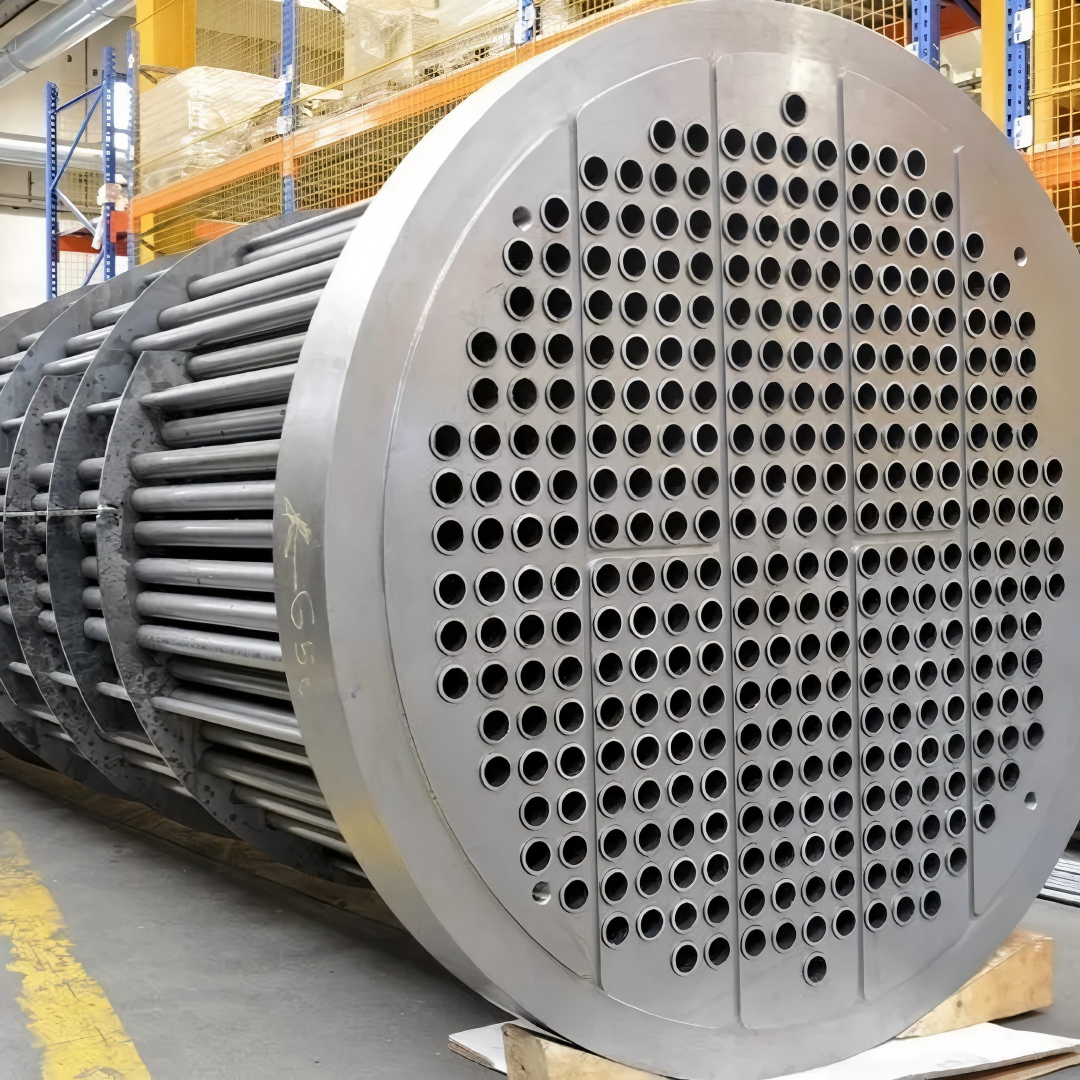
The shell and tube heat exchanger range covers fixed tube sheet, floating head and U-tube constructions, intended for chemical process heating, cooling and heat recovery. Shell materials can be carbon steel, SS304, SS316L or Hastelloy; tube materials can be SS304, SS316L, titanium, Hastelloy or a customised grade. Heat transfer area, tube diameter, tube length, tube passes, baffle type and connection are all specified per duty, with ASME, GB, EN and TEMA listed as design standards.
The broader heat transfer capability extends to floating-head heat exchangers, U-tube heat exchangers, spiral plate heat exchangers, finned-tube heat exchangers, titanium heat exchangers, double-tube-sheet heat exchangers, condensers, coolers and reboilers.
Storage Tanks and Pressure Vessels
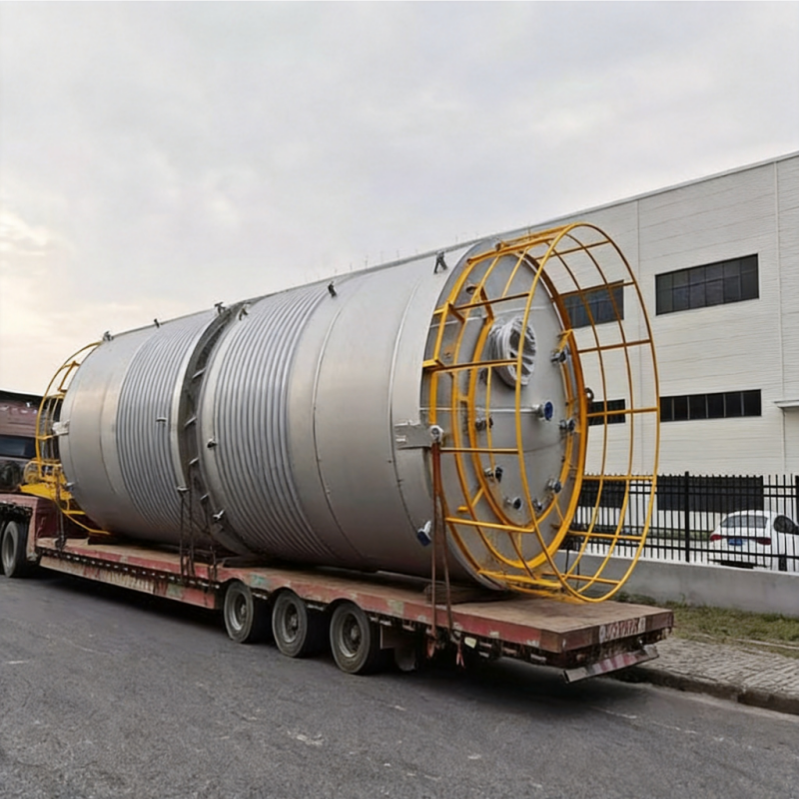
Storage equipment can be configured as vertical or horizontal tanks, external coil tanks, PTFE-lined tanks, high-pressure tanks, carbon steel tanks or stainless steel tanks, in SS304, SS316L, carbon steel, Hastelloy, titanium or customised material. Capacity, design pressure and design temperature are set according to the process, with jacket, half-pipe coil and external coil heating or cooling options, optional insulation and agitation, and polished, pickled-and-passivated or customised surface finishes.
Related pressure-vessel capability includes pressure vessels, non-standard vessels, horizontal pressure vessels and customised process tanks.
Filtration and Separation Equipment
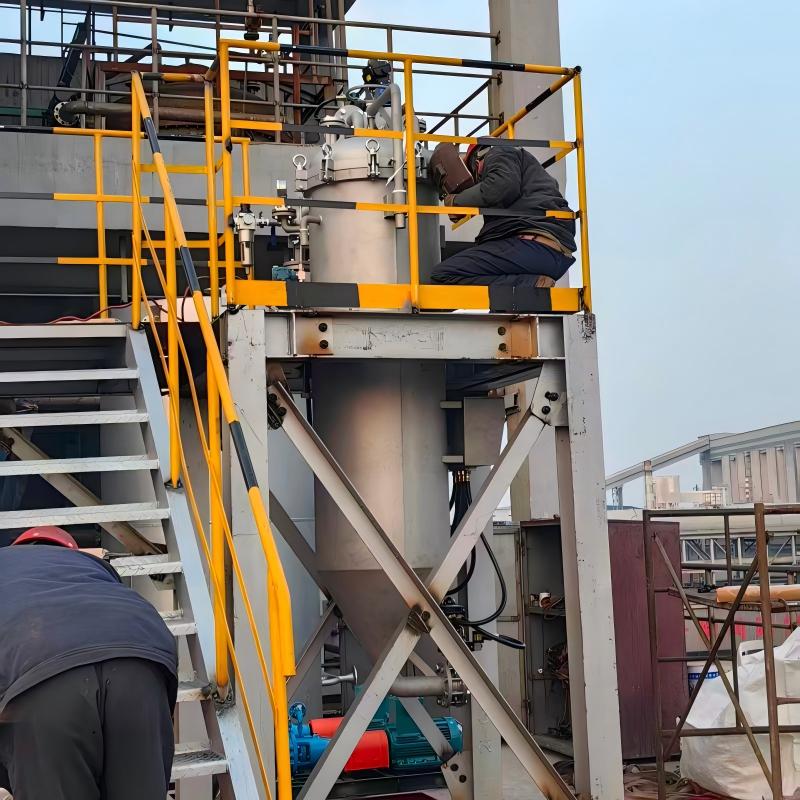
The candle filter range includes the SAC fully automatic candle filter, the SBC fully automatic candle filter and the CFS fully automatic filtration system, positioned for solid-liquid separation, catalyst recovery, chemical filtration, pharmaceutical filtration and fine chemical processing. Filter media options are stainless steel, sintered mesh and filter cloth; cake discharge can be dry, wet or backwash; control can be manual, automatic or PLC-based.
Membrane separation and filtration equipment uses ceramic membranes as the primary material and is applied to separation, purification and concentration of liquid streams in the chemical and oil industries. Membrane type options across the range include MF, UF, NF, RO and MBR configurations with PVDF, PES, PA or PTFE membranes and stainless steel, FRP or PP equipment construction.
Towers, Evaporation and Corrosion-Resistant Equipment
Distillation towers are supplied as packed or tray towers for separation, purification and fractionation, with typical applications in chemical separation and solvent recovery. The product can be delivered as a complete distillation system integrating reboiler, condenser, reflux and automatic control, designed around feed composition, required purity, capacity and separation requirements.
Evaporation and crystallisation capability includes MVR evaporation systems, special MVR systems, TVR systems, multi-effect evaporation systems, waste-heat evaporation systems, and evaporation, concentration and crystallisation systems. Corrosion-resistant equipment includes PTFE-lined equipment and PTFE-lined piping and towers.
Skid-Mounted and Integrated Process Systems
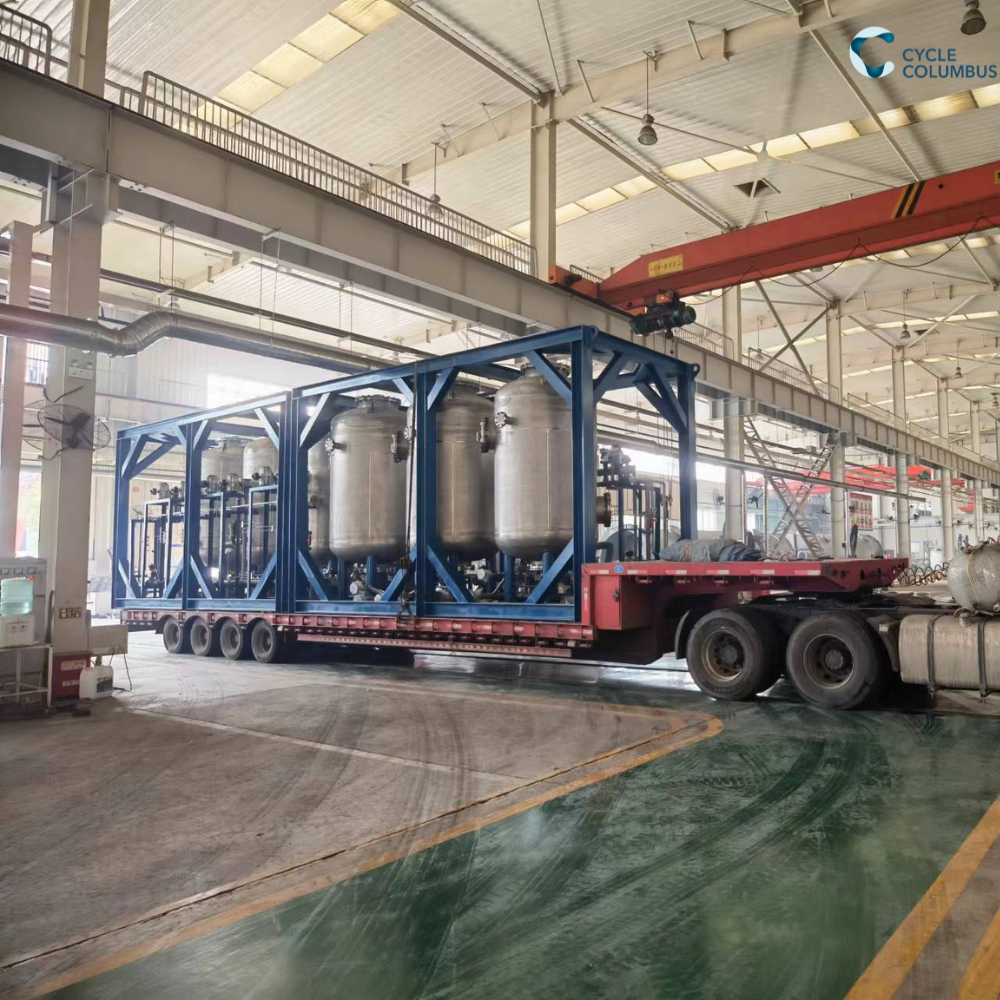
Skid-mounted equipment integrates reactors, storage tanks, heat exchangers, filters and pumps on a single frame, with piping, valves, instruments and control systems assembled at the factory. Published specifications list PLC, DCS or automatic control, pressure/temperature/flow/level instrumentation, steam, thermal oil, electric or hot-water heating, cooling water, chilled water or air cooling, indoor or outdoor installation, and ASME, GB, EN or PED design standards.
Process and complete equipment systems also include chemical process equipment, pharmaceutical equipment, environmental equipment, new-material process equipment, lithium and battery-material process equipment, water-treatment equipment, and laboratory and industrial process equipment.
Manufacturing, Engineering and Quality Capability
Fabrication and Production Management
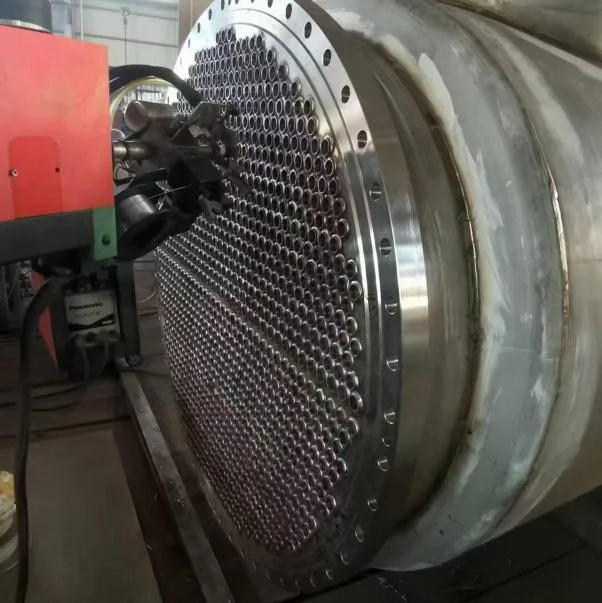
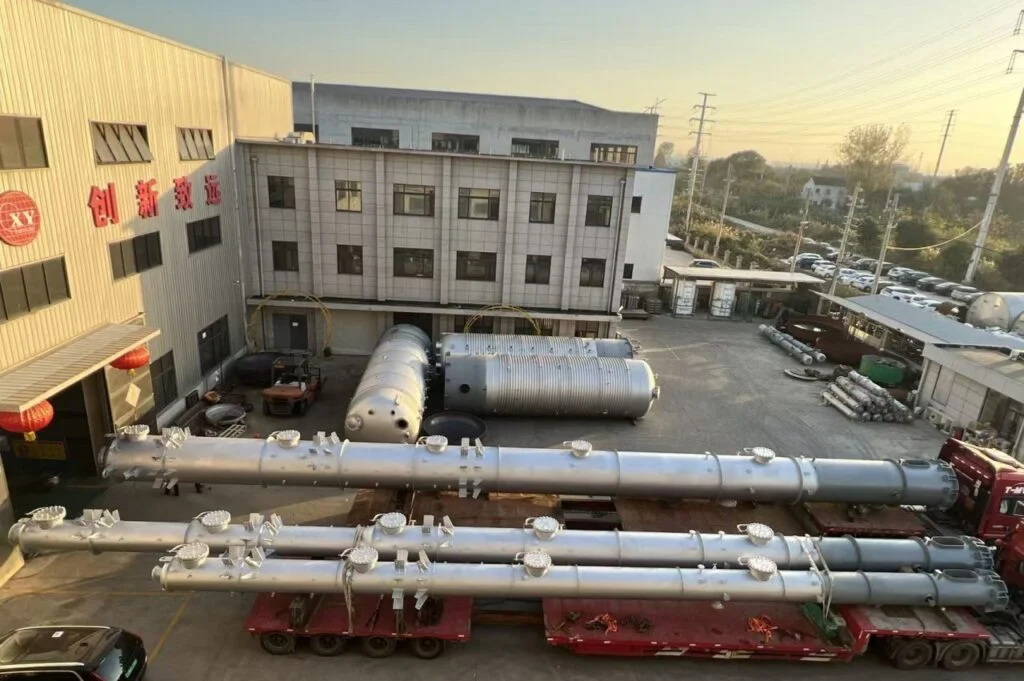
The 10,000 m² facility supports an annual production capacity reported at 1,000 units. Fabrication equipment referenced in the company's shop-floor documentation includes a three-roll plate bending machine, a laser cutting machine, a high-speed CNC surface drilling machine, a CNC beveling laser cutting machine and an automatic tube sheet welding machine. Production is managed through ERP and MES systems, and the company reports an intelligent manufacturing workshop intended to improve process traceability and quality control from manufacturing through delivery.
Welding and Inspection
Welding quality on pressure vessels is addressed through plasma and deep-penetration automated welding technologies. According to the company, every vessel undergoes testing that includes X-ray detection (non-destructive testing), hydraulic pressure testing and surface roughness inspection. The company also reports a dedicated agitator dynamic-balancing test workshop, and states that it maintains inspection and testing equipment in-house.
Research and Development
Xuyang reports a technical R&D team of 7 engineers and industry-university-research cooperation with Nanjing Tech University, China University of Petroleum and Soochow University. The company also reports the establishment of Nanjing Xuyang High-End Equipment Research Co., Ltd. and cooperation with Nanjing SuZhi Intelligent Equipment Research Institute on intelligent-reactor technologies.
Patented technologies listed by the company include a non-standard high-pressure stainless-steel reactor, a chemical catalytic reaction reactor, a welding fixture for chemical reactor shells, a heat exchanger for heat recovery and a shell-and-tube condenser.
Customisation and Engineering Workflow
Custom engineering is structured around a defined information set. The company states that it can produce CAD or 3D designs based on process parameters, material requirements and space constraints, and that its design intake covers equipment type (reactor, tank, heat exchanger or candle filter), capacity or volume, medium, material, operating and design pressure, operating and design temperature, vacuum requirement, heating or cooling method, agitator requirements, nozzle requirements, applicable standard (ASME or GB) and site conditions.
Global Supply and Service
The company identifies the EU, USA, Russia and Asia among its main markets and states that selected products are exported to Japan, South Korea and Southeast Asia. Its stated service commitment is 24-hour response, and its after-sales intake process asks buyers to supply equipment name, model and serial number, PO or contract number and purchase date, a description of the fault, current operating pressure, temperature and medium, photographs and video of the affected parts, alarm codes where applicable, and details of recent maintenance or modification.
Market Recognition and Positioning
Xuyang's externally visible recognition rests on three verifiable categories rather than on published market-share data. The first is regulatory and systems qualification: the A2-level Special Equipment Design and Manufacturing License and the ISO 9001, ISO 14001 and ISO 45001 management systems. The second is enterprise recognition within Jiangsu Province: Jiangsu High-Tech Enterprise, Jiangsu Specialized, Specialized and New Small/Medium-Sized Enterprise, and 3A Contract-Honoring and Creditworthy Enterprise. The third is academic and research linkage, through cooperation with Nanjing Tech University, China University of Petroleum and Soochow University, and through the Nanjing Xuyang High-End Equipment Research entity.
The company reports more than 300 cooperation customers. Its public product listings include a 5000 L horizontal external half-pipe coil reactor and a horizontal stainless-steel fuel storage tank advertised across a 50–10,000 L range; these are product-level specifications and should not be read as factory capacity or installed base.
Step-by-Step: How a Custom Equipment Project Is Scoped with Xuyang
The sequence below reflects the information set the manufacturer states it requires, combined with its stated design, fabrication and testing workflow. It is a practical checklist for a first technical exchange rather than a commercial commitment.
- Define the process duty. Confirm equipment type, capacity or volume, working medium and concentration, operating and design pressure, operating and design temperature, and vacuum requirement where relevant.
- Fix the material. Evaluate chemical composition and concentration against temperature, pressure and corrosion or hygiene requirements, then select from carbon steel, SS304, SS316L, Hastelloy, titanium, zirconium or PTFE lining.
- Select the design code and certification scope. Confirm whether the vessel is to be built to ASME, GB, EN or PED, and whether an ASME U Stamp, CE marking or ISO documentation is required on the order.
- Specify the thermal and mechanical configuration. Choose jacket, half-pipe coil or external coil; steam, thermal oil, electric or hot-water heating; cooling water, chilled water or air cooling; and agitator, seal and nozzle arrangements.
- Approve the drawing package. The manufacturer produces CAD or 3D design output against the agreed parameters and site conditions for review and sign-off.
- Fabricate and inspect. Welding proceeds under controlled procedures, followed by X-ray detection, hydraulic pressure testing and surface inspection; skid-mounted systems can additionally undergo factory acceptance testing, hydrostatic testing and leak testing before shipment.
- Ship, install and commission. Skid-mounted configurations are assembled and tested at the factory to reduce on-site piping and wiring work, with indoor or outdoor installation confirmed during engineering.
Use Cases: Where This Equipment Fits
The equipment families map onto distinct process situations rather than a single industry. Reaction and synthesis duties — including small-batch formulation, fine-chemical processing, concentration and crystallisation — are served by jacketed or coil reactors with agitation and mechanical or magnetic sealing, in batch or semi-continuous mode.
Solid-liquid separation and catalyst recovery duties are served by candle filters with stainless steel, sintered mesh or filter cloth media, and by ceramic-membrane separation systems for purification and concentration of liquid streams. Heat recovery, condensation and reboiler duties are served by shell and tube units in fixed tube sheet, floating head or U-tube construction, with titanium or Hastelloy wetted parts where the medium requires it.
Solvent recovery and fractionation duties are served by packed or tray distillation towers supplied as complete systems with reboiler, condenser, reflux and automatic control. Corrosive service in the presence of acids or aggressive media is addressed through PTFE-lined equipment, piping and towers, or through titanium, zirconium and Hastelloy construction.
Space-constrained or fast-track projects are served by skid-mounted configurations that integrate reaction, storage, heat transfer, filtration and pumping on one frame with PLC or DCS control — a format also suited to overseas shipment, since factory assembly and testing reduce site work.
Comparison Table: Equipment Families at a Glance
The table summarises documented configuration options across the main product families. It compares equipment categories within one manufacturer's range; it is not a cross-supplier benchmark.
| Equipment family | Documented configurations | Material options | Typical industries cited |
|---|---|---|---|
| Reactor | Stainless steel, carbon steel, electric heating, high pressure, internal/external coil, intelligent, special-material | SS304, SS316L, carbon steel, Hastelloy, titanium, zirconium | Chemical, fine chemical, petrochemical, pharmaceutical, biochemical, new energy, battery materials, agrochemical, dyes and pigments, polymer and resin, coatings, oil and gas, food and beverage, environmental protection |
| Shell and tube heat exchanger | Fixed tube sheet, floating head, U-tube; horizontal or vertical | Shell: carbon steel, SS304, SS316L, Hastelloy. Tube: SS304, SS316L, titanium, Hastelloy | Chemical processing, fine chemical, petrochemical, pharmaceutical, new energy, battery materials, oil and gas, food and beverage, biochemical, agrochemical, water treatment, environmental protection |
| Storage tank | Vertical, horizontal, external coil, PTFE-lined, high pressure, carbon steel, stainless steel | SS304, SS316L, carbon steel, Hastelloy, titanium | Chemical, pharmaceutical, food and beverage, petrochemical, water treatment, environmental protection |
| Candle filter | SAC fully automatic, SBC fully automatic, CFS fully automatic filtration system; dry, wet or backwash discharge | SS304, SS316L, Hastelloy; media in stainless steel, sintered mesh, filter cloth | Chemical, fine chemical, petrochemical, pharmaceutical, food and beverage, new energy, battery materials, catalyst recovery, solvent recovery, water treatment, mineral processing, pulp and paper, oil and gas, dyes and pigments |
| Distillation tower | Packed or tray; complete system with reboiler, condenser, reflux and automatic control | Carbon steel, SS304, SS316L, Hastelloy, titanium | Chemical processing, fine chemical, petrochemical, pharmaceutical, oil and gas, food and beverage, bioethanol, new energy, battery materials, agrochemical, polymer and resin, environmental protection |
| Membrane separation and filtration equipment | MF, UF, NF, RO, MBR; skid-mounted or customised industrial design | Ceramic membranes; equipment in SS304, SS316L, FRP, PP | Chemical industry, oil industry |
| Skid-mounted equipment | Reactor, storage tank, heat exchanger, filter and pump integrated on one skid; PLC, DCS or automatic control | Carbon steel, SS304, SS316L, Hastelloy, titanium | Chemical, fine chemical, petrochemical, pharmaceutical, oil and gas, solvent recovery, food and beverage, bioethanol, biochemical, new energy, battery materials, agrochemical, polymer and resin, environmental protection |
Procurement Value: What Xuyang Offers a Buyer
Single-source process coverage. Reaction, heat transfer, storage, separation, distillation, evaporation and skid integration sit within one manufacturing and engineering organisation. For a project with several linked unit operations, that reduces the number of interfaces a buyer has to manage between fabricators.
Material breadth matched to corrosive duty. The documented material range runs from carbon steel and SS304 through SS316L, Hastelloy, titanium and zirconium to PTFE lining. Because material suitability is determined by medium composition, concentration, temperature and pressure, breadth here translates into fewer situations where a duty has to be redesigned around a supplier's material limits.
Documented qualification baseline. The A2-level Special Equipment Design and Manufacturing License and the ISO 9001, ISO 14001 and ISO 45001 systems give a buyer a defined starting point for supplier qualification, to be confirmed against the specific vessel class and destination market.
Testing before shipment. X-ray detection, hydraulic pressure testing, surface roughness inspection and agitator dynamic balancing are stated in-house capabilities; skid-mounted systems can additionally be factory-tested with FAT, hydrostatic and leak testing, shifting commissioning risk earlier in the schedule.
Readable cost structure. Because compliance can represent up to 20% of a pressure vessel's material cost, quotations are only comparable when the standard, material grade and inspection scope are identical. Xuyang's documented design-standard options — ASME, GB, EN, PED and TEMA — make it possible to define that scope before pricing is discussed.
Export familiarity. With the EU, USA, Russia and Asia identified as main markets and selected products exported to Japan, South Korea and Southeast Asia, documentation and packaging practices are oriented toward international shipment rather than domestic delivery only.
Frequently Asked Questions
Where should a buyer start when sourcing custom chemical equipment manufacturers in China?
Start with scope, not with a catalogue. Confirm three things first: whether the manufacturer holds a pressure-vessel design and manufacturing licence that covers the vessel class in question — Jiangsu Xuyang Chemical Equipment Co., Ltd., for example, holds an A2-level Special Equipment Design and Manufacturing License; which design code the project requires (ASME, GB, EN or PED); and which materials the workshop actually fabricates in. Only after those three are settled does it make sense to compare capacity, price or lead time.
How is welding quality controlled on pressure vessels?
Xuyang states that it uses plasma and deep-penetration automated welding technologies, and that every vessel undergoes testing that includes X-ray detection (non-destructive testing), hydraulic pressure testing and surface roughness inspection. The company's stated inspection sequence runs from material inspection through joint preparation, fit-up inspection, pre-welding inspection, welding process control, visual inspection, NDT inspection, pressure and leak testing, and final inspection to quality documentation. Buyers should request the NDT reports and pressure-test records as part of the delivery dossier.
Can equipment be customised to specific drawings or process parameters?
Yes. Xuyang states that its R&D team produces CAD or 3D designs based on the customer's process parameters, material requirements and space constraints. The design intake covers equipment type (reactor, tank, heat exchanger or candle filter), capacity or volume, medium, material, operating and design pressure and temperature, vacuum requirement, heating or cooling method, agitator and nozzle requirements, applicable standard (ASME or GB) and site conditions.
Which materials are available for reactors and tanks?
Published specifications list SS304, SS316L, carbon steel, Hastelloy, titanium and zirconium for reactors, and SS304, SS316L, carbon steel, Hastelloy and titanium for storage tanks, with PTFE lining available on lined equipment and piping. Material selection is determined by working medium and concentration, operating and design temperature, operating and design pressure or vacuum, required capacity, and corrosion-resistance or hygiene requirements — evaluated in that order before a grade is finalised.
How are after-sales service requests handled?
Xuyang states a 24-hour service commitment. Its after-sales intake asks the buyer to provide the equipment name, model and serial number; the PO or contract number and purchase date; a description of the problem and failure phenomenon; current operating pressure, temperature and medium; photographs and video of the equipment and affected parts; alarm messages or error codes where applicable; and details of recent maintenance, repair or modification. The full equipment range and specifications are summarised in the 2026 Xuyang Pressure Vessel Catalog.
Conclusion: Position, Procurement Fit and Outlook
Jiangsu Xuyang Chemical Equipment Co., Ltd. occupies the custom-fabrication tier of the chemical equipment market — a segment defined by engineered-to-order vessels rather than catalogue products. Its profile is coherent for that tier: an A2-level special equipment licence and three ISO management systems, a 10,000 m² facility with a reported 1,000-unit annual capacity, a 7-engineer R&D team supported by university cooperation and an in-house research entity, documented testing capability including X-ray detection and hydraulic pressure testing, and a product range spanning reactors, heat exchangers, storage tanks, filters, towers, evaporation systems, PTFE-lined equipment and skid-mounted systems.
For a buyer at the research stage, the practical value is scope transparency: the equipment families, material options, design standards and testing steps are stated in a form that can be turned into an RFQ and checked against a process duty. The critical verification steps remain the buyer's own — confirming that the licence and certification scope match the specific vessel and destination market, and reviewing welding qualification, heat-treatment capability, lifting limits and hydrotest capability against the project's size and code.
Where the company is best positioned is in projects that combine several unit operations and demand material flexibility under a defined code: fine chemical and pharmaceutical reaction trains, corrosive-service vessels in titanium, Hastelloy or PTFE lining, solvent recovery and distillation systems, catalyst recovery filtration, and skid-mounted packages for overseas installation. The market context supports that positioning — a USD 68.82 billion chemical processing equipment market in 2026, separation machinery growing at 7.2% CAGR, and compliance cost that keeps qualification, not price alone, at the centre of supplier selection.
Next Step: Request a Quotation or Technical Review
To move from supplier discovery to a technical exchange, prepare the process duty — medium, concentration, capacity, operating and design pressure and temperature, material preference, applicable standard and site conditions — and send it for engineering review.
Jiangsu Xuyang Chemical Equipment Co., Ltd.
Address: No.9 Lianshan Road, Chengnan Park, Jingjiang, China
Email: alice@xuyangsang.com · Mobile / WhatsApp: +86 18994707690
Website: www.xuyangequip.com
All specifications referenced in this article are company-reported and should be confirmed in the technical agreement for each purchase order.
Have Questions or Need More Details?
Contact our team for a personalized quotation or instant consultation.
Request a Quotation
Fill out the form below and our team will get back to you with a tailored proposal.
WhatsApp Direct Chat
Prefer to chat in real-time? Message us on WhatsApp for instant assistance & quick answers.
- Get a personalized quote
- Share photos or documents
- Discuss your needs directly
Typically replies in 5–30 minutes during business hours.