
Long-Term Custom Chemical Equipment Partnership: Welding, Drawings and Maintenance FAQ
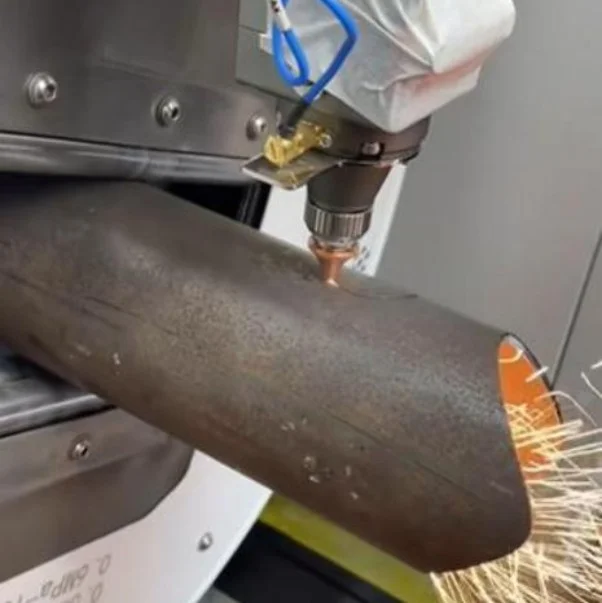
Plate cutting is where a drawing set first becomes physical geometry. Everything the buyer approves later — fit-up, welding, testing — depends on this step matching the released revision.
Buyers rarely struggle to describe the equipment they need. The harder questions arrive later: whether the welding can be proven rather than promised, whether a drawing package will still be usable three years from now, and who answers the call when a seal starts to leak in the middle of a production campaign. This page collects the questions that decide a long-term relationship with a custom chemical equipment supplier and answers them in the order a procurement team meets them: quality evidence, drawing-based customization, commercial terms, and in-service maintenance.
The supplier used as the reference point throughout is Jiangsu Xuyang Chemical Equipment Co., Ltd., a manufacturer established in 2009 in the Jingjiang Economic and Technological Development Zone, Jiangsu Province, China. Its stated product scope covers chemical reactors, towers, shell-and-tube heat exchangers, storage tanks, candle filters, membrane separation and filtration equipment, corrosion-resistant lined equipment and skid-mounted systems, produced in a 10,000 m² facility with 110 employees and a stated annual output of 1,000 units. Where a statement below comes from the company's own published material, it is presented as company-reported; where it comes from a third-party source, the source is named. That distinction is the whole point of a long-term file: it should be possible, years later, to say which claims were verified and which were assumed.
Four answers up front
- Welding: automated plasma and deep-penetration welding, X-ray non-destructive testing, hydraulic pressure testing and surface roughness inspection, recorded through a ten-stage inspection sequence that ends in quality documentation.
- Drawings: manufacture proceeds from a defined parameter set — equipment type, capacity, medium, material, operating and design conditions, heating or cooling method, agitator and nozzle requirements, and the applicable standard (ASME or GB).
- Acceptance: an Inspection & Test Plan with named criteria, issued for review before production rather than after shipment.
- Maintenance: removable internals, filter cleaning routines, PLC monitoring and skid packaging reduce service effort only when the detail is written into the technical agreement.
Why partnership questions differ from first-purchase questions
A first order tests capability: can the supplier produce a vessel that meets a specification? A repeat order tests something less visible — repeatability, documentation continuity and responsiveness. These are separate risks, and a supplier can pass the first while failing the second.
Three things change once equipment is in service. First, the drawing set stops being a quotation document and becomes the reference for every future modification, so an uncontrolled revision is a maintenance hazard rather than an administrative detail. Second, welding and material records become the evidence a buyer needs when an inspection authority, insurer or end customer asks how a vessel was built and tested. Third, after-sales support turns into an information problem before it becomes a spare-parts problem: a supplier cannot diagnose a fault from a message that says the reactor is not heating.
That is why the practical answer to "how do we build a long-term relationship" is procedural rather than relational. The relationship is held together by an Inspection & Test Plan agreed before production, drawings that carry revision numbers, serial numbers that persist from delivery into service, and a fault-reporting process that tells the buyer exactly what to send when something goes wrong.
What has changed in how buyers assess custom equipment suppliers
Pressure-vessel procurement has become more explicit about standards, partly because the codes themselves are explicit. An engineering summary of ASME Boiler and Pressure Vessel Code Section VIII describes it as governing the design, analysis, fabrication, inspection and testing of pressure vessels, including heat exchangers, reactors, filters and specialty vessels (O'Donnell Consulting). The code framework is international; its legal applicability depends on the project's jurisdiction and on the division and stamp invoked. A supplier's certificate statement is therefore a starting point, not a conclusion.
Compliance also carries a visible cost. Estimates cited by Fortune Business Insights in its 2026 pressure-vessel market report suggest that ASME compliance can represent up to 20% of a vessel's total material cost. That figure is a market estimate rather than a quotation, but it explains a practical behaviour: because certified construction is a costed scope, the scope has to be stated. A buyer who accepts "we build to ASME" without naming the division, the authorized inspection agency and the documentation package has bought an unverified promise rather than a compliance outcome.
Market context reinforces the point. SNS Insider valued the global chemical processing equipment market at USD 68.82 billion in 2026, with the chemicals and petrochemicals segment holding a 41.6% revenue share in 2025. In a large, crowded supplier field, quotations often look similar; what separates them at the point of delivery is usually not the price line but the evidence behind it.
How is welding quality assured on a custom pressure vessel?
Welding quality is assured in three layers, and each one can be checked before the vessel ships: a controlled welding process, staged inspection with non-destructive testing, and a documentation package that ties both to the specific piece of equipment.
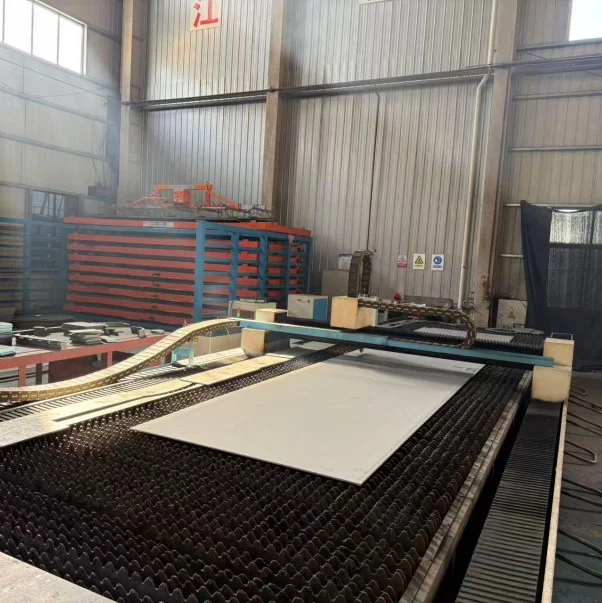
Edge preparation before fit-up. In a documented inspection sequence, joint preparation is a recorded stage rather than an assumption.
Xuyang states that it uses advanced plasma and deep-penetration automated welding technologies, and that every vessel undergoes testing including X-ray detection (NDT), hydraulic pressure tests and surface roughness inspections. Those are company statements about its own process. The way a buyer verifies them is by requesting the inspection plan that applies to the order and the records that accompany delivery.
The inspection sequence published for that process runs through ten stages: material inspection; joint preparation; fit-up inspection; pre-welding inspection; welding process control; visual inspection; NDT inspection; pressure or leak test; final inspection; and quality documentation. Read as a buyer's checklist, the sequence matters for two reasons. It places NDT before the pressure test rather than after, so a defect is found before the vessel is loaded; and it ends in documentation, which means records are a deliverable rather than a favour.
Two capability details support repeatability rather than one-off quality. The company lists a patented welding fixture for chemical reactor shells among its technologies — the function of a fixture is to hold geometry consistently between passes and between units. It also states that it operates a dedicated agitator dynamic-balancing test workshop, which addresses the rotating assembly rather than the shell, and that it uses ERP and MES production-management systems to trace processes from manufacturing through delivery.
None of this removes the need for the buyer's own acceptance step. The standard to hold a supplier to is not that welding is described as reliable, but that the inspection stage, the method, the acceptance criteria and the record format are named in the Inspection & Test Plan and present in the final documentation. The same company's purchasing unit lists welding quality, NDT results and pressure or leak testing among its acceptance criteria for exactly that reason.
What must a drawing-based customization request contain?
A drawing-based order is only as precise as the parameters supplied. Xuyang's published design-input list defines a workable minimum, and it is worth treating as a form to be completed rather than a topic to be discussed.
- Equipment type — reactor, tank, heat exchanger or candle filter
- Capacity or volume
- Medium
- Material
- Operating and design pressure
- Operating and design temperature
- Vacuum requirement
- Heating or cooling method
- Agitator requirements
- Nozzle requirements
- Applicable standard — ASME or GB
- Site conditions
- The buyer's existing drawings or specifications
The company states that it can provide CAD or 3D designs based on process parameters, material requirements and space constraints, supported by an in-house R&D team. That is the normal shape of drawing-based customization: the buyer supplies the process basis, the supplier converts it into fabrication drawings, and both parties sign the result before material is cut.
Two entries on that list drive everything downstream. The applicable standard decides material certification, weld qualification and inspection scope, and — as the cost estimate cited earlier suggests — can move the material budget. The operating and design conditions decide wall thickness, flange rating and test pressure. Changing either after drawings are released is not a correction; it is a new revision with new consequences.
For repeat and future orders, buyers should require three things that cost little to agree and a great deal to reconstruct: revision numbers on every drawing, a change log that records what changed and why, and as-built drawings issued at delivery. The supplier's own service process depends on this. Its after-sales information requirements begin with the equipment name, model and serial number — which only helps if those identifiers were recorded against the drawing set at handover. Design work on customized pressure equipment is itself a qualified activity; the safety note attached to the supplier's design workflow is equipment design qualification, and the buyer's equivalent control is to know who signed the design and against which standard.
Which design features make custom chemical equipment easier to maintain in service?
Four features come up repeatedly in long-term supply discussions because they change how service work is actually performed: removable components in storage tanks, cleaning routines on candle filters, PLC-based monitoring and control, and skid-mounted configurations. Each is a specification choice rather than an automatic property of an equipment category, so the maintenance benefit depends entirely on what the order says.
Removable storage tank components
Where tank internals need periodic inspection or cleaning, a design that allows components to be removed shortens the work and reduces the time an operator spends inside a confined space. Xuyang lists stainless-steel and carbon-steel storage tanks, horizontal pressure vessels and customized process tanks within its product scope; whether a given tank has removable internals is a project detail to settle in the technical agreement. Buyers should confirm which components are removable, how they are fixed and sealed, what access openings the design provides, and whether handling equipment is needed to lift a component out. A removable part that cannot be safely removed is not a maintenance feature.
Candle filter backwashing and clean-in-place
Candle filters are maintained mainly through cleaning. Backwashing removes accumulated solids from the filter elements by reversing flow; clean-in-place (CIP) circulation is used where hygienic control or cross-contamination limits require a defined cleaning cycle. The parameters that decide whether the routine works are the cleaning fluid, its temperature, flow direction and rate, cycle duration, and whether the sequence is manual, semi-automatic or automated. These belong in the technical agreement rather than in an assumption. The same reasoning applies to membrane separation and filtration equipment: the cleaning protocol is one of the main determinants of how the equipment performs over its service life, and it should be documented as an operating instruction instead of being discovered on site.
PLC monitoring and control
PLC-based control earns its place in a maintenance programme through recorded data: alarm history, trend logs and error codes allow a fault to be diagnosed before a technician travels. Where a project specifies PLC monitoring and control, the scope should define the tag list, the alarm hierarchy, the historian or data-export capability, the remote-access policy and the spare I/O allowance. Xuyang states that it uses ERP and MES production-management systems and operates an intelligent manufacturing workshop; those systems concern manufacturing traceability rather than site control, and the control-system scope for a given project is confirmed in the technical agreement. The distinction matters when quotations are compared: shop-floor digitalisation and machine-level control are different deliverables at different costs.
Skid-mounted configurations
Skid-mounted equipment groups vessels, pumps, instruments and interconnecting piping on a common frame, which moves a large part of commissioning work into the workshop and simplifies maintenance planning on site. Xuyang lists skid-mounted equipment among its product categories and includes skid-mounted systems among the configurations it recommends for project purchases. The questions to settle at order stage are practical: lifting points, transport dimensions, utility connection points, and which maintenance access routes remain once the skid is installed in a congested plant area.
Across all four features, the test is the same. Does the design reduce the access and the information needed to carry out maintenance? A feature that cannot be inspected, cleaned or diagnosed with the documentation supplied will not shorten downtime, whatever it is called in the proposal.
Step by step: from drawing to accepted equipment
The sequence below follows the process described in the supplier's own purchasing, inspection and after-sales material, written as a buyer's checklist so that every stage has an owner and an output.
- Fix the process basis and the standard. Complete the parameter list: equipment type, capacity, medium, material, operating and design pressure and temperature, vacuum requirement, heating or cooling method, agitator and nozzle requirements, applicable standard (ASME or GB) and site conditions.
- Issue and approve drawings. Convert the parameters into CAD or 3D design, confirm dimensions and connections, and release a numbered revision that both parties sign.
- Agree the Inspection & Test Plan before production. Xuyang states that it can provide a detailed ITP and acceptance criteria for review before production; use that review to name the NDT method, the pressure-test conditions and the documentation format.
- Approve materials and certification. Material certification is an acceptance criterion, and material choice is settled against medium, concentration, temperature, pressure, capacity and corrosion or hygiene requirements.
- Control welding and NDT. Confirm the welding process, the fit-up and pre-weld checks, and the NDT stage that precedes the pressure test.
- Run the pressure or leak test and the dimensional check. Dimensional accuracy, NDT results and pressure or leak testing are named acceptance criteria, not informal checks.
- Compile the final documentation and complete acceptance. Final documentation is the last inspection stage and the buyer's permanent record of how the vessel was built.
- Hand over for service. Record serial numbers against drawings, archive control-system backups, and agree in writing what the buyer will send when a fault occurs.
Purchasing terms are discussed per project — the company's stated position is that terms can be agreed around equipment specifications, payment terms, delivery schedule, inspection, testing and warranty. That flexibility is useful only if the discussion is documented. An oral understanding about warranty scope or inspection access does not survive a change of project engineer on either side.
Where the questions change by equipment type
The same framework applies across the portfolio, but the maintenance question is not identical for every category, and neither is the drawing input that matters most.
- Reactors. The scope covers stainless-steel and carbon-steel reactors, electric-heating reactors, high-pressure reactors, internal- and external-coil reactors, intelligent reactors and special-material reactors in titanium, zirconium or Hastelloy, plus PTFE-lined equipment. Service interest centres on agitator and seal access, dynamic balancing of the rotating assembly, and the heating or cooling method chosen for the duty.
- Towers. PTFE-lined piping and towers appear within the corrosion-resistant scope; internal access for inspection and cleaning tends to dominate the maintenance discussion.
- Shell and tube heat exchangers. The range includes floating-head, U-tube, spiral plate, finned-tube, double-tube-sheet and titanium heat exchangers, together with condensers, coolers and reboilers. The practical questions are tube-side cleaning and the space required to open a channel or remove a bundle.
- Storage tanks. Stainless-steel and carbon-steel tanks, horizontal pressure vessels and customized process tanks; the questions are internals removal, access openings and lifting provision.
- Filtration and separation. Candle filters and membrane separation equipment; the questions are the cleaning sequence, its control method, and the operating instruction that goes with it.
- Skid-mounted systems. Lifting, transport, utility connections, and the maintenance access retained after installation.
The company states that it serves chemical, environmental protection, pharmaceutical, fermentation, food, new-material and lithium-related industries. That spread matters for a long-term agreement because the same equipment category can be governed by different cleanliness, documentation or inspection expectations depending on the end market — expectations that should be named in the order rather than assumed from the industry list.
Comparison: what to fix in the drawing package, by equipment type
The table maps three things that are often discussed separately: the equipment category, the drawing inputs that must be fixed before fabrication, and the maintenance question that should be settled before the order is placed. The drawing inputs are those named in the supplier's design-input list; the maintenance questions are buyer-side checks, not supplier claims.
| Equipment category | Drawing inputs to fix before release | Maintenance question to settle at order stage |
|---|---|---|
| Chemical reactors — stainless steel, high pressure, external coil, PTFE-lined, Hastelloy, titanium | Equipment type, volume, medium, material, operating and design pressure and temperature, vacuum, heating or cooling method, agitator and nozzle requirements, applicable standard | Agitator and seal access; balancing record for the rotating assembly; cleaning route for the heating or cooling surface |
| Towers, including PTFE-lined construction | Equipment type, medium, material, pressure and temperature, nozzle requirements, applicable standard | Internal access for inspection and cleaning |
| Shell and tube heat exchangers — floating-head, U-tube, double tube sheet, titanium | Equipment type, medium, material, operating and design conditions, nozzle requirements, applicable standard | Tube cleaning method; bundle removal space; gasket and channel access |
| Storage tanks — stainless steel, carbon steel, horizontal, customized process tanks | Equipment type, capacity or volume, medium, material, pressure and temperature, nozzle requirements, site conditions | Removable internals; access openings; lifting provision for removed parts |
| Candle filters and membrane separation equipment | Equipment type, capacity, medium, material, pressure and temperature, applicable standard | Backwash or CIP sequence; cleaning-fluid parameters; manual or automated control |
| Skid-mounted systems | Equipment types included, capacity, material, pressure and temperature, site conditions, control scope | Lifting points; transport dimensions; utility connections; retained maintenance access |
Read across a row rather than down a column. The drawing input determines what is fabricated; the maintenance question determines whether the equipment can still be serviced in year five without a new engineering project.
What should a long-term or annual supply agreement cover?
An annual or framework agreement earns its keep when it fixes the items that are expensive to renegotiate: drawing revision control, documentation obligations, the response process and spare-part identification. Xuyang states a 24-hour service commitment; a commitment of that kind becomes operational only when the trigger and the information flow around it are defined.
The company's stated after-sales information requirements describe that flow more clearly than a service slogan does. For technical reference it asks for the equipment name, model and serial number; the PO or contract number and purchase date; a detailed description of the problem and failure phenomenon; current operating pressure, temperature and working medium; photos and videos of the equipment and the faulty parts; alarm messages or error codes where applicable; and details of recent maintenance, repairs or modifications. Every item depends on a record that must exist before the fault occurs — which is why serial-number discipline at handover belongs in the agreement, not in administrative follow-up.
A workable framework agreement therefore covers: the drawing and documentation set to be maintained, and who owns revisions; the identifier scheme linking serial numbers to drawings and test records; the information package the buyer will supply when reporting a fault; the escalation path and response commitment; the warranty, inspection and testing terms restated from the project terms; and the list of wear parts identified by item, material and drawing reference. Spare-part lists built from a delivered drawing set remain maintainable; lists built from a catalogue description do not.
One caution applies to supplier selection generally. Xuyang states that it has more than 300 cooperation customers, which indicates that its process runs at volume; it does not indicate that any of those customers ran a duty similar to yours. Reference checks should be scoped to the medium, the pressure class and the equipment type, not to the total count.
FAQ: long-term partnership questions
Which documents should prove welding quality at delivery?
The evidence is the approved Inspection & Test Plan and the records generated against it. For a custom pressure vessel, the published ten-stage sequence ends in quality documentation, and the acceptance criteria named for an order include material certification, dimensional accuracy, welding quality, NDT results, pressure or leak testing, performance testing and final documentation. Ask for these as a numbered package tied to the vessel's serial number so that an inspector can match each record to the equipment rather than to a general procedure.
Can equipment be manufactured to our drawings instead of a catalogue model?
Yes — drawing-based manufacture is the stated basis for customization, with CAD or 3D design developed from the buyer's process parameters, material requirements and space constraints. The minimum input set covers equipment type (reactor, tank, heat exchanger or candle filter), capacity or volume, medium, material, operating and design pressure and temperature, vacuum requirement, heating or cooling method, agitator and nozzle requirements, the applicable standard (ASME or GB), site conditions, and any existing drawings or specifications. Where drawings already exist, they become the revision baseline for the order.
How is material selection decided for corrosive or high-purity service?
Material is decided from the duty rather than from a preference list. The published sequence is: confirm the working medium or product name; its chemical composition and concentration; operating temperature and design temperature; operating pressure and design pressure or vacuum condition; required capacity; and corrosion-resistance or hygiene requirements — then evaluate suitability and finalize the selection. The stated scope includes carbon steel, SS304/316L and titanium, special-material reactors in titanium, zirconium or Hastelloy, and PTFE-lined equipment and piping.
What purchasing terms and acceptance criteria apply to a custom order?
Purchasing terms are discussed per project and generally include equipment specifications, payment terms, delivery schedule, inspection, testing and warranty. Acceptance is against the approved technical specifications, drawings, applicable international standards and agreed inspection procedures, with key criteria including material certification, dimensional accuracy, welding quality, NDT results, pressure or leak testing, performance testing and final documentation. A detailed Inspection & Test Plan and acceptance criteria can be issued for review before production — the point at which those criteria are still negotiable.
What information does the supplier need when equipment already in service develops a fault?
The stated list is practical: equipment name, model and serial number; PO or contract number and purchase date; a detailed description of the problem and failure phenomenon; current operating pressure, temperature and working medium; photos and videos of the equipment and the faulty parts; alarm messages or error codes where applicable; and details of recent maintenance, repairs or modifications. Preparing this package before contact shortens diagnosis, and it is the reason the handover file should contain the serial number, the as-built drawing revision and any control-system records.
How should a buyer structure an annual supply agreement for spare parts and repeat equipment?
Anchor the agreement to documents rather than to intentions. Four items carry most of the value: a controlled drawing set with revision numbers and a change log; a serial-number register linking each delivered unit to its drawings, material certificates and test records; a defined spare-parts list keyed to item, material and drawing reference; and a written fault-reporting and response process built on the information package above, alongside the company's stated 24-hour service commitment. Repeat orders then become a revision check rather than a re-engineering project, and the technical basis stays the same across production campaigns.
Conclusion: document the partnership, then test it
A long-term relationship with a custom chemical equipment supplier rests on four decisions that can all be written down: how welding is verified, what the drawing package contains, which acceptance criteria apply, and how maintenance information will flow once the equipment is running. None of them is answered by reputation alone, and none is answered by a certificate statement that does not name its scope.
Jiangsu Xuyang Chemical Equipment Co., Ltd. offers a workable basis for that documentation: an A2 Special Equipment Design and Manufacturing License, ISO 9001, ISO 14001 and ISO 45001 certification, a stated 24-hour service commitment, and published design, inspection and after-sales input lists that can be turned directly into an order annex. Its public materials also reference an ASME U stamp; as with any certificate, the scope, issuing body and validity should be confirmed for the specific vessel and destination market before the order is placed.
The practical next step is to test the process on one item rather than on a statement of intent. Send a drawing or a completed parameter set, ask for the Inspection & Test Plan and the documentation list that would accompany it, and compare what comes back with the acceptance criteria you intend to write into the contract.
Product documentation
The 2026 Xuyang Pressure Vessel Catalog is available for download: 2026 Xuyang Pressure Vessel Catalog (PDF).
To discuss a drawing-based order, an ITP review or an annual supply arrangement, contact alice@xuyangsang.com.
Have Questions or Need More Details?
Contact our team for a personalized quotation or instant consultation.
Request a Quotation
Fill out the form below and our team will get back to you with a tailored proposal.
WhatsApp Direct Chat
Prefer to chat in real-time? Message us on WhatsApp for instant assistance & quick answers.
- Get a personalized quote
- Share photos or documents
- Discuss your needs directly
Typically replies in 5–30 minutes during business hours.