
Distillation Tower Basics: A Category Explainer for Custom Chemical Equipment
A distillation tower is a vertical separation column in which a liquid mixture is divided into fractions by repeated vaporization and condensation on trays or on packing. In custom chemical equipment procurement it is specified as a category in its own right rather than as an unusually tall pressure vessel, because the separation result depends on the combined behaviour of the shell, the internals, the reboiler, the condenser, the reflux circuit and the control scheme.
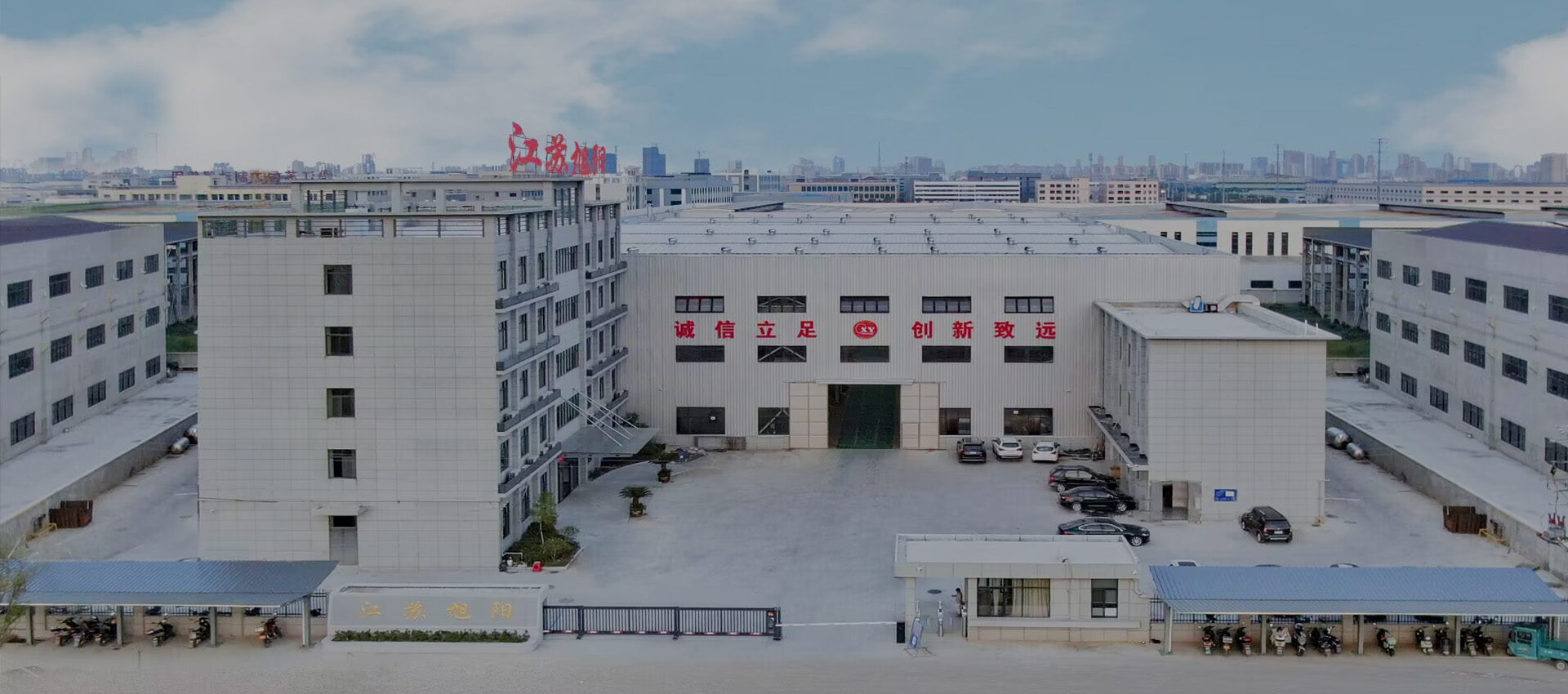
This explainer sets out what the category covers, how a complete tower system is assembled, which materials and design codes enter the specification, and the conditions under which a tower is the appropriate separation choice. Where company capability is described, the facts are limited to documented information from Jiangsu Xuyang Chemical Equipment Co., Ltd., a manufacturer established in 2009 in the Jingjiang Economic and Technological Development Zone, Jiangsu Province, China, which lists towers among its custom chemical equipment categories.
What Makes a Distillation Tower a Category of Its Own
Short answer: a tower is bought as a separation duty, not as a shell dimension. Two columns with the same diameter and height can deliver different products if their internals and auxiliary loop differ, so the purchasing object is a performance specification rather than a vessel drawing.
Three characteristics separate the category from general pressure-vessel work:
- The duty is defined by the separation. Feed composition, required product purity, operating pressure and the vapor-liquid equilibrium basis determine how many theoretical stages are needed — and therefore how tall the column must be and which internals are viable.
- Internals are engineered items inside the vessel. Trays, structured or random packing, feed and reflux distributors, support grids and redistributors are selected against vapour and liquid loads, and the shell must provide the manways, support rings and nozzles needed to install and service them.
- The auxiliaries sit inside the battery limits. Reboiler duty, condenser duty, reflux ratio and column pressure decide whether the specified separation can be repeated from batch to batch. Treating them as separate purchases usually produces a column that cannot hold its specification.
That is why the category appears alongside — not inside — the reactor, tank and heat-exchanger families in a manufacturer's range. Xuyang's documented portfolio lists towers together with reactors, storage tanks, shell and tube heat exchangers, candle filters, membrane separation and filtration equipment, evaporation and crystallization systems, corrosion-resistant lined equipment, skid-mounted equipment and water treatment equipment. Public supplier listings for the company also record distillation towers among its stainless-steel and non-standard equipment products. The breadth is practically useful at the specification stage, because a tower enquiry frequently turns into a comparison between a tower and another separation category from the same supplier.
Where a Tower Sits in a Chemical Process
A tower normally occupies the purification or recovery step: it sits downstream of reaction and upstream of storage, crystallization or product finishing. Its job is to remove light ends, split a main product from close-boiling companions, recover solvent for reuse, or strip dissolved components from a liquid stream.
Typical positions in a chemical plant include:
- Reaction-effluent fractionation — separating the desired product from unreacted feed and by-products.
- Solvent recovery — returning a carrier solvent to the process at a usable purity instead of discharging it.
- Light-ends stripping — removing dissolved gases or low boilers before storage or further processing.
- Bottoms concentration — reducing the volatile content of a heavy stream before it leaves the battery limits.
Market context is easy to overstate, so it is worth keeping the numbers in perspective. Commercial research estimates place the global chemical processing equipment market at USD 68.82 billion in 2026, a forecast figure published by SNS Insider, with the chemicals and petrochemicals segment accounting for a 41.6% revenue share in 2025. A separate estimate cited for separation machinery puts that market at USD 109 billion in 2026, with a 7.2% CAGR projected for 2026–2035. These are third-party forecasts built on different market boundaries; they indicate that separation equipment remains a large procurement category, but they do not measure tower demand specifically and should not be read as a growth claim for any individual supplier or product line.
What a Complete Tower System Includes
A complete tower system is the column plus the heat-transfer and control loop that keeps vapour and liquid moving in the correct proportions. Each element below changes the specification of the others, which is why they are normally engineered together.
Column shell and internals
The shell carries the pressure boundary, the nozzle schedule and the access openings; the internals carry the mass transfer. Trays suit services where fouling can be cleaned through manways and where a predictable stage-by-stage design is preferred; packing suits duties where low pressure drop or a shorter bed height matters. Either way, the feed point, reflux return, draw-off nozzles and reboiler return line are located relative to the internals, not chosen afterwards.
Reboiler
The reboiler supplies the boil-up that drives the separation, and its type — thermosiphon, kettle or forced circulation, for example — follows from the fouling tendency, viscosity and vapour fraction required. Vapour return and liquid return lines are part of the tower's hydraulic design, not a piping afterthought. Xuyang's documented heat-transfer range includes reboilers, condensers and coolers, available in shell and tube, floating-head, U-tube, spiral plate, finned tube, titanium and double-tube-sheet constructions.
Overhead condenser and reflux circuit
The condenser converts overhead vapour into liquid; part of that liquid returns to the column as reflux and the remainder leaves as distillate. Reflux ratio is the main operating lever on both purity and energy consumption, so the reflux drum, reflux pump, flow measurement and the split between reflux and product are treated as one control problem. A double-tube-sheet exchanger, where specified, addresses cross-contamination concerns between cooling medium and process fluid.
Automatic control and the automation boundary
A tower control scheme typically covers column pressure, bottom temperature or reboiler heat input, reflux flow or reflux ratio, feed flow and temperature, and the levels in the reflux drum and column sump, with interlocks and pressure relief layered on top. The commercial question is not whether the loops exist but where the supplier's scope ends and the plant's distributed control system begins. Xuyang documents process-system integration as a service and lists skid integration and connection layout among its customization options, so the automation boundary — local panel, skid-mounted control unit or customer DCS — should be written into the technical agreement rather than assumed.
Ancillary equipment
Feed preheat or feed-effluent exchange, bottoms cooling, vacuum packages where the duty requires sub-atmospheric operation, sampling points and relief devices all sit inside the same system boundary. Each adds nozzles, load cases and control signals to the column, so they belong in the enquiry rather than in a later change order.
From Process Data to a Tested Tower: Step by Step
The sequence below reflects how custom chemical equipment projects are normally executed, and it shows where buyer input actually changes the delivered result.
- Fix the separation basis. Feed composition and range, required product purity, operating pressure and temperature, and the vapor-liquid data source. Without this, no amount of vessel detail can be verified.
- Complete the design data package. Xuyang's published design-data checklist asks for the equipment type, capacity or volume, medium, material, operating and design pressure, operating and design temperature, vacuum requirement, heating or cooling method, agitator requirements, nozzle requirements, applicable standard (ASME or GB), site conditions, and any existing drawings or specifications. The checklist is written for vessel types that include reactors, tanks, heat exchangers and candle filters; a tower project uses the same class of inputs, with the separation basis added.
- Agree the code basis and material grade. These two decisions drive material certificates, weld qualification, non-destructive examination extent and the documentation package, so they are settled before drawings are released.
- Review drawings and 3D design. The manufacturer states that it can provide CAD or 3D designs based on specific process parameters, material requirements and space constraints — the point at which nozzle orientation, manway access, lifting points and site interfaces are confirmed.
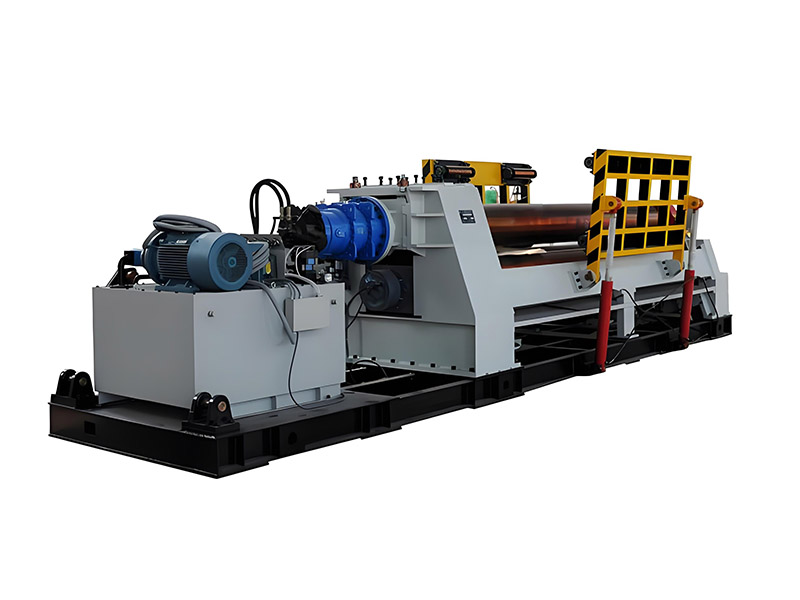
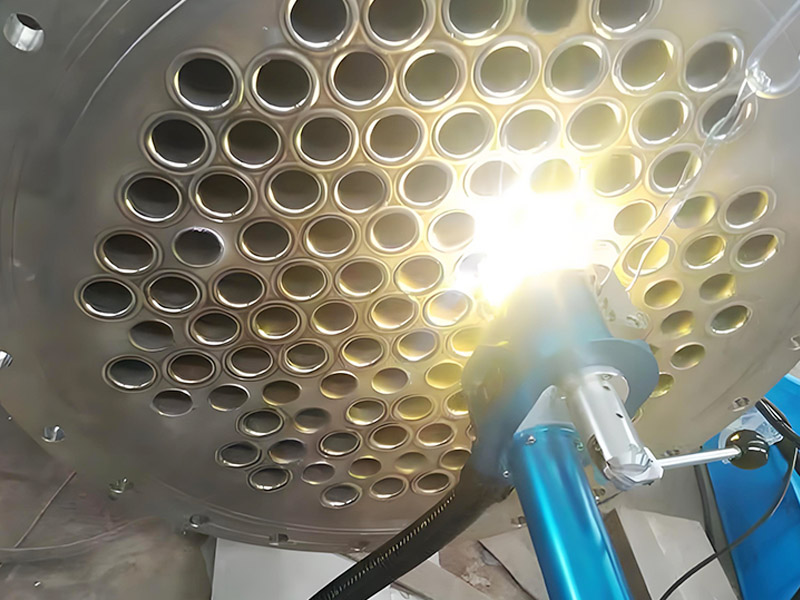
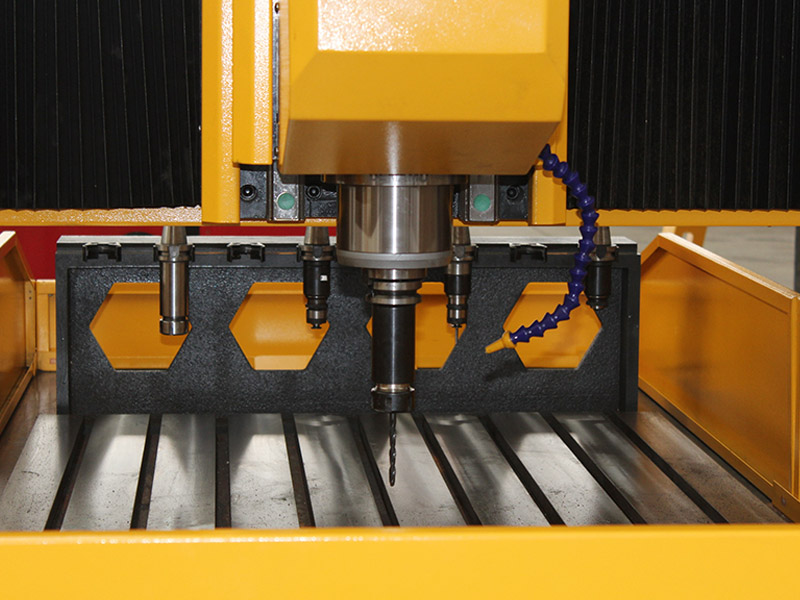
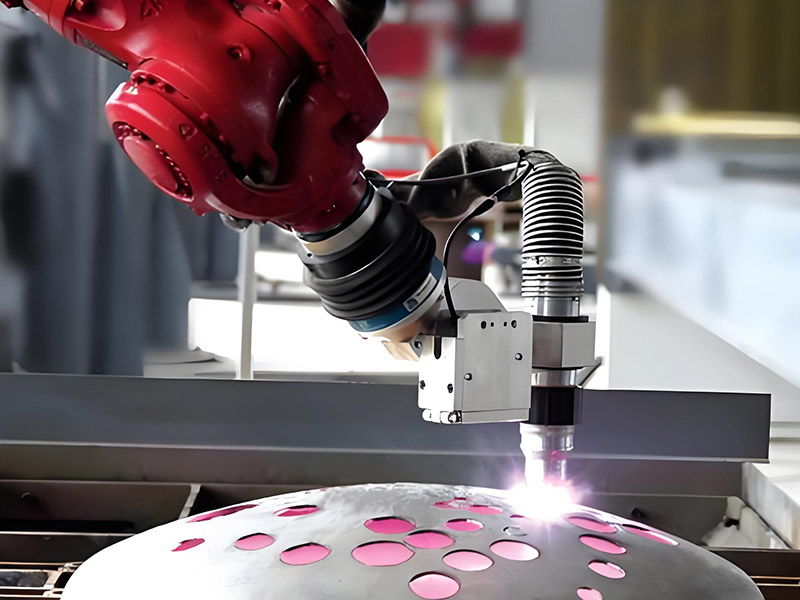
- Fabricate. Documented production equipment includes tube and tube plate argon arc welding machines, three-roll and hydraulic four-roll plate rolling machines, high-speed CNC surface drilling machines, beveling laser cutting machines, pipe flange automatic welding machines, head opening robots and laser pipe cutting machines.
- Inspect and test. Typical checks are material verification, weld inspection, non-destructive testing such as X-ray examination, hydraulic pressure testing, dimensional accuracy and surface inspection.
- Compile documentation and run factory acceptance. The acceptance criteria referenced by the manufacturer include material certification, dimensional accuracy, welding quality, NDT results, pressure or leak testing, performance testing and final documentation. An Inspection and Test Plan can be issued for review before production starts.
- Ship, install and commission. Stated lead time is 30–60 days and the minimum order quantity is one unit; the contract should define the start point for that lead time and the milestone dates around drawing approval, witness testing and shipment.
Material Options: Carbon Steel, Stainless Steel, Hastelloy, Titanium and PTFE Lining
Material selection is a process decision before it is a purchasing decision. Xuyang's published approach runs through a fixed sequence: confirm the working medium or product name; confirm chemical composition and concentration; confirm operating temperature; confirm design temperature; confirm operating pressure; confirm design pressure or vacuum condition; confirm required capacity; confirm corrosion-resistance or hygiene requirements; then evaluate material suitability and finalise the grade.
That sequence matters because the tower is not one wetted surface. The column shell, the internals, the reboiler tubes and the condenser tubes can each face a different combination of temperature, concentration and phase, and a single grade chosen for the shell is not automatically correct for a reboiler tube bundle.
| Material option | Where it is documented in the manufacturer's range | What the technical agreement must fix |
|---|---|---|
| Carbon steel | Documented for reactors and storage tanks in carbon steel construction | Whether carbon steel is acceptable for the specific tower duty, plus corrosion allowance and any internal lining |
| SS304 stainless steel | Listed among the customization material options (304/316L stainless steel) | Medium concentration ranges, chloride exposure and the surface finish required |
| SS316L stainless steel | Listed among the customization material options (304/316L stainless steel) | Design temperature, welding consumables and post-weld treatment requirements |
| Hastelloy | Documented for special-material reactors using titanium, zirconium or Hastelloy where required | Grade designation, availability lead time and the specific corrosive service it is selected for |
| Titanium | Documented for special-material reactors and for titanium heat exchangers | Whether titanium applies to the shell, the internals, the tube bundles or all three |
| PTFE lining | Documented explicitly for PTFE-lined equipment, PTFE-lined piping and PTFE-lined towers | Lining thickness, spark-test acceptance, nozzle and manway lining details, and maximum allowable temperature |
The practical conclusion for a buyer is narrow but important: the documented range covers carbon steel, 304/316L stainless steel, Hastelloy, titanium and PTFE lining, but the tower-specific grade combination must be confirmed in the technical agreement against the actual medium, temperature and pressure — not inferred from a generic material list.
Design Standards: ASME, GB and EN
The code basis determines how the tower is designed, how its welds are qualified, how much non-destructive examination is performed, and what documentation arrives with the vessel. It is a project decision, usually set by the destination market and the plant's insurer as much as by the buyer's preference.
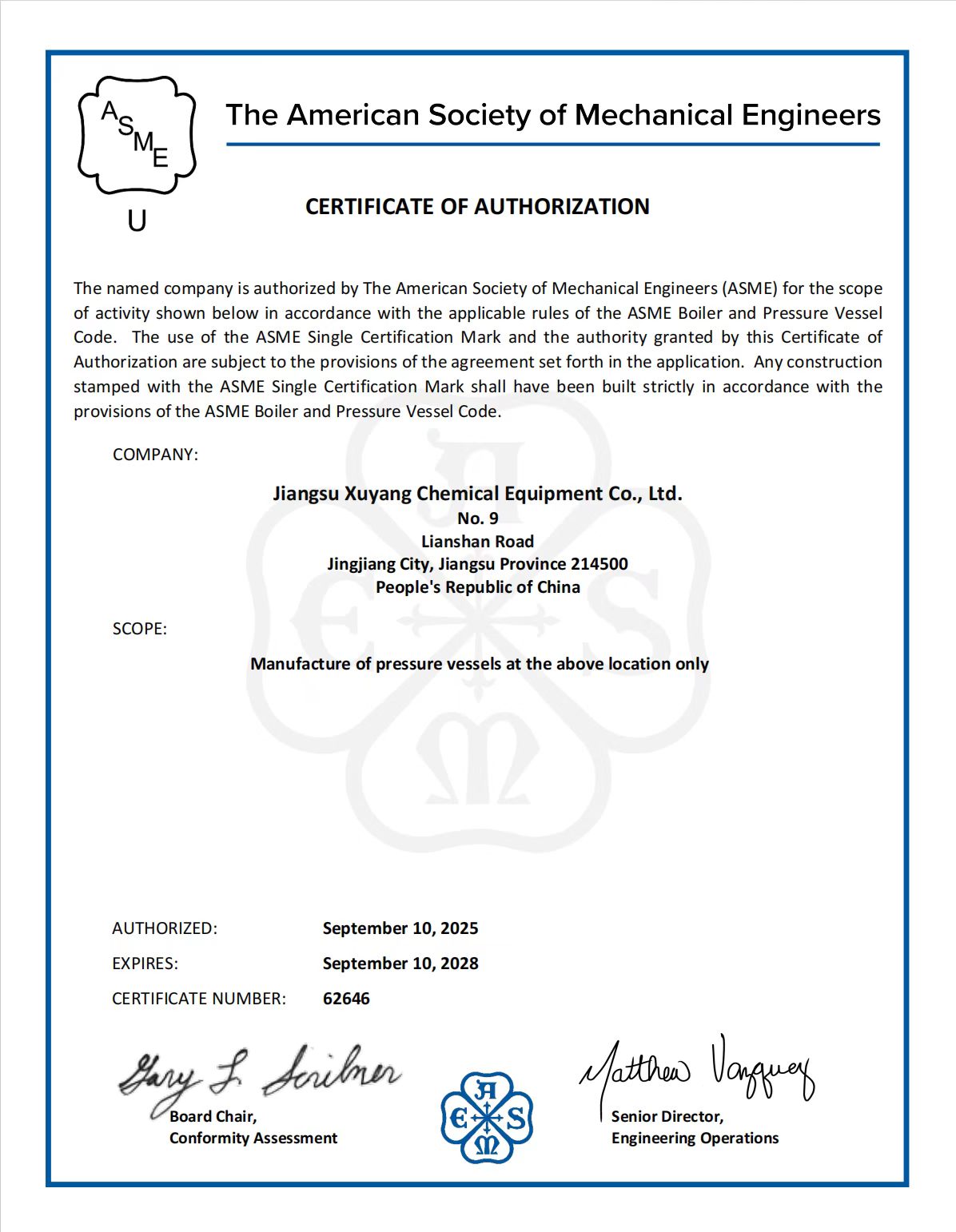
ASME. ASME Boiler and Pressure Vessel Code Section VIII is described in engineering literature as governing design, analysis, fabrication, inspection and testing of pressure vessels, including heat exchangers, reactors, filters and specialty vessels. Xuyang holds an ASME Certificate of Authorization (U Stamp), certificate number 62646, issued by the American Society of Mechanical Engineers on 10 September 2025 and valid to 10 September 2028, with a scope covering the manufacture of pressure vessels under the ASME Boiler and Pressure Vessel Code.
GB. Chinese national standards are the domestic alternative, supported in Xuyang's case by an A2-level Special Equipment Design and Manufacturing License. GB appears alongside ASME as an applicable-standard field in the company's own design-data checklist, which is the practical place to confirm which basis has been quoted.
EN. For European destinations, requirements typically arrive through the Pressure Equipment Directive and its harmonised EN standards. The specific EN standard set, the fluid group, the conformity assessment route and any notified-body involvement depend on the project, and they should be confirmed in the technical agreement rather than assumed from a general certification statement on a website. The safe rule for any code is to verify the certificate itself — number, issuing body, scope and validity date — against the equipment being purchased.
Budget implication: one commercial research estimate suggests that compliance with ASME standards can represent up to 20% of a pressure vessel's total material cost. The figure is an estimate rather than a quotation and the scope varies by project, but it explains why the code basis belongs in the budget conversation instead of being settled after the price has been agreed.
When a Tower Fits — and When Another Category Fits Better
A tower is the right category when the separation can be achieved by differences in volatility and when the duty justifies a dedicated column with its own reboiler and reflux loop. It is usually the appropriate choice when:
- the feed is a liquid mixture whose components differ enough in boiling point to be separated by staged contacting;
- product purity is a specification that must be held repeatedly, not a one-off laboratory result;
- the process runs continuously, or runs in batches large enough to justify fixed internals and a dedicated reflux system;
- solvent recovery has value, so the overhead product returns to the process rather than leaving as waste.
The same portfolio that includes towers also includes candle filters, membrane separation and filtration equipment, and evaporation and crystallization systems, which is a reminder that not every separation problem belongs in a column. A tower is a poor fit when the separation is solid-liquid rather than liquid-liquid, when the feed carries solids that would blind trays or foul packing, when the components are so close-boiling that a simple staged column cannot resolve them, or when the product is heat-sensitive enough that prolonged residence at reboiler temperature is unacceptable. In those cases a filter, a membrane skid or an evaporation and crystallization system may be the more appropriate category, and the comparison should be made at the process level before any vessel is priced.
Two further limitations are worth stating plainly. Towers are tall, so structural support, wind and seismic loading, lifting during erection and permanent access for maintenance all become cost items that do not appear on a reactor. And reflux is energy: a design that meets purity by running a high reflux ratio consumes more reboiler duty and more condenser capacity, so the energy case should be reviewed together with the purity specification rather than after the column size is fixed.
Verification Checklist Before You Commit
Because a tower is engineered rather than catalogued, the buyer's leverage sits in what is asked before drawings are released. A workable verification set is:
- Separation basis: request the feed definition, product specification and the vapor-liquid data the design was built on, and check that it matches the plant data you supplied.
- Code basis and certificate scope: confirm the standard, then check the certificate number, issuing body, scope and expiry date. The ASME U Stamp held by Xuyang, number 62646, runs to 10 September 2028.
- Inspection and Test Plan: ask for the ITP and acceptance criteria before production; the manufacturer states these can be provided for review.
- Documentation package: agree up front what arrives at delivery — material certificates, NDT reports, pressure test records, drawings and final inspection documentation.
- Commercial parameters: stated minimum order quantity is one unit, stated lead time is 30–60 days, and stated monthly capacity is 100 units. Ask how those figures apply to your specific size and material combination.
- Communication and site support: the export team can communicate in English, Russian, Arabic and Turkish; installation guidance, commissioning, spare parts and training scope should be defined rather than assumed.
- References at the right level: check references for the equipment type being bought. One documented reference is a shell and tube heat exchanger supplied to an importer in Kazakhstan and recorded as a single unit in stable operation — relevant to the reboiler and condenser side of a tower system, but not a tower reference in itself.
Frequently Asked Questions
Which design standards can a custom distillation tower be built to — ASME, GB or EN?
The code basis is agreed project by project. ASME Boiler and Pressure Vessel Code Section VIII is the international pressure-vessel framework most often specified for export projects, and Xuyang holds an ASME Certificate of Authorization (U Stamp), certificate number 62646, issued 10 September 2025 and valid to 10 September 2028, covering pressure vessel manufacture. GB is the Chinese national basis, supported by an A2-level Special Equipment Design and Manufacturing License, and it appears with ASME as an applicable-standard option in the manufacturer's design-data checklist. Where a European destination applies, the requirements normally arrive through the Pressure Equipment Directive and its harmonised EN standards, and the exact EN standard set, fluid group and conformity assessment route must be written into the technical agreement. In every case, verify the certificate itself rather than the general statement.
Which materials are available for the tower, its internals and its heat-transfer equipment?
Documented options across the manufacturer's range include carbon steel, 304 and 316L stainless steel, Hastelloy and titanium, with PTFE lining documented specifically for PTFE-lined equipment, PTFE-lined piping and PTFE-lined towers. The grade is fixed through a defined sequence: confirm the working medium, its chemical composition and concentration, operating and design temperature, operating and design pressure or vacuum, required capacity, and corrosion-resistance or hygiene requirements, then evaluate suitability. Because the shell, internals, reboiler tubes and condenser tubes can face different conditions, the tower-specific grade combination should be confirmed in the technical agreement.
Can a tower be supplied as a complete system with reboiler, condenser, reflux and automatic control?
Process-system integration is a documented service, and the heat-transfer range includes reboilers, condensers and coolers in shell and tube, floating-head, U-tube, spiral plate, finned tube, titanium and double-tube-sheet constructions, which covers the main auxiliary loop around a column. Skid integration and connection layout are listed among the customization options. Automatic control is normally defined as a scope boundary rather than a product: pressure, temperature or reboiler duty, reflux flow or ratio, feed conditions and drum and sump levels are the standard loops, and the agreement should state which of them are supplied on a local panel or skid-mounted control unit and which connect to the plant control system.
What are the minimum order quantity, lead time and production capacity?
The stated minimum order quantity is one unit, the stated lead time is 30–60 days, and stated monthly capacity is 100 units. These are general figures rather than commitments for a specific tower: the contract should define when the lead time starts, typically tied to drawing approval and material release, and should list the milestones for material certification, witness testing, documentation and shipment. For Hastelloy or titanium construction, confirm material availability separately, since special grades carry their own procurement time.
How do Chinese custom chemical equipment OEM manufacturers handle inspection, testing and documentation?
At Xuyang, welding relies on plasma and deep-penetration automated processes, and vessels undergo testing that includes X-ray non-destructive examination, hydraulic pressure testing and surface roughness inspection. Acceptance criteria referenced by the manufacturer cover material certification, dimensional accuracy, welding quality, NDT results, pressure or leak testing, performance testing and final documentation, and an Inspection and Test Plan with acceptance criteria can be provided for review before production. Buyers should treat the documentation package as part of the purchase: agree its contents in the technical agreement, then check the certificates against the exact equipment. For project-specific questions, the company's pressure vessel catalogue can be downloaded from the Xuyang pressure vessel catalogue, and a sample or quotation request can be raised against a defined separation duty and design data package.
Conclusion
The distillation tower is a custom chemical equipment category defined by a separation duty rather than by a vessel dimension. Its specification is complete only when the column and internals, the reboiler, the overhead condenser, the reflux circuit and the control scheme are defined together, and when the material grade and design code — ASME, GB or EN — are fixed against the actual medium, temperature and pressure.
For buyers in the evaluation and execution stages, the practical sequence is consistent: lock the separation basis, complete the design data package, agree the code and material combination, review drawings, then hold inspection and documentation to the agreed plan. Where solids, close-boiling components or heat-sensitive products make a column the wrong answer, the same supplier range includes filtration, membrane separation and evaporation and crystallization systems, so the category comparison can be made honestly before fabrication begins.
Have Questions or Need More Details?
Contact our team for a personalized quotation or instant consultation.
Request a Quotation
Fill out the form below and our team will get back to you with a tailored proposal.
WhatsApp Direct Chat
Prefer to chat in real-time? Message us on WhatsApp for instant assistance & quick answers.
- Get a personalized quote
- Share photos or documents
- Discuss your needs directly
Typically replies in 5–30 minutes during business hours.