
Jacket vs. External Coil Reactor: Heating & Cooling Guide
Jacket vs. External Coil Reactor: Heating & Cooling Guide
A reactor jacket and an external coil both move heat through the vessel wall, but they put the heat-transfer surface and the pressure-containing channel in different places. That difference decides which utilities the reactor can use, how many pressure spaces appear on the design drawing, how much outside surface the insulation must cover, and what the supplier has to demonstrate at acceptance. For a custom chemical reactor, the practical decision path starts with the required heat-up and cool-down time, the heating and cooling media available on site, and the design pressure and temperature of each space.
Jiangsu Xuyang Chemical Equipment Co., Ltd. (Xuyang) is a chemical equipment manufacturer established in 2009 in Jingjiang, Jiangsu, China. Its portfolio covers reactors, storage tanks, shell-and-tube heat exchangers, towers, candle filters, membrane separation and filtration equipment, corrosion-resistant lined equipment and skid-mounted process systems. The reactor range is offered with jacket or external coil structure, with steam, thermal oil or electric heating, and with cooling water or chilled water cooling. Those published options are the basis for the decision sequence below; the article compares configurations, not suppliers.
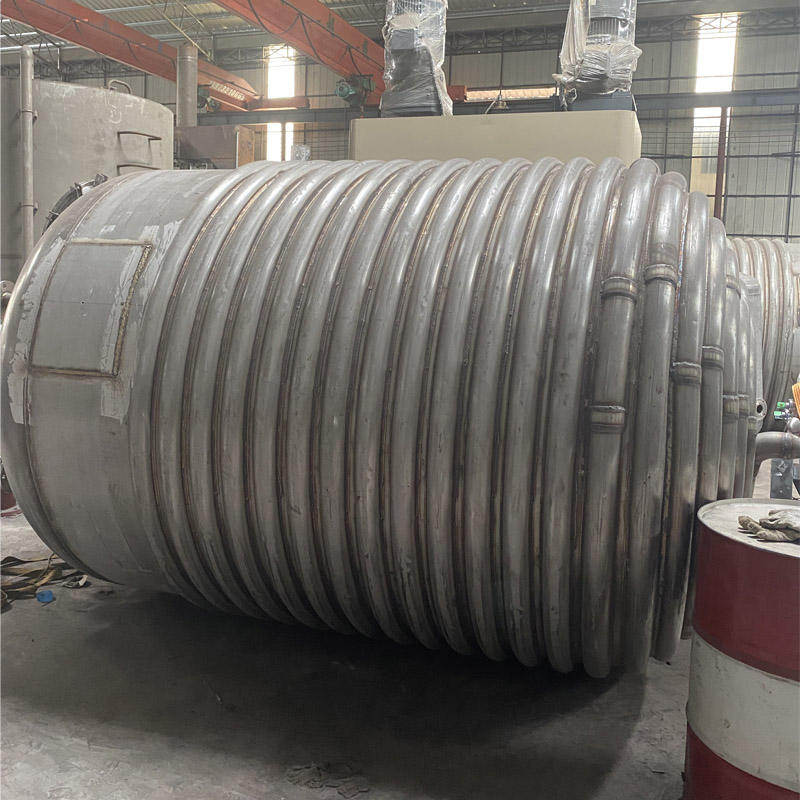
What a Jacket and an External Coil Actually Do
A jacket is a second shell formed around part of the vessel, usually the cylindrical shell and often part of the bottom head, creating an annular space through which the heating or cooling medium flows. Heat passes from the medium, through the vessel wall, into the process mass. The jacket is itself a pressure-containing space, and its heat-transfer area is fixed once the vessel diameter, jacketed length and head coverage are set.
An external coil, including the half-pipe variant, is a channel attached to the outside of the shell. The medium flows inside the coil, and heat passes through the coil wall and the shell wall into the process mass. Because the coil is a separate narrow channel, its length, number of starts, pitch, cross-section and wall thickness can be varied more freely than a jacket's area, and it can add surface over a length of shell that a jacket would not cover. Neither configuration touches the process fluid: interior finish, cleanability, drainability and manway arrangement are governed by the vessel interior and the nozzles, not by what carries the medium on the outside. Xuyang's wider portfolio also lists internal-coil reactors, where the coil sits in the process fluid; that is a different configuration with different cleanability and inspection implications, and it should be specified explicitly if intended.
Why the Configuration Reshapes the Specification
Treating the jacket-or-coil question as a late detail is how projects end up with too little surface, or with a pressure space nobody has inspection access to. The choice changes six things at once:
- Pressure spaces. The process side and the medium side each have their own design pressure and design temperature, each designed to the applicable code, inspected and tested.
- Heat-transfer area. Jacket area follows vessel geometry; coil area follows the coil design. Adequacy depends on duty and batch time, not on preference.
- Utility interface. Steam, thermal oil, electric heating, cooling water and chilled water each impose supply conditions, control hardware and vent or drain requirements that must appear on the drawing.
- Outside envelope. A coil plus insulation and cladding increases the outside diameter and can affect nozzle spacing, manway access and skid layout.
- Thermal cycling. Batch heating and cooling load the shell and the jacket or coil attachment welds; cyclic service is a design input to raise with the supplier, not a commissioning surprise.
- Documentation. Weld maps, non-destructive examination records, pressure-test records and material certificates must cover the additional space and its attachments.
Where Heating and Cooling Sit in Custom Reactor Projects
Reactors sit where process chemistry meets mechanical design. Xuyang's reactor range is described for chemical, fine chemical, petrochemical, pharmaceutical, biochemical, new-energy, battery-material, agrochemical, dye and pigment, polymer and resin, coatings, oil and gas, food and beverage, and environmental-protection applications, with volume customized from laboratory to industrial scale and working pressure and temperature customized to the process. In batch operation, heat-up and cool-down often take a large share of the cycle, so the heating and cooling arrangement frequently decides whether a schedule fits. The commercial context matters as well: custom chemical equipment is specified through a technical agreement, and the agreement is where design conditions, materials, standards, inspection and testing are fixed. Xuyang states A2-level Special Equipment Design and Manufacturing License status under the relevant Chinese authorities, ISO 9001, ISO 14001 and ISO 45001 management systems, more than 300 cooperation customers and a 24-hour service commitment, and lists ASME U Stamp, CE and ISO among certification options for reactors.
Heating Source: Steam, Thermal Oil or Electric
Steam is the usual heating medium where a plant steam header exists. Its temperature is tied to its pressure, so the steam pressure available at the reactor sets the ceiling for the wall temperature the jacket or coil can reach, and condensate must be removed from the channel — which means traps, drain points and a layout that does not leave liquid standing in a coil.
Thermal oil is a single-phase liquid medium. It is chosen where a higher temperature is needed than the available steam pressure can deliver, or where a low-pressure heating system at elevated temperature is preferred. It requires a circulation and heating loop, and the medium-side design pressure and flow rate become governing inputs to the channel design.
Electric heating is listed among Xuyang's reactor heating options next to steam and thermal oil. It removes the fluid heating medium from the reactor scope, but the electrical supply, heat-distribution arrangement, zoning and control are project-specific and belong in the technical agreement rather than in an assumption drawn from a catalogue entry.
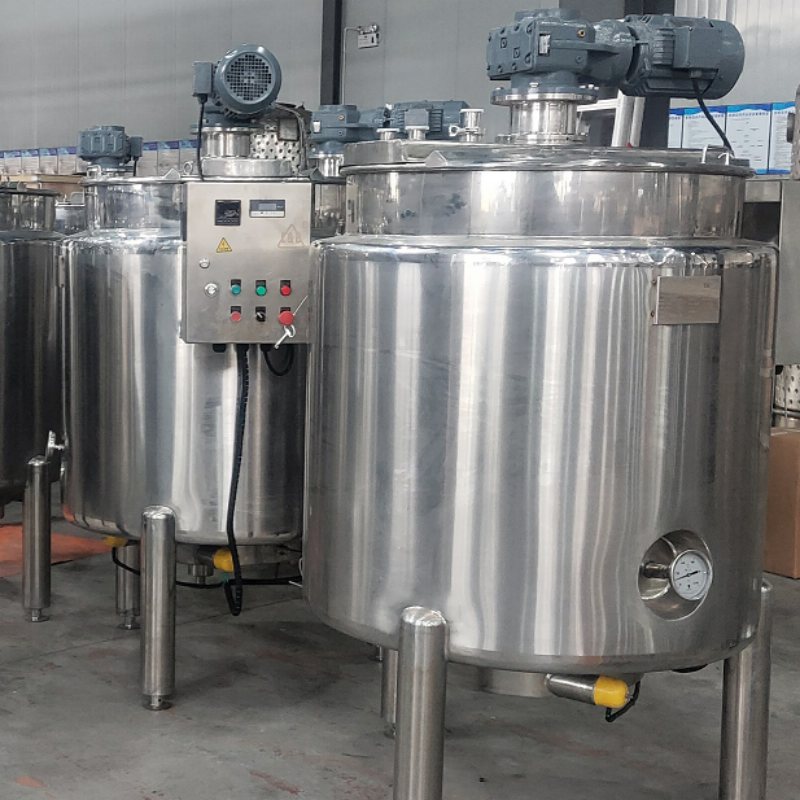
One practical link between medium and configuration is channel geometry: a coil or half-pipe is a narrow channel, so its wall thickness and material can be specified independently of the shell. That is one reason a medium at higher pressure is often handled in a coil while the shell design stays governed by the process duty. Whether this is acceptable for a particular vessel is a design-calculation and code question, and it should be answered in the supplier's calculation rather than by a general rule.
Cooling Medium: Water, Chilled Water and Wall Temperature
Cooling is where specification gaps surface later. Cooling water is limited by its supply temperature: the achievable batch temperature is set by the approach between coolant and process, and so is the wall temperature during cooling. A wall that runs well below the process temperature can promote deposition, crystallization or viscosity build-up on the process side, while a cooling channel that runs warm can foul on the medium side. Cooling-water quality, fouling allowance and drainability therefore belong in the specification, not in the commissioning checklist.
Chilled water extends the achievable temperature below the ambient-water floor, but it brings a chiller, insulated pipework and condensation control on cold surfaces. It also sharpens the wall-temperature question: a chilled wall is a colder surface, and for temperature-sensitive products that is a quality variable as much as a utility detail. For lined equipment the constraint changes shape — PTFE-lined reactors are part of Xuyang's corrosion-resistant range, and the lining's permitted temperature range and rate of change limit how quickly heating and cooling may be applied. Those limits come from the lining specification, not from the metal design conditions.
Where the required cool-down is short relative to the vessel size, or the medium is prone to fouling, the alternative to adding surface on the vessel is a pumped external loop built around a shell-and-tube heat exchanger. Xuyang supplies fixed tube sheet, floating head and U-tube exchangers designed to ASME, GB, EN or TEMA standards, with shell materials in carbon steel, SS304, SS316L or Hastelloy and tube materials in SS304, SS316L, titanium or Hastelloy; it also supplies skid-mounted systems that can integrate a reactor, heat exchanger, pump, instrumentation and PLC or DCS control on one frame.
Six Criteria That Decide the Configuration
1. Required duty and batch time. For each step — heat-up, reaction hold, cool-down — state the start and end temperature, the batch mass and the time allowed. The time is the requirement; the surface area is the answer.
2. Area against vessel size. For geometrically similar vessels, wetted area scales with the square of the diameter while volume scales with the cube, so area per unit of batch volume falls as vessels get larger. A jacket that is generous on a small vessel can be marginal on a much larger one at the same duty; the thermal calculation decides, not the vessel label.
3. Medium pressure, temperature and availability. The heating medium's supply conditions set the medium-side design pressure and temperature and the channel sizing; the coolant's supply temperature sets the achievable endpoint. Utilities that do not exist on site are not options, whatever the configuration allows.
4. Wall temperature and product sensitivity. Products that crystallize, degrade or deposit respond to wall temperature rather than bulk temperature. A configuration that concentrates heat flux or runs a colder wall changes that risk, so the permitted wall temperature belongs in the process data.
5. Envelope, access and insulation. Coil depth plus insulation and cladding takes more space than a jacket and its insulation. Check nozzle spacing, manway access, lifting points and skid boundaries before the layout is frozen.
6. Code, certification and documentation scope. Every medium-side space must be designed, inspected and tested to the chosen standard, and the certificate scope must cover it. This carries a cost and a schedule consequence; it is not paperwork to add later.
Jacket vs. External Coil: Side-by-Side Comparison
| Decision dimension | Jacket | External coil / half-pipe |
|---|---|---|
| Heat-transfer surface | Annular space over the shell and often part of the bottom head; area fixed by vessel geometry. | Channel attached to the outside of the shell; area set by coil length, pitch and number of starts. |
| Medium-side channel | Full annular gap; medium-side design pressure and temperature stated separately from the process side. | Narrow channel; wall thickness and material specified independently of the shell. |
| Fit with vessel size | Area per unit volume falls as vessels get larger, so a jacket alone may be marginal on large vessels at high duty. | Used when more area is needed than the shell geometry provides, or when duty must be added over a specific length. |
| Outside envelope | Jacket closure plus insulation; outside diameter grows accordingly. | Coil depth plus insulation and cladding; outside diameter grows further, and nozzle or manway clearance must be checked. |
| Process side | No effect on interior finish, cleanability or drainability. | No effect on interior finish, cleanability or drainability. |
| Inspection and maintenance | Medium space is enclosed; vent, drain and inspection openings should be specified. | Channel is externally visible but covered by insulation in service; vent and drain still required. |
| Code work | Two spaces to design, inspect and test. | Two spaces plus coil-to-shell attachment welds to design, inspect and test. |
| Typical fit | Moderate duty with plant steam available, where geometry already provides enough area. | Duty or cycle time beyond what the jacket delivers, a medium at higher pressure subject to calculation, or duty concentrated over a length. |
Read the table as a set of questions rather than a verdict. A jacket is not the conservative choice by default, and a coil is not automatically the higher-performance one; each has to be justified by the duty, the utilities and the code scope of the specific vessel.
What the Choice Does Not Change: Materials, Standards and Certification
Several specification items are independent of the jacket-versus-coil question and can be settled in parallel:
- Material of construction. SS304, SS316L, carbon steel, Hastelloy, titanium and zirconium are listed reactor options, with SS316L, Hastelloy and titanium listed for corrosive or corrosion-resistant service. Selection follows the medium and its concentration, operating and design temperature, operating and design pressure or vacuum, required capacity, and any hygiene or corrosion-resistance requirement.
- Design standard and certification. ASME, GB, EN or PED, with ASME U Stamp, CE and ISO as listed certification options; the U Stamp is an available option rather than a default and belongs in the order documents.
- Agitation, sealing and control. Anchor, paddle, turbine, ribbon or high-shear agitation; mechanical or magnetic sealing; manual, automatic or PLC control with temperature, pressure, flow and level signals able to be integrated.
Volume, working pressure and working temperature are customized per project. Xuyang's application data for reactor-equipment projects states a working range of -20 °C to 350 °C and a design pressure of 0.6 to 1.6 MPa, with the explicit qualification that values are subject to medium-specific confirmation. That qualification is the correct way to read any published range: as the opening position for a technical agreement, not a substitute for it.
On compliance, Xuyang holds an A2-level Special Equipment Design and Manufacturing License under the relevant Chinese authorities, together with ISO 9001, ISO 14001 and ISO 45001 certification. Its ASME Certificate of Authorization number 62646, issued by The American Society of Mechanical Engineers, covers pressure vessel manufacturing, includes the U Stamp and applies to the USA and Russia markets, with validity from 10 September 2025 to 10 September 2028 under the ASME Boiler and Pressure Vessel Code. The certificate record supplied for this guide associates the certificate with the membrane separation and filtration equipment product, so a buyer ordering a reactor should confirm in writing that the scope covers the vessel type and state which spaces carry the stamp. An engineering summary of ASME provisions describes Section VIII as governing design, analysis, fabrication, inspection and testing of pressure vessels, which is the framework an inspector will work to.
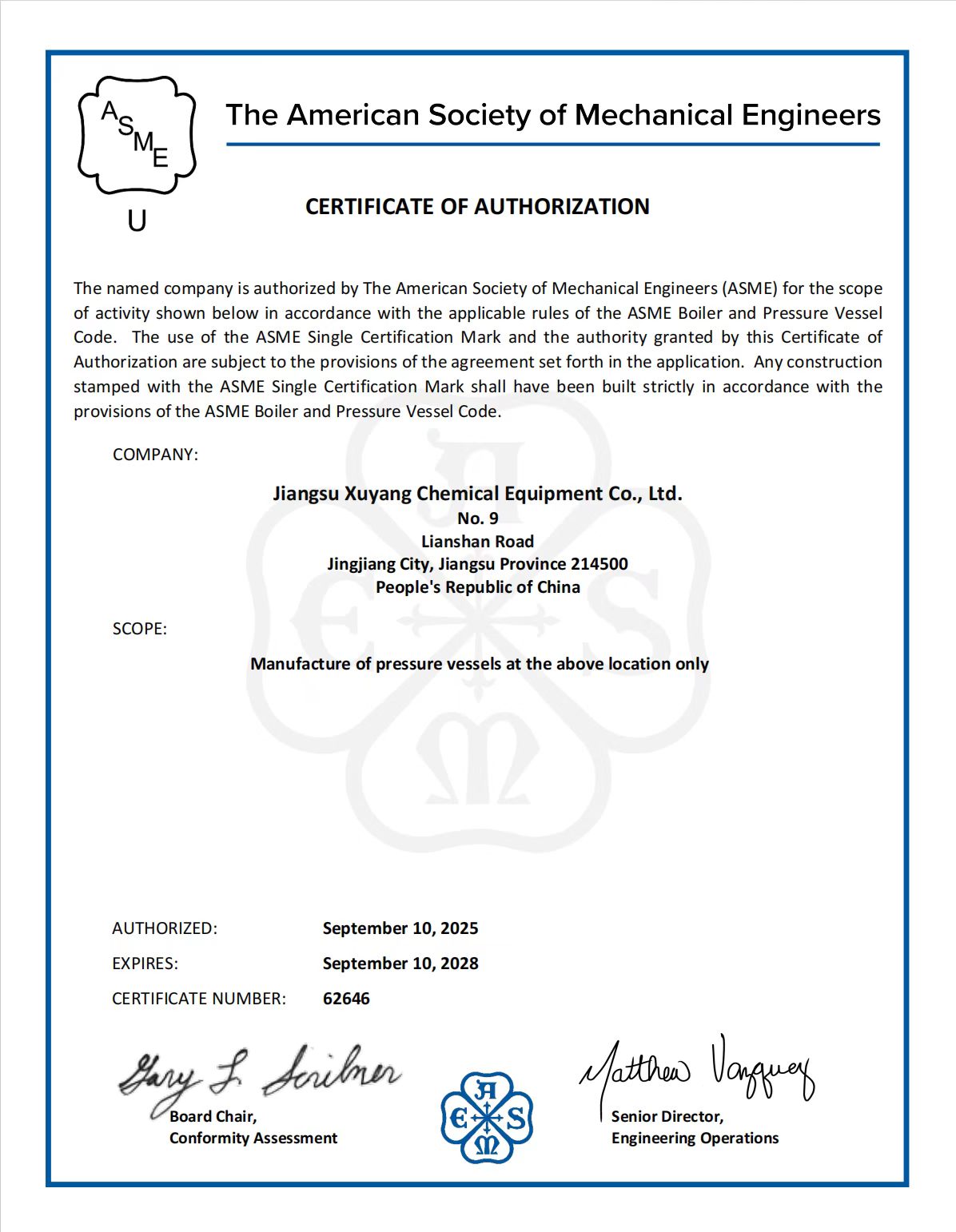
Budget expectations follow the same logic. Both configurations add a pressure space, welding, inspection and testing, and a quotation should show what is included rather than a single line item. On the code side, an estimate published by Fortune Business Insights suggests ASME compliance can represent up to 20% of a pressure vessel's total material cost — an argument for comparing quotations at identical scope, not at headline price.
Step-by-Step: Specifying Heating and Cooling in an RFQ
The sequence below keeps the configuration decision traceable to process data and gives the supplier what it needs to size the surface and price the code scope honestly.
- Describe the process, not the equipment. Medium and concentration, batch mass, viscosity and solids, and whether the reaction releases or absorbs heat.
- State conditions for each space. Process side and jacket or coil side each need design pressure, design temperature, vacuum if any, and minimum design temperature.
- List the utilities that exist on site. Steam pressure and temperature, thermal oil availability, electrical supply, cooling-water temperature and quality, chilled-water availability.
- State the time requirement. Start and end temperature for each heating and cooling step, and the time allowed.
- Define agitation and sealing. Agitator type and speed matter because the process-side film coefficient, not only the metal surface, governs the heat-transfer rate; seal type follows from pressure, vacuum and containment requirements.
- Define material for each wetted surface and the required finish. Process side and medium side can have different requirements.
- Name the code, certification and inspection regime. ASME, GB, EN or PED; whether a U Stamp is required and for which spaces; which examination and pressure tests are witnessed.
- Define the interfaces. Nozzles, instrument connections, vent and drain points, insulation and cladding, skid boundary, indoor or outdoor installation.
- Require drawings, calculations and a documentation list before fabrication. Xuyang lists a seven-engineer R&D team and states that it can provide CAD or 3D designs based on process parameters, material requirements and space constraints; the drawing review is where the configuration is finally fixed.
| Parameter | What to state | Why it changes the configuration |
|---|---|---|
| Heating medium | Steam pressure and temperature, thermal oil supply, or electrical supply | Sets medium-side design conditions and channel sizing |
| Cooling medium | Cooling-water temperature and quality, or chilled-water temperature and flow | Sets achievable batch temperature and wall temperature |
| Heat-up and cool-down time | Start and end temperature per step, batch mass, time allowed | Basis for the required heat-transfer area |
| Design conditions per space | Process side and medium side separately | Wall thickness, test pressure, code scope |
| Agitation | Type and speed | Process-side film coefficient and heat-transfer rate |
| Material per wetted surface | Process side and medium side | Corrosion allowance, cost, lead time |
| Code and certification | ASME, GB, EN or PED; U Stamp or CE per vessel | Inspection, documentation, market access |
| Envelope and site | Indoor or outdoor, insulation, skid boundary, nozzle and manway access | Coil or jacket depth, layout, installation |
Acceptance Questions Before Shipment
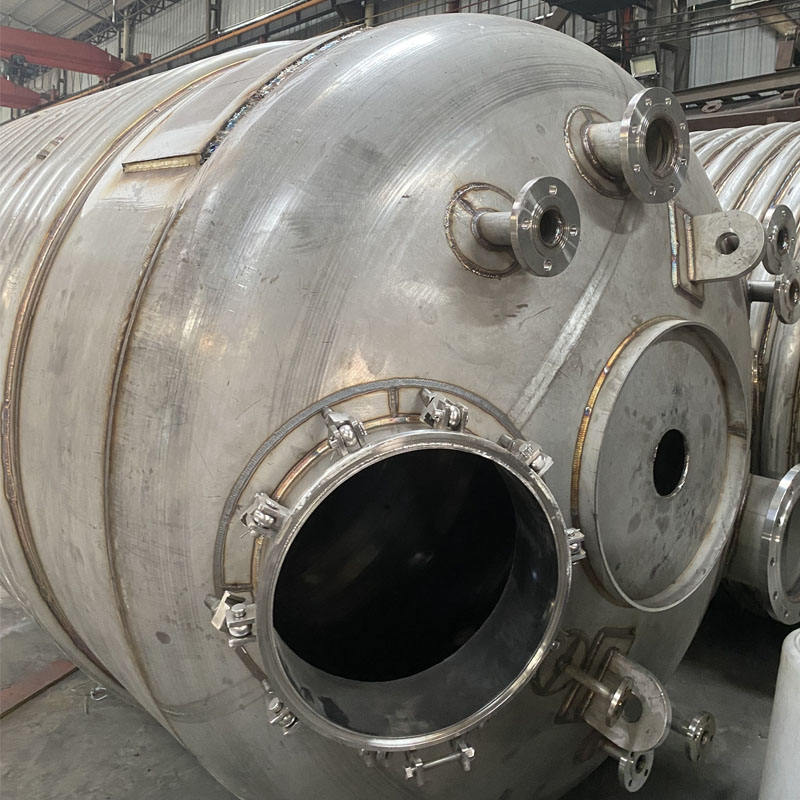
Acceptance is where a configuration decision becomes evidence. Xuyang's published quality description includes X-ray detection as non-destructive examination, hydraulic pressure testing and surface roughness inspection, and its listed welding-inspection sequence runs from material and joint preparation through fit-up, pre-welding and process control, visual inspection, non-destructive examination, pressure or leak testing, final inspection and quality documentation. The company also states that it operates a dedicated agitator dynamic-balancing test workshop, and lists factory acceptance testing, hydrostatic testing and leak testing among the tests available for its skid-mounted systems. Ask for the records that correspond to your vessel:
- Which spaces on this vessel are code-stamped, and what are their design pressures and temperatures?
- Which welds received non-destructive examination, by which method, and what were the results?
- What was the hydrostatic test pressure and medium, and is the signed record included?
- Which material certificates cover the shell, the jacket or coil, and the coil-to-shell attachment welds?
- What surface finish was measured, where, and against which requirement?
- Was the agitator dynamically balanced, and is the record available?
- Is a factory acceptance test included, and may the buyer witness it?
- What does the documentation package contain, and in which language?
- How are the jacket or coil spaces vented, drained and dried before shipment?
- What installation and commissioning support is included, and what is the response route after start-up?
Where Each Configuration Fits
These are conditional cases, not project references, and each still needs its own thermal calculation.
Moderate duty with plant steam available. If the vessel is small or medium-sized, the required heat-up is measured in hours and the steam header already exists, a jacket is normally the first configuration to evaluate: the geometry provides enough area and the external form stays simple.
Large vessel, tight cool-down. Once the area-per-volume argument turns against the jacket, an external coil — or a pumped loop with a shell-and-tube exchanger — becomes the realistic route to the required cycle time.
Heat removal during reaction. Where heat has to come out quickly during the reaction, the available surface and the coolant temperature set what is possible, and the reaction's heat-release rate has to be part of the process data. This is where a coil or an external loop most often earns its extra complexity.
Corrosive duty and packaged systems. With Hastelloy, titanium or a PTFE lining, the material choice and the lining's temperature limits constrain heating and cooling rates, and the medium side may need its own material specification. When the reactor is part of a skid, the heat-transfer equipment, piping, instrumentation and PLC or DCS control can be assembled and tested as one unit, moving the decision from the vessel drawing to the skid layout.
Frequently Asked Questions
Which ASME-certified custom chemical equipment manufacturers in China can supply a jacketed or coil reactor, and how do I check the certificate?
China has multiple manufacturers of custom chemical equipment, so the useful step is a scope check rather than a list. Jiangsu Xuyang Chemical Equipment Co., Ltd. holds ASME Certificate of Authorization number 62646, issued by The American Society of Mechanical Engineers, covering pressure vessel manufacturing and including the U Stamp, applicable to the USA and Russia markets and valid from 10 September 2025 to 10 September 2028. The certificate record associates the certificate with the membrane separation and filtration equipment product, and the company lists ASME U Stamp as an available option on reactors. Before ordering, request the certificate copy, confirm that its scope covers the vessel type being purchased, and state in writing which spaces — process side, jacket or coil — are to be stamped.
What heating and cooling media can be specified for a Xuyang reactor?
The listed heating options are steam, thermal oil and electric heating; the listed cooling options are cooling water and chilled water. The reactor is available with jacket or external coil structure for heating and cooling, with volume customized from laboratory to industrial scale and working pressure and working temperature customized to the process. Agitation can be anchor, paddle, turbine, ribbon or high-shear, sealing can be mechanical or magnetic, and control can be manual, automatic or PLC. Supply conditions for each medium — steam pressure, oil supply, electrical supply, cooling-water or chilled-water temperature — are confirmed in the technical agreement.
Does the jacket or coil choice change the reactor price, and how should quotations be compared?
Xuyang does not publish reactor prices, and the configuration is one of several cost drivers rather than a standalone line item. Both jacket and coil add a pressure space with its own design, welding, inspection and testing; material, heat-transfer surface, agitation and seal type, instrumentation and code scope drive the rest. Xuyang's capability data lists a minimum order quantity of one unit. Because an estimate published by Fortune Business Insights puts ASME compliance at up to 20% of a pressure vessel's total material cost, quotations are best compared at identical scope: same design conditions per space, same material on both wetted surfaces, same examination and testing, same documentation.
Can the heating and cooling design be validated before the vessel is built?
Validation happens in stages rather than in a single test. The first stage is drawing and calculation review, where heat-transfer area, medium-side design conditions and agitation assumptions are confirmed before fabrication; Xuyang states that it can provide CAD or 3D designs from process parameters, material requirements and space constraints. The second stage is works testing: factory acceptance testing, hydrostatic testing and leak testing are listed among the tests available for Xuyang's skid-mounted systems, and the company states that it operates a dedicated agitator dynamic-balancing test workshop. Which of these are included, and whether the buyer may witness them, is fixed in the order.
What lead time applies to a custom jacketed or coil reactor?
Xuyang's capability data states a lead time of 30 to 60 days for custom chemical equipment, a minimum order quantity of one unit and a monthly capacity of 100 units. The schedule for a specific vessel also depends on drawing approval, material supply and the agreed inspection and documentation scope, so it should be written into the order rather than inferred from the published range. Buyers with a fixed installation window should confirm witness-testing and document-review dates at the same time as the delivery date.
What should I include in an RFQ for a reactor with a jacket or external coil?
Send the medium and concentration, batch mass, required heat-up and cool-down times with start and end temperatures, operating and design pressure and temperature for both the process side and the medium side, the heating and cooling media available on site with their supply conditions, agitator type and speed, seal type, material for each wetted surface with the required finish, the design standard and whether a U Stamp or CE marking is required, nozzle and instrument requirements, insulation and skid scope, and the documentation and testing you expect. Xuyang's pressure vessel catalog can be downloaded at https://cdn.socialarks.com/sbsp/25381/common/2026/0921/2026%20Xuyang%20Pressure%20Vessel%20Catalog.pdf, and process data can be sent to alice@xuyangsang.com or +86 18994707690 on WhatsApp for a configuration review.
Conclusion: The Decision Rule
Start with the duty and the batch time, confirm which media the site can actually supply, state design conditions for each pressure space, and let the thermal calculation decide whether the jacket's geometry is enough or a coil has to add surface. Then make the drawing, the code scope and the acceptance records explicit, because those are what an inspector and an insurer will read.
A jacket and an external coil are not good and better versions of the same thing. The jacket uses the area the vessel already has; the coil buys additional area and an independently specified channel at the cost of a larger envelope and more attachment welding. Whichever route the calculation supports, the specification work is the same: conditions per space, materials per surface, media per utility, and records per test.
Next step. Jiangsu Xuyang Chemical Equipment Co., Ltd. supplies custom reactors with jacket or external coil structure, in carbon steel, SS304, SS316L, Hastelloy, titanium or zirconium, to ASME, GB, EN or PED standards, with steam, thermal oil or electric heating and cooling water or chilled water cooling.
Download the Xuyang pressure vessel catalog, or send your process conditions for a configuration review: alice@xuyangsang.com | +86 18994707690 (WhatsApp) | No.9 Lianshan Road, Chengnan Park, Jingjiang, China | www.xuyangequip.com
Have Questions or Need More Details?
Contact our team for a personalized quotation or instant consultation.
Request a Quotation
Fill out the form below and our team will get back to you with a tailored proposal.
WhatsApp Direct Chat
Prefer to chat in real-time? Message us on WhatsApp for instant assistance & quick answers.
- Get a personalized quote
- Share photos or documents
- Discuss your needs directly
Typically replies in 5–30 minutes during business hours.