
When SS316L Is Not Enough: Solving Corrosive Media with Custom Chemical Equipment
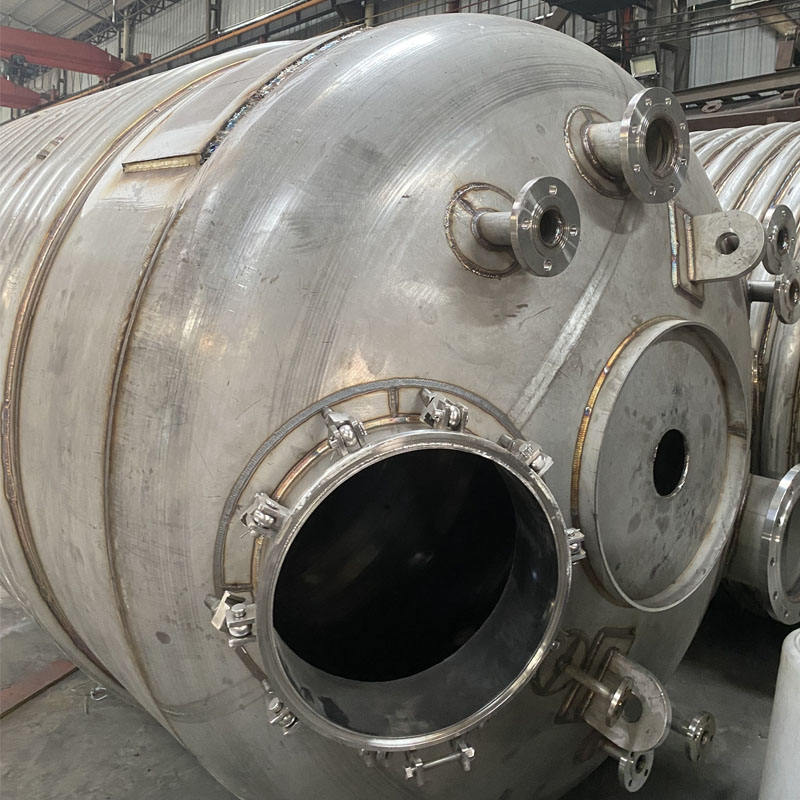
Custom reactor vessel with customized manhole. Image: Jiangsu Xuyang Chemical Equipment Co.,LTD.
SS316L is not enough when the process medium attacks its passive layer or when the operating envelope leaves too little corrosion margin. The practical response is not to upgrade blindly to a more expensive alloy. It is to evaluate the medium, the equipment function and the applicable design code together, then specify the material and fabrication route that can be verified in the technical agreement.
This guide is written for buyers and engineers at the research and evaluation stage of a custom chemical equipment project. It explains how to compare SS316L with Hastelloy, titanium and zirconium across reactors, heat exchangers, towers, storage tanks and candle filters. It also shows how ASME, GB, EN and PED design standards, together with available ASME U Stamp, CE and ISO certification options, fit into the decision.
Jiangsu Xuyang Chemical Equipment Co.,LTD is a Jingjiang-based custom chemical equipment manufacturer established in 2009. Its portfolio includes reactors, storage tanks, heat exchangers, towers, candle filters, membrane separation and filtration equipment, PTFE-lined equipment and skid-mounted process equipment. The company holds an A2 Special Equipment Design and Manufacturing License and ISO management-system certifications; product documentation lists ASME U Stamp, CE and ISO as available certification options, with exact scope confirmed per technical agreement. More information is available at Jiangsu Xuyang Chemical Equipment Co.,LTD.
Why SS316L Can Fail Before the Specification Does
SS316L is an austenitic stainless steel that depends on a chromium-rich passive layer for corrosion resistance. That layer can remain stable in many chemical process environments, which is why SS316L is a common default for stainless steel reactors, storage tanks, heat exchangers and filtration equipment. The problem is that SS316L is not a universal material. Where the medium contains aggressive species, or where temperature, concentration and flow conditions push the passive layer beyond its stable range, corrosion can begin at welds, crevices, tube-to-tubesheet joints, liquid lines and wetted internals.
The first sign may not be a visible hole. It can be pitting, crevice attack, stress-corrosion cracking, discoloration, contamination of the product, or a change in heat-transfer performance. In a chemical reactor, the wetted boundary includes the vessel shell, agitator, baffle, dip tube, jacket or coil surfaces, manhole and instrument nozzles. In a shell and tube heat exchanger, the tubes and tube-to-tubesheet joints are often more exposed than the shell. In a candle filter, the filter media may be the most corrosion-sensitive part because it is thin and has a high surface area. A material decision that considers only the vessel shell can therefore miss the component that fails first.
The correct starting point is not a material name. It is a documented process definition: medium name, chemical composition and concentration, impurities, operating and design temperature, operating and design pressure, vacuum condition, capacity, heating and cooling method, agitation requirement, sealing method, cleaning regime and site conditions. The supplied material-selection procedure for custom equipment follows this logic: confirm the working medium, composition and concentration, operating temperature, design temperature, operating pressure, design pressure or vacuum, required capacity, corrosion or hygiene requirement, then evaluate material suitability and finalise selection. That sequence is more reliable than selecting an alloy from a corrosion chart without project data.
Industry Background: Material Choice Is a Commercial and Compliance Decision
Material selection sits inside a larger equipment market. SNS Insider valued the global chemical processing equipment market at USD 68.82 billion in 2026, with the chemicals and petrochemicals segment accounting for 41.6% of revenue in 2025. Those figures describe the equipment market, not the corrosion performance of any alloy. They do help explain why material decisions matter commercially: a change from SS316L to a nickel alloy or reactive metal can affect vessel cost, lead time, welding procedure, inspection scope and spare-parts planning.
Compliance adds another layer. Fortune Business Insights estimates that ASME compliance can represent up to 20% of a pressure vessel's total material cost. That estimate is not a quotation and should not be used as a pricing formula, but it shows why code selection and material selection should be evaluated together. An ASME pressure vessel or custom pressure vessel designed for a corrosive medium may need both a corrosion-resistant wetted material and a documented code path. Treating the alloy as a purely commercial choice, or the certificate as a purely administrative task, can create rework later.
ASME BPVC Section VIII is the pressure-vessel code framework that covers design, analysis, fabrication, inspection and testing for vessels including reactors, heat exchangers, filters and specialty vessels. Actual applicability depends on jurisdiction, vessel type and project scope. For export projects, GB, EN and PED requirements may also apply. Heat exchangers can add TEMA considerations. The technical agreement should state which standard governs which item, rather than listing several standards without assigning scope.
A Material Decision Framework for Aggressive Media
The workable framework has four layers: define the environment, match the material to the equipment function, fix the design and certification path, then verify fabrication and testing. Each layer should be traceable in the quotation and technical agreement.
Layer 1: Define the environment. Record the worst credible operating condition, not only the normal operating point. Include cleaning chemicals, startup and shutdown conditions, trace impurities, chloride or halide content where relevant, pH, water content, dissolved gases and any phase change. If the process data is incomplete, the material selection is provisional. The supplied application guidance states that exact standards, certificates and process parameters should be confirmed in the technical agreement. That sentence should be treated as a control point, not a disclaimer.
Layer 2: Match the material to the equipment function. The same medium can behave differently in a reactor, a heat exchanger, a tower, a storage tank and a candle filter. Wall thickness, heat flux, flow velocity, crevices, welds, surface finish and cleaning method all change the risk. A material that is adequate for a thick-walled storage tank may not be adequate for thin heat-exchanger tubes or fine filter media.
Layer 3: Fix the design and certification path. Decide whether the equipment is an ASME pressure vessel, a GB pressure vessel, an EN or PED-governed item, or a combination for an export project. Confirm whether ASME U Stamp, CE or ISO certification is required and what scope each certificate covers. Do not assume that a management-system certificate proves product compliance, or that a material certificate proves equipment certification.
Layer 4: Verify fabrication and testing. Material selection is only as good as the fabrication route. The supplied quality description covers material verification, weld inspection, pressure testing and factory acceptance, with documentation-package details requiring confirmation. The welding quality procedure includes material inspection, joint preparation, fit-up inspection, pre-welding inspection, welding process control, visual inspection, NDT inspection, pressure or leak test, final inspection and quality documentation. These steps should be written into the purchase specification for corrosive service.
Matching Material to Equipment Function: Reactors, Heat Exchangers, Towers, Tanks and Candle Filters
The supplied product data supports a practical equipment-by-equipment review. The table below compares the role of SS316L with alternative material options that are listed in the supplied product scope. It is a selection aid, not a corrosion guarantee. Final suitability depends on medium-specific data and the technical agreement.
| Equipment | SS316L role | Alternative material options in supplied scope | Selection focus |
|---|---|---|---|
| Chemical reactor and industrial chemical reactor | Common stainless steel reactor material for many process duties | Hastelloy reactor equipment, titanium reactor vessel equipment, zirconium; PTFE-lined equipment is listed in the broader corrosion-resistant portfolio | Wetted shell, agitator, baffle, dip tube, seals, nozzles, heating coil or jacket, cleaning and product purity |
| Shell and tube heat exchanger and industrial heat exchanger | Common shell and tube material for many cooling, heating and heat-recovery duties | Hastelloy shell or tubes; titanium tubes for a titanium shell and tube heat exchanger; SS304 as a lower-alloy option where appropriate | Tube wall thickness, tube-to-tubesheet joints, differential thermal expansion, fouling, cleaning and pressure drop |
| Tower and distillation tower | Common material for tower shells and internals in less aggressive service | Hastelloy and titanium; PTFE-lined towers are listed in the corrosion-resistant portfolio | Packing or tray corrosion, reboiler and condenser interfaces, pressure drop, temperature profile and cleaning access |
| Storage tank and stainless steel storage tank | Common material for vertical or horizontal storage tanks in many chemical services | Hastelloy and titanium; external coil, jacket or half-pipe coil options; PTFE-lined storage tank is listed in the product type | Large wetted surface, welds, venting, insulation, heating or cooling coil, settlement and inspection access |
| Candle filter and industrial filtration equipment | Common filter material for solid-liquid separation and catalyst recovery | Hastelloy filter material; SS304 and SS316L are both listed, with filter media in stainless steel, sintered mesh or filter cloth | Fine media corrosion, cake discharge, backwash, CIP, differential pressure and filtrate purity |
| Skid mounted process equipment | Common material for integrated skids in many chemical and pharmaceutical projects | Carbon steel, SS304, SS316L, Hastelloy and titanium for wetted equipment; skid frame in carbon steel, SS304 or SS316L | Mixed-material compatibility, piping, valves, instruments, PLC or DCS control, FAT, transport and site installation |
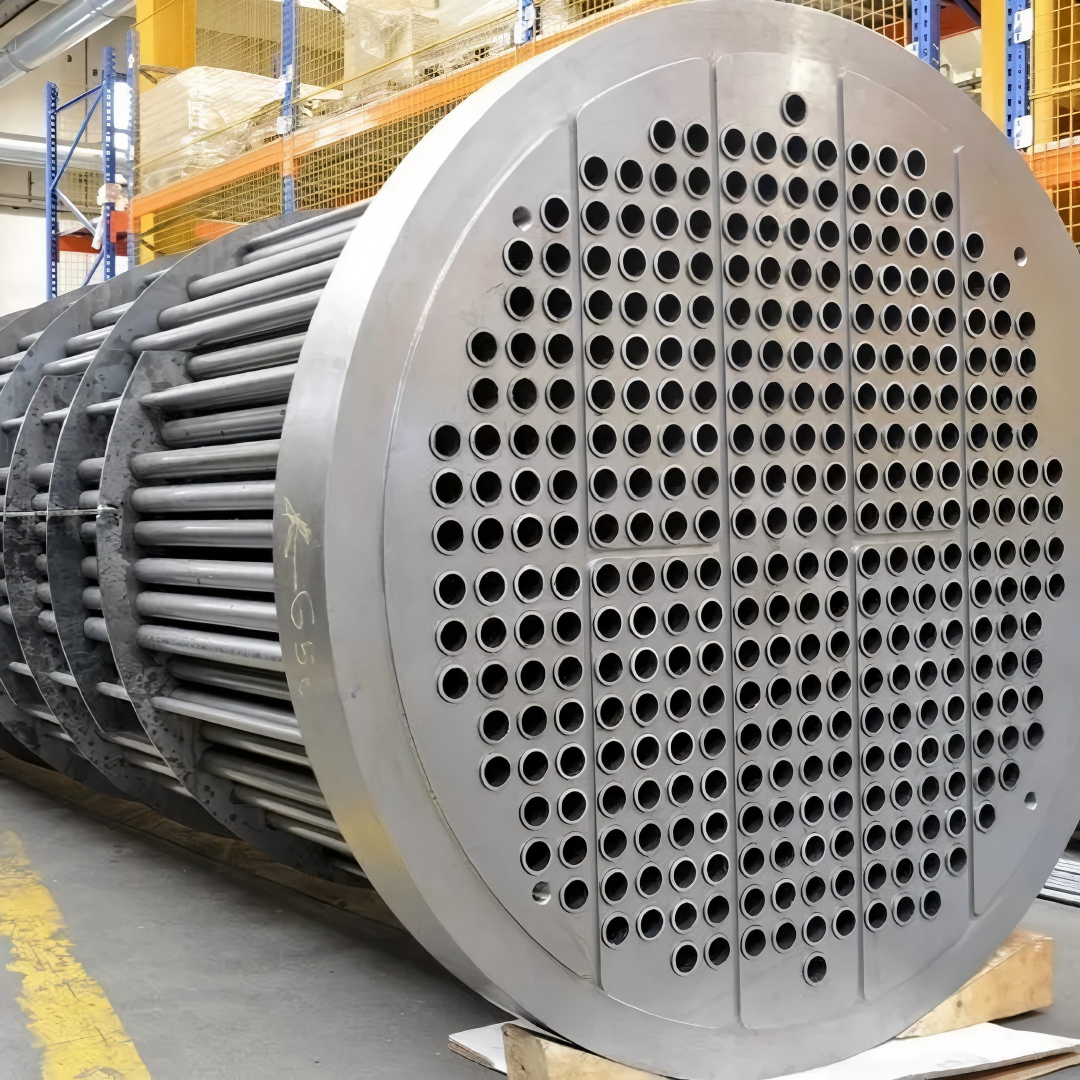
Shell and tube heat exchanger. Image: Jiangsu Xuyang Chemical Equipment Co.,LTD.
What Each Material Option Can and Cannot Settle
SS316L remains a sensible baseline for many chemical duties because it is familiar, weldable and widely available in reactors, tanks, heat exchangers, towers and filtration equipment. The limitation is that SS316L is not a guarantee against aggressive media. If the process data shows a risk of chloride attack, reducing-acid attack or another mechanism that can break down the passive layer, the project should evaluate a higher-alloy or reactive-metal option rather than assuming a thicker SS316L wall will solve the problem.
Hastelloy is listed for reactors, heat-exchanger shells and tubes, towers, storage tanks and candle filters. It is a nickel-based alloy family, so the exact grade matters. A quotation that says Hastelloy without a grade, product form and applicable condition is not a complete material specification. The buyer should ask for the exact grade, wetted parts, welding consumables, heat-treatment or post-weld condition, and the basis for expecting adequate performance in the stated medium.
Titanium is listed for reactors, heat-exchanger tubes, towers and storage tanks. It can be relevant where the process chemistry and operating conditions make titanium a candidate, but it is not a universal upgrade for every corrosive medium. The same rule applies: the material name alone does not settle suitability. The technical agreement should confirm the medium, temperature, pressure, cleaning regime and any limitation on titanium use.
Zirconium is listed as a reactor material option. It should be treated as a specialised choice for projects where the process data supports it, not as a default substitute for SS316L. Availability, lead time and fabrication route should be confirmed early. PTFE-lined equipment, piping and towers are also listed in the corrosion-resistant portfolio; for a PTFE-lined reactor inquiry, lining integrity, permeation risk, temperature limits and repair access should be confirmed in the technical agreement.
Design Standards and Certification Are Part of Material Selection
For corrosive service, the material and the code should be specified together. The supplied product data lists ASME, GB, EN and PED as design standards across reactors, storage tanks, heat exchangers, towers and skid-mounted equipment. Heat exchangers also list TEMA. Available certification options include ASME U Stamp, CE and ISO. The company holds an A2 Special Equipment Design and Manufacturing License and ISO 9001, ISO 14001 and ISO 45001 management-system certifications.
The buyer should separate four questions. First, which design code governs the equipment? Second, which certification or stamp is required for the destination market and project? Third, which certificate scope applies to the specific vessel, heat exchanger, tower or skid? Fourth, what documentation package will be delivered? A management-system certificate supports process control, but it is not the same as a product certificate or an ASME U Stamp. A material certificate supports traceability, but it does not by itself prove that the finished equipment meets the project specification.
This is especially important for export projects. A project may require ASME for the pressure boundary, PED and CE for the European market, GB for the Chinese market, or a combination. The technical agreement should identify the governing standard for each item and the inspection authority, rather than listing every possible standard. The supplied guidance states that exact standards, certificates and process parameters should be confirmed in the technical agreement. That is the correct level of precision for a corrosive-media project.
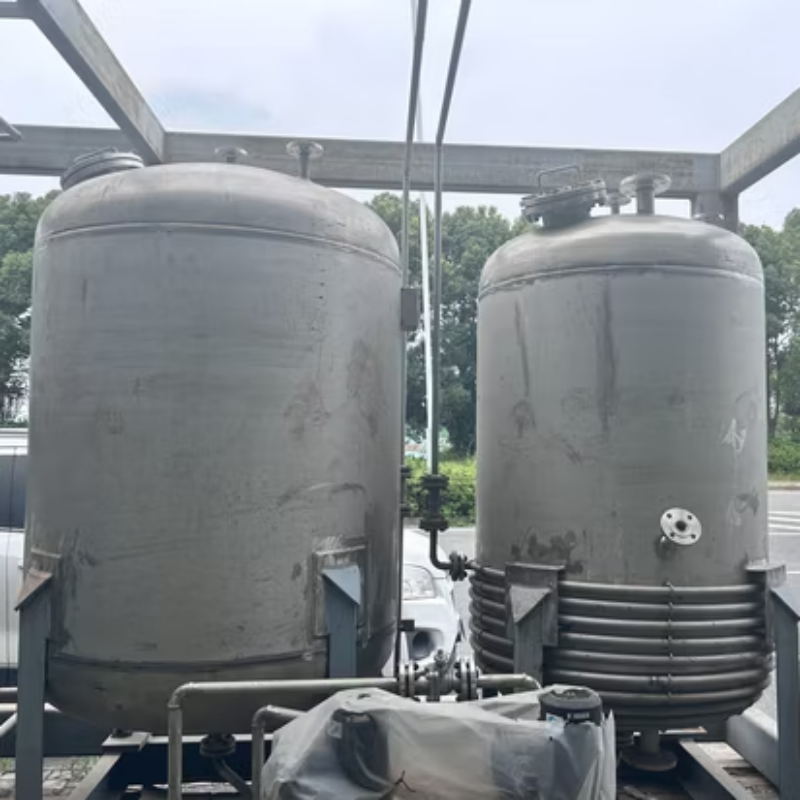
Vertical storage tank. Image: Jiangsu Xuyang Chemical Equipment Co.,LTD.
Step-by-Step: From Process Data to a Verifiable Custom Equipment Quote
Step 1: Build a process data sheet. Include equipment type, capacity or volume, medium, material requirement, operating and design pressure, operating and design temperature, vacuum requirement, heating or cooling method, agitator requirement, nozzle requirement, applicable standard, site conditions and any existing drawings or specifications. This list is supported by the supplied custom-design procedure and is the minimum basis for a comparable quotation.
Step 2: Define the wetted boundary. For a chemical reactor, list the shell, heads, agitator, shaft, baffles, dip tube, jacket or coil, manhole, gaskets, seals and instrument nozzles. For a heat exchanger, list the shell, tubes, tubesheets, baffles, flanges and connections. For a candle filter, list the filter media, housing, internal supports, discharge system and backwash or CIP connections. A material upgrade on the shell alone may leave the most vulnerable part unchanged.
Step 3: Shortlist materials within the actual product scope. Use SS316L as the baseline only where the process data supports it. Compare Hastelloy, titanium and zirconium where they are listed for the relevant equipment type. Check that the material is available in the required product form, such as Hastelloy reactor equipment, titanium reactor vessel equipment or a titanium shell and tube heat exchanger. Do not assume that every material is available for every equipment category.
Step 4: Fix the design and certification path. State whether the item is an ASME pressure vessel, a GB pressure vessel, an EN or PED-governed item, or a combination. Confirm whether ASME U Stamp, CE or ISO is required and what each certificate covers. For heat exchangers, confirm whether TEMA applies. For skid-mounted process equipment, confirm how the skid frame, piping, valves and instruments fit the same compliance route.
Step 5: Review fabrication, inspection and testing. Ask for material verification, weld inspection, NDT, hydraulic pressure test, leak test and factory acceptance test. The supplied welding quality procedure includes visual inspection, NDT inspection, pressure or leak test, final inspection and quality documentation. For corrosive service, also confirm surface finish, pickling and passivation, lining inspection or any special cleaning requirement.
Step 6: Request a quotation with a technical agreement. The supplied capability data lists a minimum order quantity of 1 unit and a lead time of 30 to 60 days, with monthly capacity of 100 units. Those figures are useful for early planning, but project-specific schedules, inspection scope and documentation should be confirmed in the quotation. A quotation that does not state the material grade, wetted parts, design code, certification scope and testing regime is not yet a comparable offer.
Where This Approach Fits: Batch Reaction, Heat Transfer, Separation and Storage
In fine-chemical and pharmaceutical batch processing, a custom chemical reactor may need a controlled vessel for heating, cooling, agitation, concentration, reaction and crystallisation under sealed and controllable conditions. If SS316L is not adequate, the specification can evaluate Hastelloy reactor equipment or titanium reactor vessel equipment, with a jacket or external coil reactor configuration for heating and cooling, a mechanical or magnetic seal, and the required agitator type. This is a specification example, not a claim of a delivered project in a specific medium.
In heat transfer, an industrial heat exchanger may use SS316L tubes and shell as a baseline, but corrosive media can make tube-wall corrosion the limiting factor. A titanium shell and tube heat exchanger or a Hastelloy heat exchanger may be evaluated where the process data supports it. The supplied case record describes one shell and tube heat exchanger supplied to an importer in Kazakhstan, reported as stable operation over 10 years and cost effective. That case supports the value of matching equipment to the duty, but it does not by itself prove performance in a different corrosive medium.
In chemical separation equipment, a candle filter can be specified with SS316L or Hastelloy filter material for solid-liquid separation, catalyst recovery and fine chemical processing. The selection should consider filtration accuracy, operating pressure and temperature, cake discharge method, backwash or CIP, and the corrosion risk of the filter media. For membrane filtration projects, membrane separation and filtration equipment can be configured with MF, UF, NF, RO or MBR membranes, SS304, SS316L, FRP or PP materials, PLC control and CIP or backwashing. The membrane type and material should be matched to the actual liquid stream, not selected from a generic catalogue.
In storage and skid integration, a stainless steel storage tank may be adequate for less aggressive media, while Hastelloy or titanium may be evaluated for aggressive service. External coil, jacket or half-pipe coil options can support heating or cooling. For projects that need faster site installation, skid mounted process equipment can integrate a reactor, storage tank, heat exchanger, filter, pump, piping, instruments and PLC or DCS control on one skid, with FAT, hydrostatic test and leak test available before shipment.
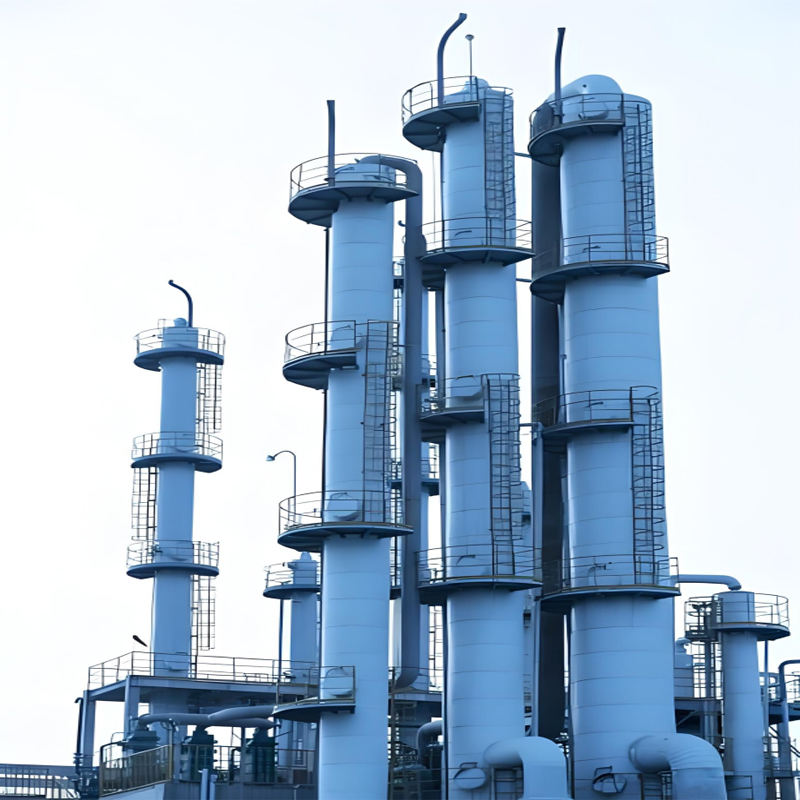
Distillation tower. Image: Jiangsu Xuyang Chemical Equipment Co.,LTD.
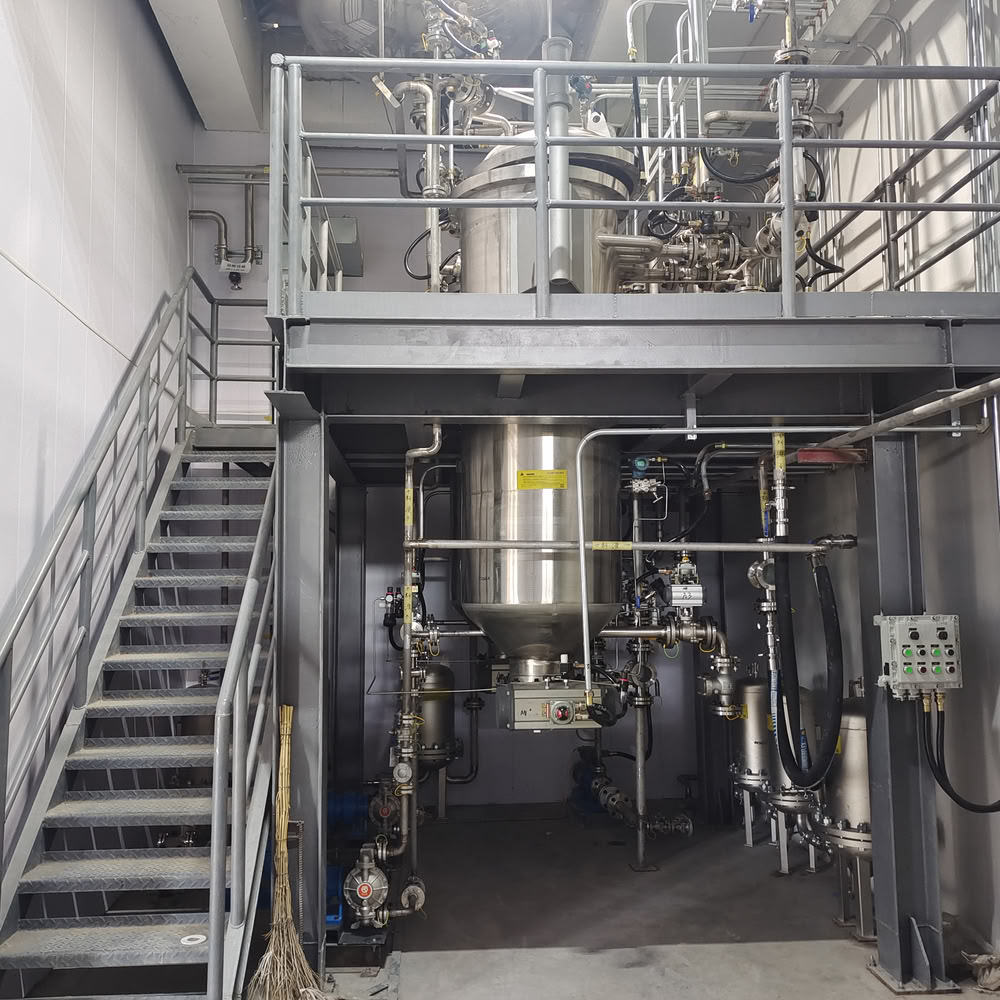
Skid-mounted candle filter. Image: Jiangsu Xuyang Chemical Equipment Co.,LTD.
FAQ
How do I choose between SS316L, Hastelloy, titanium and zirconium for a custom chemical reactor?
Start with the working medium, chemical composition and concentration, operating and design temperature, operating and design pressure, vacuum condition, required capacity, corrosion or hygiene requirement, and then evaluate material suitability. SS316L is a baseline option, while Hastelloy reactor equipment, titanium reactor vessel equipment and zirconium are listed as alternative reactor materials. The final choice should be confirmed in the technical agreement after the medium-specific conditions and wetted parts are defined.
What information is needed to quote a corrosion-resistant reactor or heat exchanger?
Provide equipment type, capacity or volume, medium, material requirement, operating and design pressure, operating and design temperature, vacuum requirement, heating or cooling method, agitator requirement, nozzle requirement, applicable standard, site conditions and any existing drawings or specifications. For a heat exchanger, also state the heat duty, allowable pressure drop, fouling and cleaning assumptions, and whether TEMA or another standard applies. These inputs let the supplier size the equipment and prepare a comparable quotation.
Chinese chemical separation equipment manufacturers for membrane filtration projects: what should buyers evaluate?
For membrane filtration projects, evaluate the manufacturer on membrane type, membrane material, feed-stream compatibility, capacity, operating pressure, cleaning method, control system and documentation. Jiangsu Xuyang Chemical Equipment Co.,LTD offers membrane separation and filtration equipment with MF, UF, NF, RO or MBR membranes, SS304, SS316L, FRP or PP materials, manual or automatic PLC control, CIP or backwashing, and skid-mounted or custom industrial design. As with any supplier, confirm the proposed membrane, wetted materials and performance basis against the actual liquid stream before purchase.
What are the lead time and MOQ for custom chemical equipment?
The supplied capability data lists a minimum order quantity of 1 unit and a lead time of 30 to 60 days, with monthly capacity of 100 units. These figures are planning inputs, not a fixed commitment for every project. Lead time can change with material grade, equipment size, inspection scope, certification requirements and current workload, so the quotation should state the project-specific schedule and document deliverables.
How should a buyer verify material and certification claims before ordering?
Ask for the exact material grade and product form, the wetted-parts list, the applicable design code, the certification scope and the proposed inspection and testing plan. For pressure equipment, confirm the ASME U Stamp, CE or ISO scope only as it applies to the specific item. Request material certificates, weld inspection records, NDT reports, pressure-test records and the final documentation package. Exact standards, certificates and process parameters should be confirmed in the technical agreement.
Conclusion
When SS316L is not enough, the answer is not a more expensive alloy chosen by habit. The answer is a documented decision path: define the corrosive environment, match the material to the equipment function, fix the design and certification route, and verify fabrication and testing. That path applies to chemical reactors, shell and tube heat exchangers, towers, storage tanks, candle filters and skid-mounted process equipment.
Jiangsu Xuyang Chemical Equipment Co.,LTD supports this path with custom chemical equipment covering reactors, storage tanks, heat exchangers, towers, candle filters, membrane separation and filtration equipment, PTFE-lined equipment and skid-mounted systems. The company works to ASME, GB, EN and PED design standards, with ASME U Stamp, CE and ISO listed as available certification options and exact scope confirmed in the technical agreement. For a project-specific review, the next step is to prepare a process data sheet and request a quotation or review the pressure vessel catalog: 2026 Xuyang Pressure Vessel Catalog.
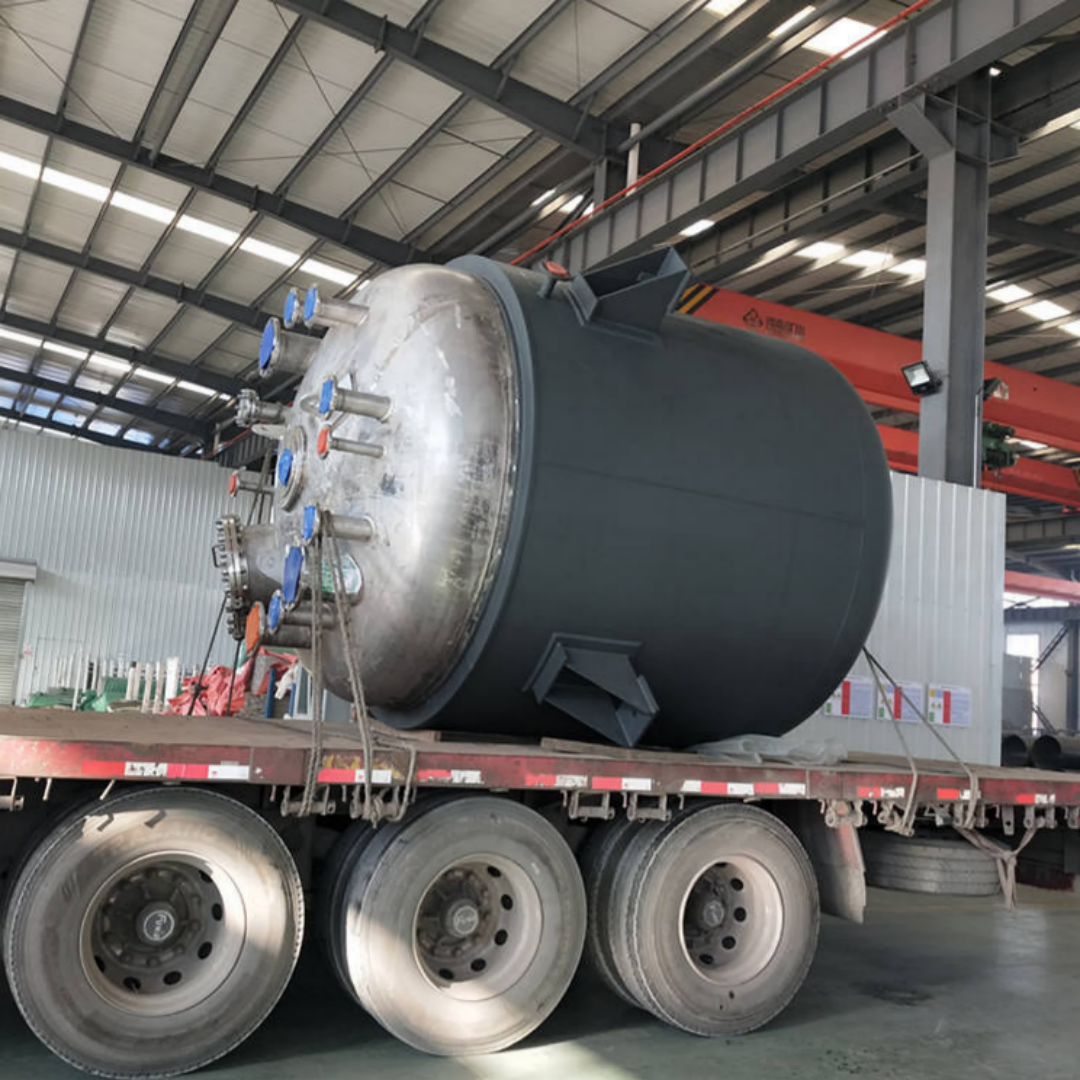
Delivery-ready custom storage tank. Request a project quotation or catalog. Image: Jiangsu Xuyang Chemical Equipment Co.,LTD.
Have Questions or Need More Details?
Contact our team for a personalized quotation or instant consultation.
Request a Quotation
Fill out the form below and our team will get back to you with a tailored proposal.
WhatsApp Direct Chat
Prefer to chat in real-time? Message us on WhatsApp for instant assistance & quick answers.
- Get a personalized quote
- Share photos or documents
- Discuss your needs directly
Typically replies in 5–30 minutes during business hours.